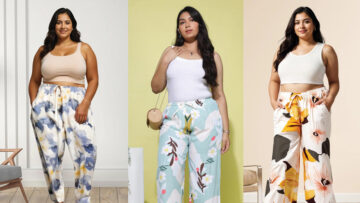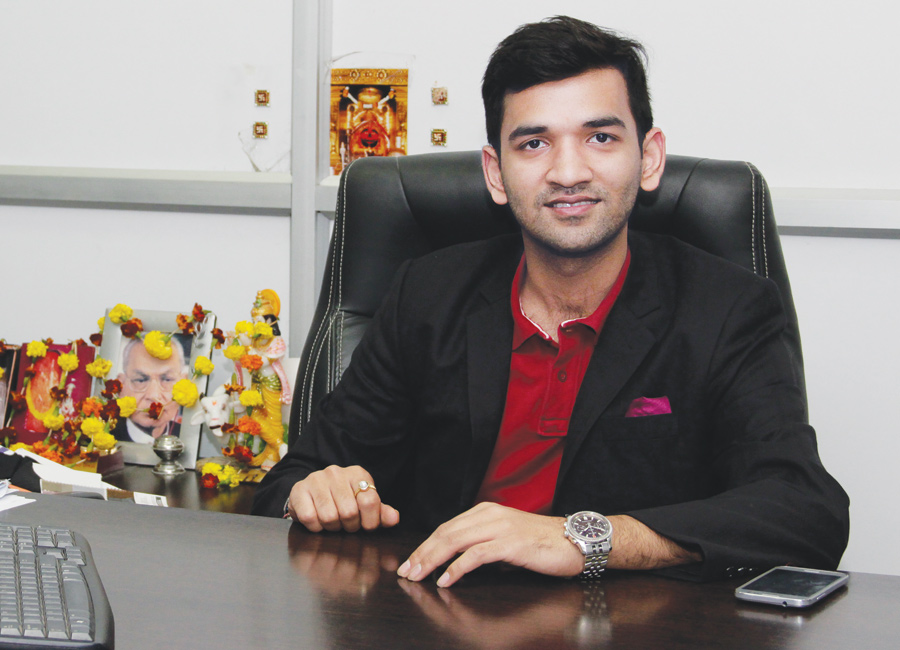
As the lines of dress code blur further, after jeans, it is the turn of sweatpants and leggings to push the frontiers. Having won acceptance across the globe for their versatility and comfort about half a decade ago, today the product category of leggings has a ripe market bubbling with variants in stretch, construction and colours. A pioneer in this product category Shivam Sonthalia, Director of the Kolkata-based Shivam Creative forayed into the domestic market with leggings around the year 2010. “It was a phase when people were changing from pyjamas to chooridaars,” he recalls. In an exclusive interaction with StitchWorld, Shivam unveils how his enterprise today is manufacturing leggings in a total of 200 colours…
Around 2010, there was only one company manufacturing leggings for the domestic market, and to a great extent enjoyed a monopoly because that was the only company to challenge the market and competition with a palette of 50 colours. “We got a huge response and I can proudly say that we were the frontrunners in the organized sector for leggings. Right now everyone is into leggings – any entity you name – be it Amul, Dollar, Lux or Rupa, but being the frontrunners, our brand TSG Bliss continues to enjoy an edge in the market,” claims Shivam. The market for leggings has not shrunk, but instead has grown over the time as it has become a basic wear for every woman.
To stay ahead of the game, the company now offers 130 colours and the palette is set to expand to 200 colours in the coming few months. If one deconstructs the challenges associated with the situation, it is evident that such a large colour palette poses huge challenges of inventory holding and with it the working capital. “The minimum dye lot is of 200 kgs which is equivalent to 1,000 pieces. So if I plan to add 70 more colours, I will be adding 70,000 pieces. Currently, we’re maintaining an inventory level of 4-5 lakh pieces every single day, which is set to go up substantially,” Shivam shares. Maintaining colour continuity is another challenge since a slight shade variation could perhaps mean that the shade is enlisted on the Shivam Creative’s colour chart as an entirely distinct colour. Besides, with 100 per cent cotton knits, the shrinkage percentage varies from colour to colour,” informs Shivam.
The various shrinkages are managed by maintaining patterns colour-wise. What simplifies the conundrum is an astute construction of leggings which literally is a ‘one size fits all’ solution through a back yoke.
The challenges of using 100 per cent cotton has been controlled by making use of a special yarn construction – a 40s yarn knitted twice (equivalent to 20s single) – but more compact and strong. Following dyeing and heat setting, the fabric becomes more stable.
“I still get a premium rate because I am a frontrunner, but times will get tough and the premium will dissolve,” says Director of the company. Bracing for the future, Shivam is now looking at creating a corpus of demand and eventually in a year or two outsourcing the manufacturing to focus on brand building and marketing. Another area of growth which the company envisages is through offering designer leggings like shimmer leggings, carbon lycra, jeggings, interlock and rib.
Critical manufacturing for better control on product
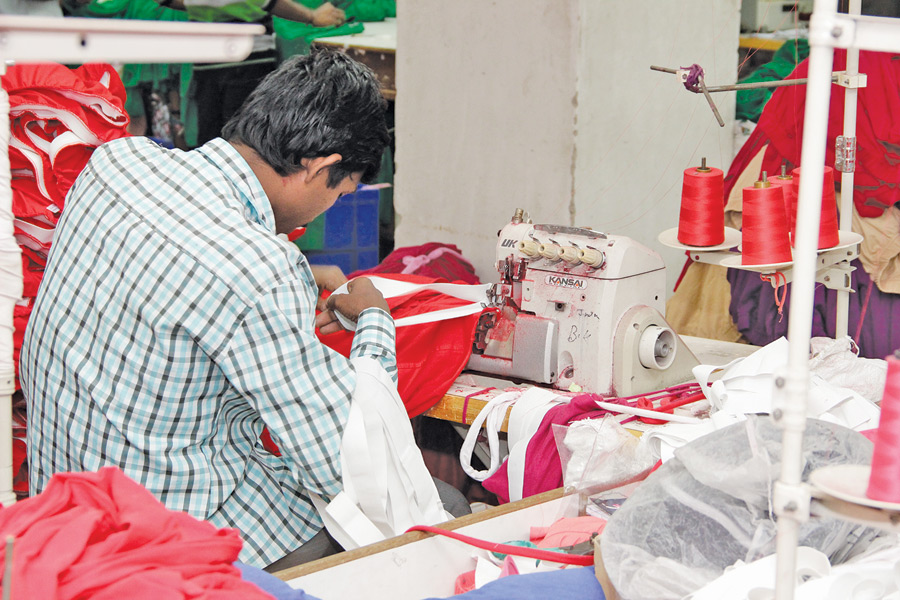
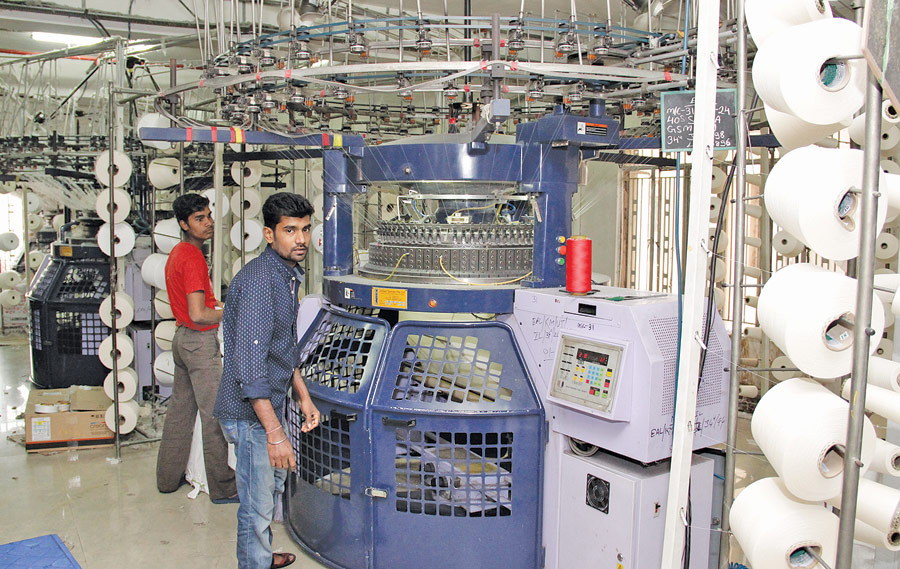
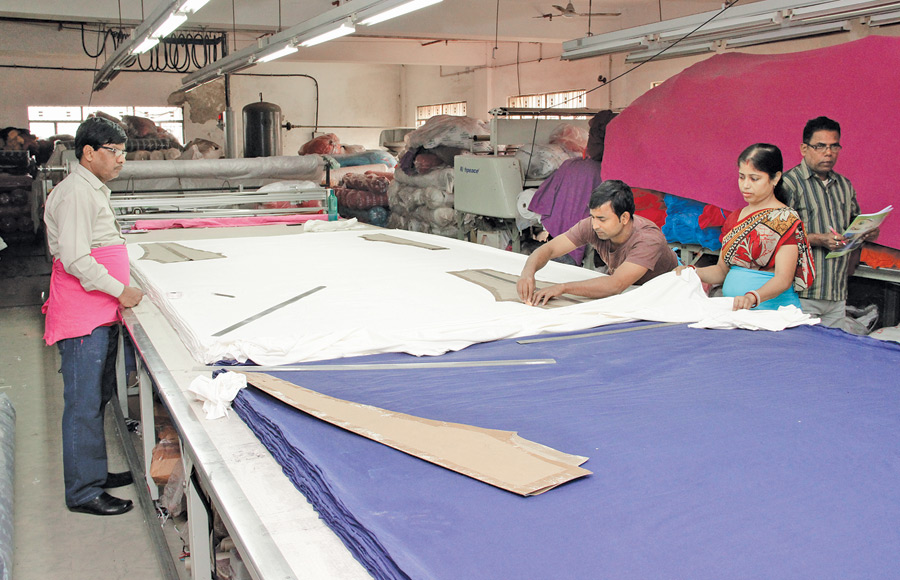
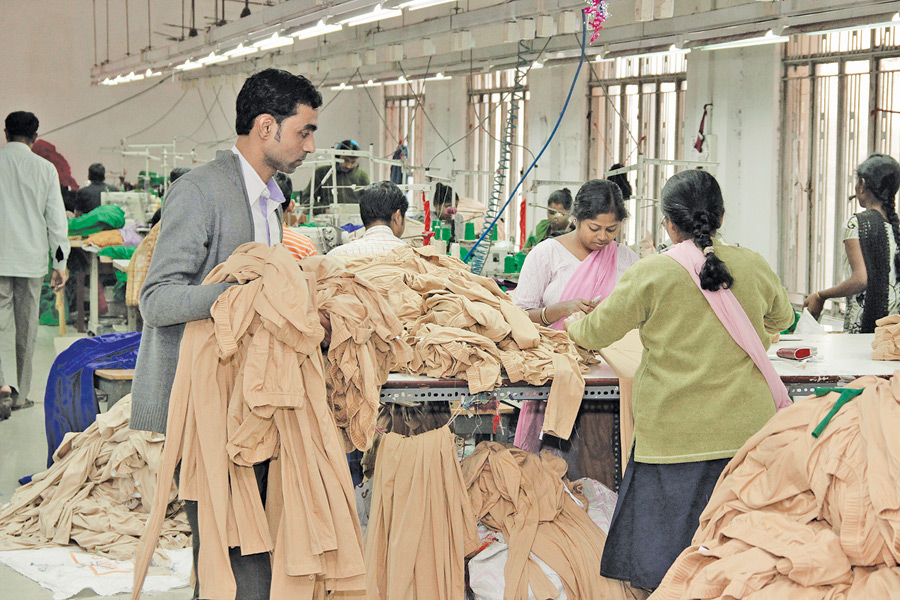
Shivam Creative’s 80 per cent business is dedicated to leggings, which it markets through retailers such as Globus, MegaMart, Reliance, Amul, and Mohe whereas the balance capacity is used for manufacturing polo T-shirts, track pants, shorts, T-shirts, harem pants, etc. Producing close to a million leggings every month, Shivam has a composite setup, integrated right from knitting, cutting, sewing, finishing to finally packing. The knitting setup is composed of 38 circular knitting machines – 6 from Terrot, 8 seamless knitting machines from Santoni, and 24 circular knitting machines from Knitech. In base materials, Shivam Creative is today manufacturing two qualities – alternate feeder (interlock knit) and all feeder (single jersey). The cutting room is largely automated with one fully-computerized auto spreader, and another semi-computerized spreader and auto cutter – all from Richpeace alongside a marker planning software from the same company. The sewing room has the best of Japanese technology with 700 machines from Brother and Juki.
With an impressive line-up of machines in the house, it is quite peculiar that Shivam Creative does not intend having a dyeing unit under its aegis. Shivam explains why: “There are a lot of issues attached to owning a dyeing house. It begins with having the requisite land, getting environment clearances and finally feeding the capacity, takes away the focus of the company from marketing to manufacturing.”
How success came through?
Shivam Creative’s success has come on account of its built-in efficient capabilities. “We are amongst the very few companies which have aced 100 per cent cotton despite it being a tricky fabric since it has a property of uneven shrinkage and fabric twisting. To control that we do a special construction of yarn – a 40s yarn knitted twice (equivalent to 20s single) – but more compact and strong. Following dyeing and heat setting, the fabric becomes more stable. Dyeing and heat setting it makes it a high quality product,” he shares.
Shivam also accredits the water in Kolkata, used for dyeing, which gives a certain sheen to the fabric. “We’ve a natural edge over others. We’re one of the few suppliers to have been able to tap the big brands,” he concludes.