Since long, smocking has been a trendy fad that showed up invariably as an elasticized patterned panel on a little girl’s dress. A baby’s dress favourite, smocking survived through a time when the fashion world forgot about…, but in the last few seasons, designers have rediscovered this traditional technique and are parading it down the runways once again. Owing to its aesthetic appeal, simplicity and usefulness, smocking has become very popular for use on lingerie, womenswear sleeves, skirts and many other articles. Witnessing the same, exporters are making a conscious effort of producing value-added products in line with this ongoing trend, making smocking the must-have technique for summer collections…
Among the many fabric manipulation techniques that not only adorn the garments with a fresh touch but also steps aside from the monotony of prints and embroideries, smocking is emerging as one of the favourites followed by pleating. Of peasant origin, smocking is a decorative means of gathering a wide piece of material into a required measurement, which might or might not provide elasticity. Smocking has always been India’s strength as Indians have excelled in executing this European technique. With the global fashion scene looking for eye-catchers, product development teams are busy developing innovative smocking concepts for that one exclusive ‘look’ that creates the ‘wow’ factor. Supporting the popularity of the trend are some smocking/ pleating machines which help to create design impact at low cost, thus making smocking a major hit with exporters.

The major leap that smocking as a technique has taken is to become more visually appealing. “Being a fabric manipulation technique, the industry has always looked at smocking as a more functional method of giving added movability and elasticity to a garment. But now with designers exploring smocking as a visual pattern, exporters have also started to manipulate smocking in different ways,” says Roshan Choudhary, Creative Director, Roshe – Handmade & Heartfelt Clothing. Earlier smocking was strategically placed in areas of a garment where flexibility was required like waist, chest, puffsleeve hems, etc. However, now smocking has crawled up to necklines and is adorning wrist and knee length hems.
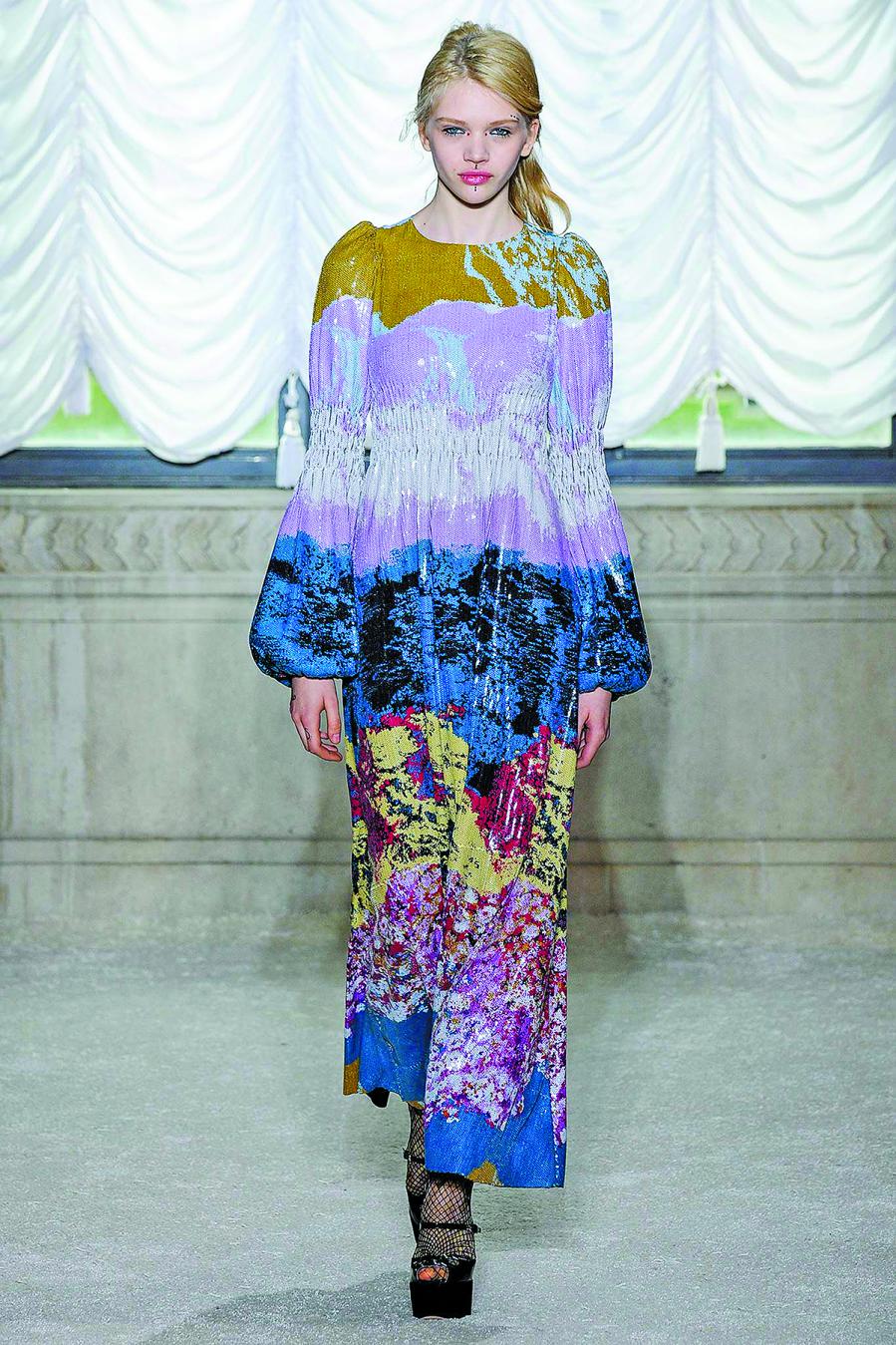
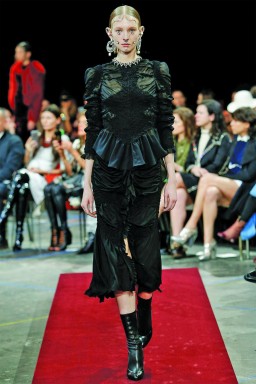
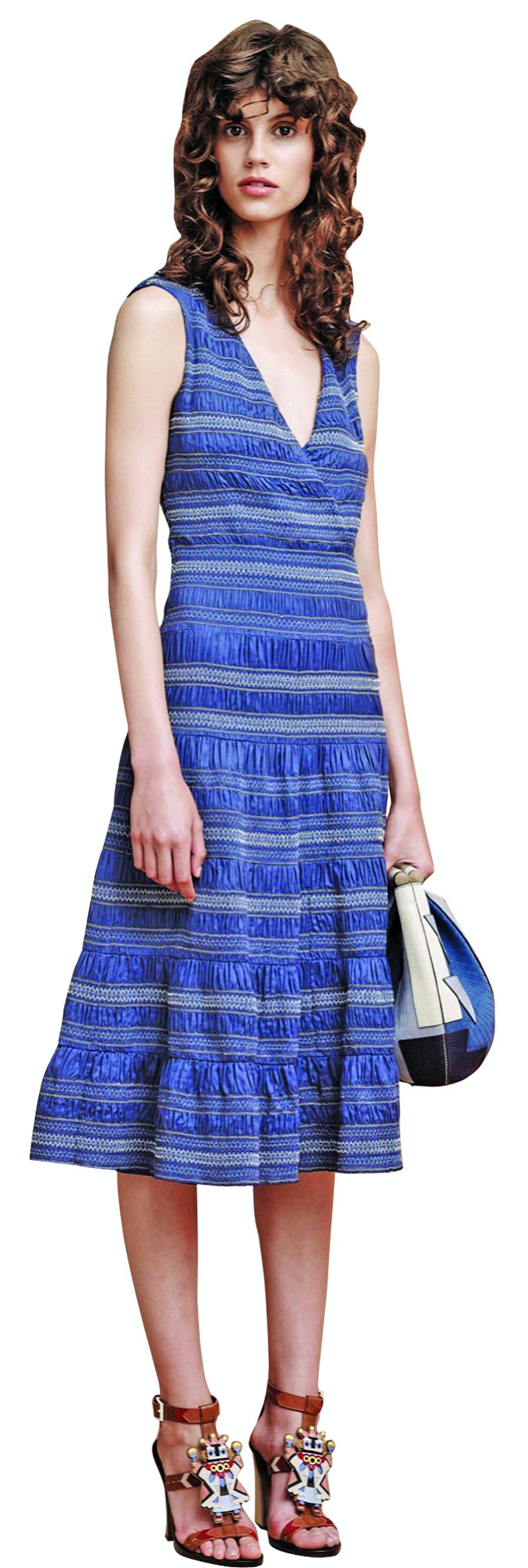
Witnessed on the runways of Fall ’15 and Resort ’16, designers created wide varieties of amalgamated looks from smocked fabrics which enhanced the collection’s aesthetic appeal. Be it pleat mimicking smocking application seen at 3.1. Phillip or 3D lattice smocking pattern on blouses and dress hems presented by Carven, examples are many. Giamba and Philosophy di Lorenzo Serafini went the archetypical way and garnished their maxi dresses with smocked waist and elbows, whereas Givenchy gave smocking an out of character look by combining opaque and transparent fabrics smocked in distinct techniques. Paco Rabanne also tried his hands on smocking by inducing smocked panels of 4-5 inches on his knee length skirts. Amalgamating the best of both worlds, Tory Burch created dresses with continuous panels of gathered and smocked fabrics. Amongst the many concepts, shell smocking emerged to be the front-runner and is all set to add to the textural temperament of S/S ’16.
Witnessed on the runways of fall ’15 and resort ’16, designers tried and created wide varieties of amalgamated looks from smocked fabrics which enhanced the collection’s aesthetic appeal.
Manoeuvring between the dots or corners of the grid with thread and holding stitches can create different effects depending on the path taken. Smocking patterns can range from diamonds to flowers, from the herringbone pattern to the latticework, among a host of other patterns. These types of patterns are commonly chosen by what type of garment the smocking effect will appear on. Where kid’s clothing are concerned, especially infant and toddler wear, commonly featured are stitches in contrast effects, but for womenswear the smocking is used more tone-on-tone, tightly packed and more origami like in styles which demand an added 3D effect. Namrata Duggal, Kokeva Designs explains why, “We are mostly experimenting with embroideries and garment washes, which require addition of a valueaddition technique that adds to the look but does not take away the beauty of the wash. We are doing skirts and tops in cotton lycra, and we are adding smocking, shirring and gathering on the waist bands and sleeves for an extra punch on design.”
Since smocking was at first simply utilitarian in use, therefore the original patterns were simplistic and targeted at performance value. Today, the smocking designs used by exporters are not only simplistic, but also distinctively decorative. Techniques like the beaded diamond smocking concept are still used for creating glittery and flexible surfaces. Mostly used in skirts, different sequins run on top of the smocking whereas the base thread runs on the opposite, creating an attractive surface with beaded effect, giving a futuristic and rich look. Creativity has no boundaries, and with smocking techniques spreading its wings, simple cable stitches, stem stitches, wave stitches, honeycomb stitches, trellis stitches and bullion stitches are giving the technique of smocking a further scope of expanding as a design element.
Another reason why smocking is increasingly becoming the technique of the season is its quality of draping well with lightweight fabrics. Summer fabrics like rayon, poly-cot, modal blends, nylons, cotton voiles silk and viscose, due to their openness and weightlessness gather pretty well, which in turn adds on to the gathering look of smocking, and attracting the exporter’s interest as they give wide options to play with the fabric as a medium of design. “The requirement for more comfortable clothing is arising, and to go in line with that, value additions which are flexible in nature have to be taken on board while developing a collection. Lightweight fabrics have a good drape and fall, and feel like you’re wearing ‘next to nothing’, and therefore reciprocating to what is in demand, smocking is back in business,” says Nandini Pal, Designer, Bershka, ITX Trading SA, INDITEX.
Another interesting development to be noticed nowadays is the expansion of smocking as an all-over design. Moving ahead of only being a patched design or limited to areas requiring flexibility, all-over smocking on dresses and tops can be seen now adding to its increasing popularity. Agreeing with the growing demand of smocking in the market, Rajesh Kumat, Director of Ganga, and exporter of readymade garments shared, “We experiment a lot with fabric manipulation to go with our USP, which is thread embroidery. We are doing shirring, and smocking with elastic stitching for waistbands and all-over smocking on dresses and tops.” Embossing at Roberto Cavalli, be it a high-waist midi silk skirt, a floor length chiffon dress, or a subtle accent on an ensemble, diverse varieties of smocking are bringing a touch of graceful fluidity and movement into garments, while also providing it with a touch of flexibility.