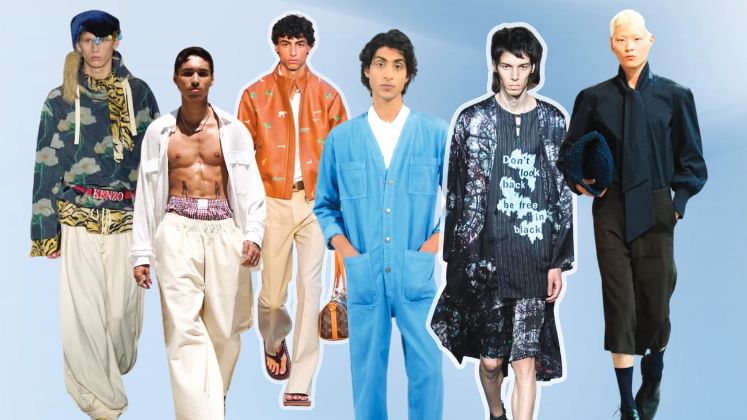
The Spring/Summer 2026 menswear season proceeds to blur the lines between streetwear and classic tailoring, resulting in collections that reflect both sartorial structure and self-expression. The message is clear: growing up doesn’t mean giving up on play.
Across global runways, this evolution is evident in pieces that blend formality with wit. Workwear suits nod to factory-floor functionality while being styled with ease with shirts and ties layered under loose overalls, finished with sandals or beanies. There is a subversive use of visible boxer shorts under low-slung trousers that offer a playful yet purposeful nod to the intersection of nostalgia, comfort and cool.
Neckerchiefs styled as lavallières in matching tones, bring elegance to relaxed silhouettes, while statement belts with oversized monogrammed buckles or slogans pose as conversation starters.
Even all-over prints have scaled down, inviting closer inspection and revealing graphic narratives in hidden-object-like patterns. And for those who wear their thoughts on their sleeves, slogan tees make a return, with text that feels straight out of Tumblr-era wit and WhatsApp one-liners. In a season that celebrates bold styling choices, the statement belt poses as both throwback and trend-forward – a small accessory delivering oversized personality.
Spring/Summer 2026 doesn’t abandon youthfulness – it refines it.
Amidst a world weighed down by uncertainty, designers are choosing to balance grown-up polish with a wink of humour, proving that menswear can be both self-aware and sharply dressed.
Read along to discover the key trends shaping the menswear narrative for the season:
Boxer Shorts
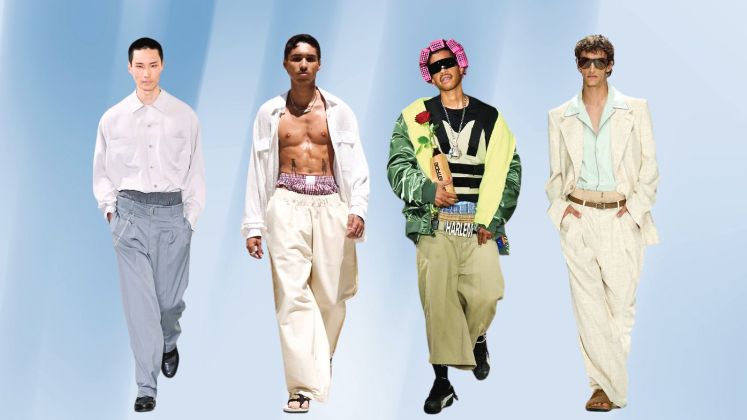
In a nod to ’90s hip-hop nostalgia, boxer shorts are stepping back into the spotlight and are updated with a fashion-forward twist to suit the season. As trousers continue to fall lower on the waistline, boxer shorts are becoming more than just an undergarment peeking through to a visible, styled element in the new-age wardrobe.
What began as a subcultural streetwear statement is now finding resonance across luxury and contemporary fashion. Études and Dolce & Gabbana have reinterpreted the look, with the former showcasing puffed-up boxers styled with tailored separates that add a youthful irreverence to polished dressing and the latter embracing the contrast by pairing visible boxers with traditional suiting – demonstrating that the trend can play well with classic tailoring when styled with intention.
The appeal lies in the unexpected juxtaposition where formality meets street-casual codes and comfort meets attitude. Whether layered under oversized trousers or worn high and cinched with sharp blazers, boxer shorts are emerging as both a design detail and a styling tool. Their exaggerated waistband, voluminous shape and utilitarian fabrications bring texture and personality to otherwise structured looks.
For brands, incorporating boxer shorts into upcoming collections offers an opportunity to tap onto the burgeoning Gen Z and Millennial market who value both irony and individuality. Look towards developing designs that feature standout prints in soft cottons or luxe materials, allowing versatility across categories ranging from loungewear and resort to urban daywear.
All-over prints but make them small
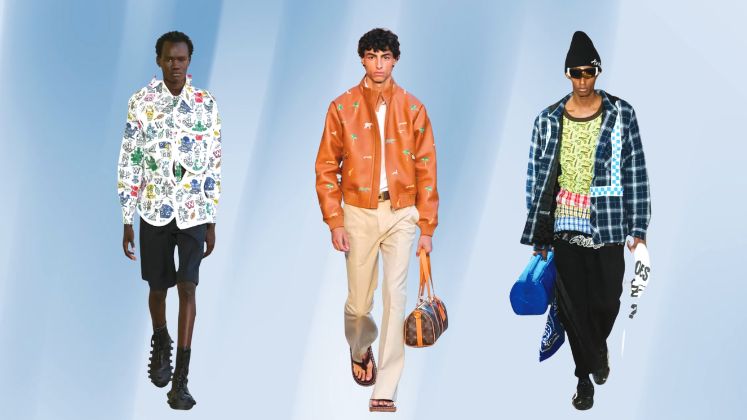
For Spring/Summer 2026, all-over prints are making a return while bidding adieu to bold, oversized motifs. The new season sees prints get an update with miniature graphics and micro-illustrations taking centre stage, offering a fresh, intricate visual language.
From jackets to T-shirts, designers are embracing repetition as a design strategy, turning simple, small-scale motifs into compelling surface stories. From opting for multiplied single graphics creating rhythmic, almost meditative patterns, to a more eclectic route that combines various mini illustrations to form dense, hidden-object-style compositions that blur the line between fashion and visual art – the options are endless.
This season, the power of print lies not in scale—but in storytelling, subtlety, and surprise.
The trend encourages playful storytelling and hyper-personalisation, both of which resonate strongly with Gen Z and Millennial consumers who seek individuality in the details.
For labels looking to refresh their print language without leaning into loud graphics, this trend offers a subtler yet equally impactful alternative. Think scattered sketches, repeat icons, and collage-like prints that draw the viewer in rather than shout for attention.
The Neckerchief
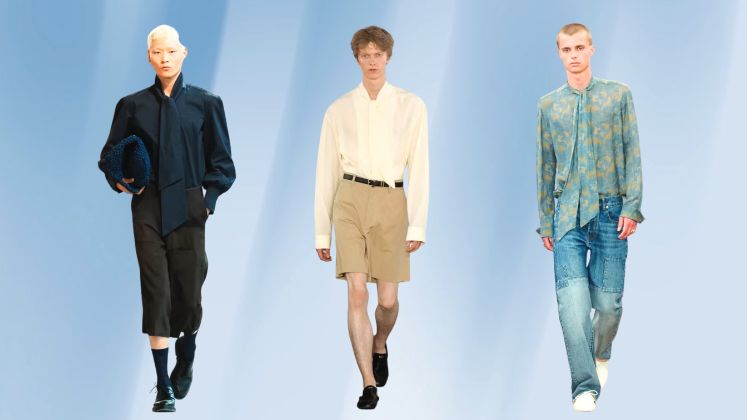
Neckerchiefs reclaim their position as a defining menswear accessory, evolving from a retro design element into a modern styling essential fOr SS’26. Whether tied tightly or left loose, this short scarf adds an understated sophistication to casual dressing, offering an alternative to traditional neckwear without the stiffness of a classic tie.
This season’s runway iterations go beyond the usual bandana styling, introducing the lavallière scarf (essentially a refined hybrid between a silk scarf and a tie, recognisable by its slanted ends and fluid drape). Brands like Wales Bonner, System, and Orange Culture Nigeria embraced this new silhouette with subtle flair, tying the scarf loosely around the neck and matching its tone to the shirt beneath.
The result? – A seamless, monochromatic accent that whispers elegance rather than shouting for attention.
Neckerchiefs open styling opportunities by accentuating an open-collar shirt with quiet confidence, softening a utilitarian jacket, or elevating a plain tee with Parisian polish. For designers and retailers, it presents a low-lift, high-style accessory that lends itself to endless customisation whether in tonal silks, printed cottons, or sustainable blends.
This further taps into the growing appetite for gender-fluid styling and subtle self-expression, making it a smart addition to SS’26 collections across both casual and semi-formal offerings.
Workwear suits get a tailored rework
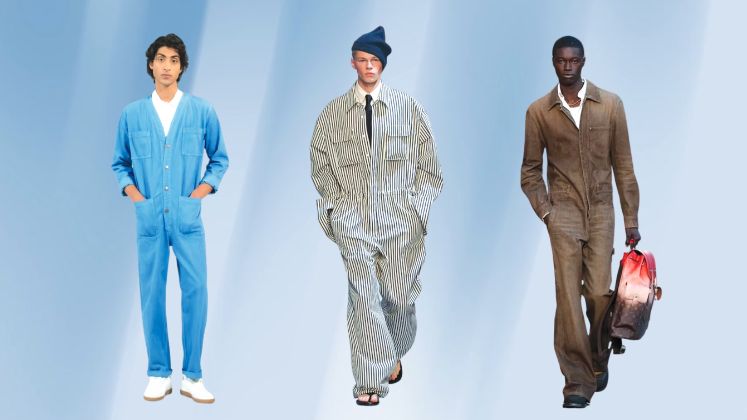
Workwear continues to dominate the streetwear-meets-classic wardrobe space, but for Spring/Summer 2026, it is being refined with a more sartorial twist. The utilitarian roots are still visible in terms of overalls, durable fabrics, and functional silhouettes, but are being paired with polished elements for the season, creating a hybrid look that merges industrial grit with gentlemanly flair.
The runway was awash with one-piece suits and overalls taking on a more structured, fashion-forward approach with cuts ranging from straight and utilitarian to relaxed and draped, depending on fabric choice, moving beyond heavy-duty canvas into lighter cottons and blends. Styled with crisp shirts and even ties tucked under zippers, the look nodded to factory floor attire while stepping confidently into modern day streetwear.
Workwear suits signal a strong commercial opportunity for brands by blending the timeless appeal of workwear with the tailoring and versatility of classic suiting. This silhouette speaks to comfort, function, and style – ideal for consumers seeking statement pieces that don’t compromise on ease or utility.
Slogans and Phrases
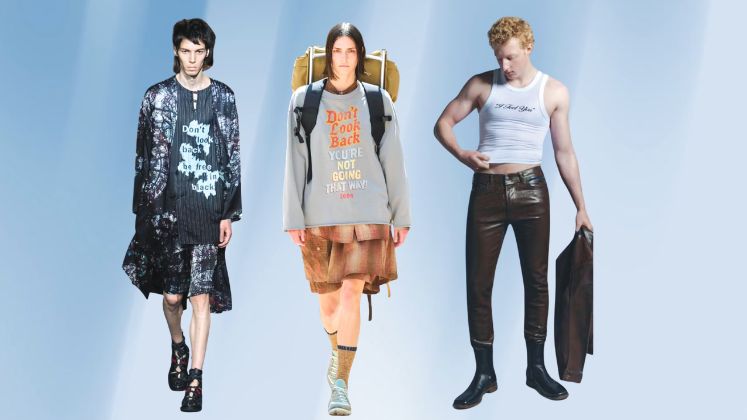
This season sees the return of slogans and phrases with a louder, cheekier, and more culturally aware approach. We witness a playful detour into social media sarcasm and digital-era wit, reviving the Tumblr-esque aesthetic of the early 2010s but with a sharper, more self-aware twist. These phrases, often resembling WhatsApp statuses or wall art quotes, are stamped boldly across otherwise minimal garments letting the text do all the talking.
The key to this trend is intentional simplicity, with designers opting for clean silhouettes that range from oversized tees, sweatshirts, to tanks and using neutral bases to ensure that the slogan commands full attention.
The messaging ranges from ironic and humorous to cryptic and provocative, allowing wearers to signal mood, identity, or social commentary with a single glance.
While designer Mihara Yasuhiro didn’t embed the motif into his mainline collection, he underscored its cultural relevance by walking the runway himself in a grey T-shirt emblazoned with “Don’t Tag Me” in bold yellow type – a perfect example of how these phrases blur the line between fashion and digital self-expression.
For brands, slogans offer a low-investment, high-impact tool to connect with younger consumers, especially Gen Z, who gravitate toward apparel that speaks to their mindset in a shareable, statement driven format. Beyond graphic tees, the trend can be applied across knitwear, outerwear linings, accessories, and coordinated sets, making it versatile and commercially viable.
In a season where personal expression is king, these wearable captions invite consumers to wear their thoughts, moods,and memes in an unfiltered, unedited, and current fashion.
Statement Belts Make a Loud Comeback
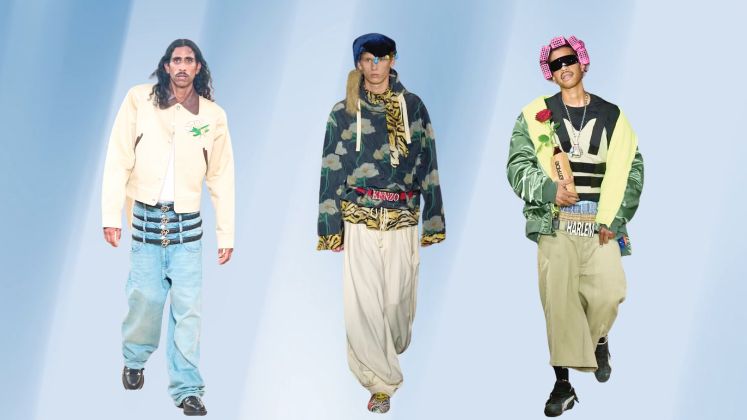
SS’26 confirms that belts are no longer just functional, and are being reworked upon to pose as conversation starters.
Riding on the success of the ongoing Y2K revival, statement belts with oversized buckles are stepping back into the spotlight, bringing with them a touch of nostalgia and a bold dose of attitude. This time, the focus is on custom lettering and expressive slogans, turning the belt buckle into a wearable message board.
Where trucker style belts led the comeback in recent seasons, the latest iterations push the envelope further by featuring monogrammed initials, full words, or graphic motifs, acting as both accessory and personal declaration.
The trend taps directly into the Y2K aesthetic that is visibly playful, slightly brash, and designed to create an impact. For brands, this is an opportunity to revive accessories with an expressive edge. Belts can be stylised with bold logos, metal typography, or even light-up details for those leaning into the nostalgia of early digital fashion. Think of them as the new-age logo tee – just worn at the waist.