Mimaki announces unique hybrid printer for flexible textile printing

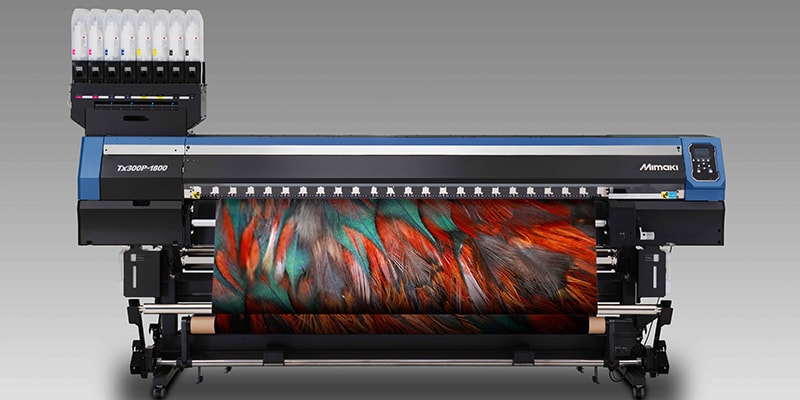
Mimaki Tx300P-1800
Image Courtesy: mimakieurope.com

Mimaki, a pioneer in manufacturing of wide format inkjet printers and cutting plotters, has announced that it has updated its Tx300P-1800 and Tx300P-1800B direct-to-textile printers, to load both textile pigment and sublimation dye inks. The hybrid ink system for the Tx300P-1800 and Tx300P-1800B direct-to-textile printers will be commercially available from the summer of 2017.

This will enable use of a single printer to print directly on a wide range of textiles without the need to change ink systems. The latest technology is seen as a breakthrough that will improve productivity and increase flexibility for these Mimaki textile printers.

“Recently, in the textile and apparel markets, quick deliveries and short, customised production are becoming increasingly important. This new system is specifically designed to address this need for cost-effective short run printing of textiles for products or samples,” said Ronald van den Broek, General Manager Sales of Mimaki Europe, adding, “It means that producers can switch fabric types quickly and easily, selecting the appropriate ink system for each fabric. And these inks do not require usage of water or steaming in the post-treatment process, making them environmentally sustainable as well.”

Also ReadMimaki launches UJV55-320 LED-UV inkjet printer

The company states that it understands the need for an affordable printer with a compact footprint for these users, and it moved swiftly to address this need with a very unique approach. As digital textile printing continues to gain traction, placing these printers in design and educational environments will help educate more people about the possibilities presented by on-demand printing of textiles and spur further demand for digitally printed textiles.


 

Lindex uses ‘cleanest’ dye for its denim range

Lindex
Image Courtesy: lindexgroup.com

Lindex, a European fashion chain, has stated that almost all of its denim assortments (about 90 per cent) are now being dyed with the ‘cleanest’ indigo dye which is better for the environment and the people working with it, the company claims.

The company’s denim range is dyed using DyStar Indigo Vat 40 per cent Solution. The dyeing process has a lower environmental impact: saving water, energy and chemicals. “We work on reducing the environmental footprint in all parts of our denim production, from fibre to finished product. We are proud to have taken this big step in the dyeing process, which stands for a major part of the impact for both workers and the environment. We will continue our denim journey and we have more great things to come,” says Anna-Karin Dahlberg, Production Sustainability Manager, Lindex.

Also ReadLindex – Amongst top users of organic cotton: Textile Exchange

It may be mentioned here that cleaner denim production is part of Lindex’s denim journey. The company aims to make 80 per cent of all its processes more sustainable by the year 2020.


Euratex President unveils his ambitions for EU T&C sector

AmbitionsThe newly appointed President of Euratex, Klaus Huneke, believes that working in coherence and as a team with the entire membership along the strategic priorities, namely trade, innovation and sustainability, would bring better results for the textile and apparel industry.

Sharing his ambition, Huneke said, “The textile and apparel industry needs more and better Europe to maintain its competitiveness ahead of the world competitors. It will be our task to make clear to EU policymakers the value of maintaining strong, innovative and competitive textile and clothing value chains in Europe. I hope under my Presidency to convince to have greater coherence among policies and to favour targeted and efficient support more in line with textile and clothing companies’ needs and capabilities.”

The Euratex Chief is of the view that the EU textile and clothing companies should take advantage of the opportunities offered by the association, in terms of innovations and tools developed to help SMEs to improve their competitiveness.

Also ReadEuratex’s new President assumes charge

In addition to this, the association will keep supporting regional initiatives that it has taken lately, such as RegioTex to enhance the growth of the European textile and clothing industry.


Utenos Trikotažas joins Greenpeace Detox initiative

Greenpeace
Image Name: greenpeace.org

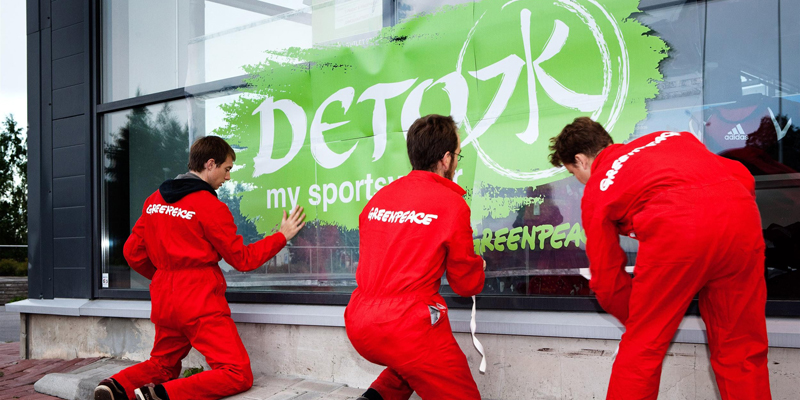
Central and Eastern Europe’s largest and one of the most modern knitwear manufacturers, Utenos Trikotažas has officially joined the Detox campaign of Greenpeace. The company has committed itself to eliminating by 2020 any raw materials that are likely to have adverse effects on humans or the environment from its production chains at all stages of the product life cycle, from the start of production to sorting and recycling of clothing.

Greenpeace has been actively fighting pollution in the textile industry from 2011.

The campaign involves 78 companies from all over the world, including apparel brands like Valentino, Benetton, Levi’s and more. Utenos Trikotažas is the first Lithuanian company to join this campaign.

“Ever since 2012, the strategy of Utenos Trikotažas has been focused on higher value-added, Eco-friendly and high-quality products. We have strong customers who value innovative materials and see environmental protection and the effects of the products they buy on the nature in a broad sense as issues of relevance – this is a growing global trend, and we have been consciously and consistently preparing for it,” highlighted Algirdas Šabūnas, CEO at Utenos Trikotažas.

Also ReadSupermarket Kaufland joins ‘Detox campaign’ by Greenpeace

It took several years for the manufacturer to prepare for joining the Greenpeace initiative. Since 2014, it has invested in a variety of laboratory tests and trials, with its professionals devoting a lot of time to reviewing all the production chains and carrying out regular comprehensive assessments of suppliers. The Detox commitment will add to the certifications earned by the company so far in recognition of abode-friendly and socially-responsible production.


Business keyboard_arrow_right Retail keyboard_arrow_right News

Zalando breaks € 1billion barrier in Q4

Zalando
Image Courtesy: zalando.it

Zalando, Europe’s leading online fashion platform, reported its revenues worth Euro 1,086-1,094 million, up by 25-26 per cent in the fourth quarter of fiscal 2016 as against Euro 868.5 million in the corresponding period last year. In the reporting period, it achieved an adjusted EBIT of Euro 81-104 million compared to Euro 71.8 million in the comparable period prior year.

Also, in full FY 2016 Zalando achieved a growth of 22.9-23.1 per cent in group revenues amounting to Euro 3,633-3,642 million compared to last year’s Euro 2,958 million. Profitability improved substantially, with adjusted EBIT approximately doubling to Euro 202-225 million compared to prior year’s Euro 107.5 million.

“We have completed a successful 2016. For the first time, we broke the billion-euro revenue barrier in a single quarter, a clear result of our customer focus. We will continue to emphasize growth and further invest behind an ever-improving customer experience across all our markets,” said Rubin Ritter, Co-CEO, Zalando.

Also ReadAbercrombie & Fitch partners with Zalando

The etailer intends to open a satellite warehouse in Sweden in current year, similar to its satellite warehouses in France and Italy. The facility aims to further improve Zalando’s customer proposition in its important Nordic markets in Sweden, Norway, Finland and Denmark.


EURATEX kicks-off eBIZ 4.0 to digitalize European fashion supply chain

eBIZ 4.0
Image Courtesy: diariosigloxxi.com

EURATEX – the European Apparel and Textile Confederation, has launched eBIZ 4.0 to digitally integrate at least 100 European companies, notably the SMEs, from production to retail, by combining the benefits of the eBIZ digital language with RFID and NFC technologies.

The goal is to bring benefits of IT tools mostly used in large fashion businesses within the actual reach of small and medium companies to improve product traceability, time to market, warehouse management and digital data exchange throughout the supply chain as well as the connection with suppliers and customers. This will be achieved by applying RFID and other communication technologies with eBIZ, the European standard for digital data exchange across the fashion value chain.

Also ReadBritish retailer New Look backs supply chain managing software – Fabacus

The new project eBIZ 4.0 starts in 2017 and will deliver early results supporting the European fashion companies, notably the SMEs, from production to retail, to digitalize the way of working. The 24 months’ project has an overall budget of around Euro 1.5 million and has been awarded a 50 per cent costs co-funding by the European Commission through the programme COSME which supports the SMEs competitiveness.


EURATEX urges European Commission to act on China trade barriers

Trade
Image Courtesy: vipllogistics.com

EURATEX – the European Apparel and Textile Confederation – voice of the textile and clothing industry in Europe, has urged European Commission to “strongly act” and clarify its position on investigating anti-subsidy proceedings against China and on tackling barriers to trade in the country. The association reiterated that China does not meet the five criteria required to qualify as a market economy.

The association highlighted that the European Commission’s proposal to change the AD-AS legislation and introducing the concept of “significant distortion” may open a lot of uncertainty for the European companies. Some of the concerns that can arise are WTO compatibility, the drafting of the reports, the burden of proof, the management of the transition period, the timetable for adoption of this proposal and the subsequent reaction of China.

Also ReadEuratex’s new President assumes charge

Euartex also underlined the necessity to address sectoral problems through dedicated initiatives for issues like tackling barriers to trade in China, protecting IPR, ensuring stability of raw material prices and addressing over capacities remain. It also suggested DG Trade to set up a specific task force on over capacities in man-made fibres and yarns.


Knitted apparel exports to EU positive in first nine months of 2016

Knitwear Exports
Image courtesy: dailyrecord.co

In the nine-month period ending September 30, 2016, total knitted apparels exports to the European Union (EU) has seen a positive trend with quantity increasing 6.28 per cent to 1.97 billion kg as against 1.86 billion kg in the year earlier period. Though values were marginally up by 0.08 per cent to Euro 30.23 billion versus Euro 30.20 billion in the first nine months of 2015.

The countries that majorly exported knitted garments to EU include Vietnam, Pakistan Bangladesh, India, among others. Among these countries, Vietnam’s export of knitted apparels were up 18.25 per cent to Euro 680.10 million as against Euro 575.16 million last year. It was followed by Pakistan which registered 13.34 per cent surge to Euro 803.33 million in its knitted garments exports to the EU.

Also ReadBan possible on EU and US clothing imports

In bulk, however, Bangladesh saw an increase of 6.19 per cent to Euro 6.49 billion as compared to Euro 6.11 billion during the same period of 2015. Second to Bangladesh was India with knitted apparels exports rising by 1.19 per cent to Euro 2.04 billion in comparison to Euro 2.01 billion in the corresponding nine months of 2015.


Euratex’s new President assumes charge

Klaus Huneke
Image Courtesy: twimg.com

Klaus Huneke, who holds an extensive international experience in the textile industry, has assumed charge as new President of Euratex (The European Apparel and Textile Organisation) for a two-year term. He succeeded Sege Piolat, who headed the organization during the last two years.

“Serge Piolat achieved impressive results in strengthening the voice of the European textile and clothing industry. To further enhance our industry, my intention is to focus on few strategic priorities such as better communication towards policymakers and stakeholders on the excellence of our innovation and sustainability, enhancing EU competitiveness and greater participation of companies in innovation,” Klaus Huneke was quoted as saying in a statement issued by the organization.

Also ReadTEXPROCIL appoints new Chairman

Huneke previously served the role of CEO at Heimbach, a large technical textiles producer in Germany. He was also the Vice-president of the German textile employer’s association and has also been actively involved in representation of textile and clothing industry at the European level, acting as a Board Member and Vice-President Treasurer of Euratex.

Euratex is a non-profit organisation based in Brussels, Belgium engaged in promotion of the European textile and apparel industry.


Labfresh launches odour, stain and wrinkle repellent shirts

Labfresh
Image Courtesy: ksr-ugc.imgix.net

Labfresh, an EU-based fashion brand, has introduced performance wear for the workplace with a premium cotton shirt that is soft, breathable, odour, stain and wrinkle repellent.

The INDUO® technology blocks out all fluids and bacteria before it enters the fabric. Almost any substance can be rinsed off with ease. The fibres are treated with the technology before it is spun into the fabrics, unlike other existing technologies where it is added as a surface coating.

Also ReadVietnamese fashion brand launches new yoga clothing line

The patented technology enables cotton fibres to repel water, oil and bacteria. Additionally, the temperature difference between wearer’s body and outside temperature enables the sweat to evaporate from the fabric, thus leaving the wearer and fabric dry. Though not 100 per cent waterproof, it repels substantial amount of liquids and dry up extremely fast.

The shirts are made from the softest cotton with 2 per cent elastane for maximum comfort.

TexClubTec launches project to boost fashion apprenticeships in EU

Fashion Student
Image Courtesy: ecetravel.com

TexClubTec, Italy-based association which aims for development and promotion of technical textiles and innovation, along with eight project partners, recently hosted the launch of the newly ERASMUS+ KA3 project TEXAPP at its premises in Milan, Italy.

The project titled ‘Integrated Strategy Initiative for Strengthening the supply of APPrenticeships in TEXtile sector’, coordinated by EURATEX, addresses the issue of apprenticeships delivery in the fashion sector dominated by SME’s and micro enterprises. The objective of TEXAPP is to foster and strengthen the supply of apprenticeships for SME’s and micro enterprises active in the sector through the close cooperation between Euratex and its partners – members and affiliates.

TEXAPP project partners will create and provide a structure and tools oriented towards the textiles and clothing sector considering the SME’s needs and obstacles they face in this regard through close cooperation. The sectoral tool package to be developed aims at assisting SME’s in setting up, planning, delivering and ensuring the quality of their apprenticeships, including apprentice assessment.

Also Read – EURATEX promoting silk via ‘Towards European Sericulture’

Additionally, the project will act and produce targeted tools for pooling resources, sharing information, exchanging knowledge, developing ideas and learning from each other’ experiences.

The other project partners include The Huddersfield and District Textile Training Company, UK, Pirin-Tex EOOD, Bulgaria, Centro Tecnologico das Industrias Textil e do Vestuario de Portugal (CITEVE), Portugal, Textilipari Műszaki és Tudományos Egyesület (TMTE), Hungary, Bulgarian Association of Apparel and Textile Producers and Exporters (BAATPE), Bulgaria and Hellenic Clothing Industry Association (HCIA), Greece.

Tech keyboard_arrow_right Retail Tech keyboard_arrow_right News

Detego connects a billion garments digitally

Detego
Image Courtesy: retail-week.com

Detego, a retail software specialist, has reached the milestone of digitally connecting over a billion items of clothing in a bid to help several European retailers gain actionable insights into product ranges and customer behaviour. Both UK and Germany are leading the field in adopting RFID technology, accounting for around 70 per cent of the European fashion business.

Also ReadSML opens three new RFID Solution Innovation Centres

Uwe Hennig, Chief Executive, Detego commented, “The cost of RFID tags has fallen so much over the last decade that most fashion retailers are now seeing the sense of item-level visibility and the more detailed analytics it supports. Connected technologies enable fashion retailers to automate processes and reduce administrative duties, freeing up staff to focus on customer service. Combined with near 100 per cent inventory accuracy, this leads to an enhanced shopping experience and higher sales conversion rates.”


Detego is currently rolling out its software across 900 stores for a global sports brand, at a rate of about twenty stores a week, to improve the in-store experience for consumers and to support the brand´s omni-channel strategies. Using Detego’s software, it will even be able to measure the time it takes to replenish shelves, keeping track of the shelf inventory.

It might be mentioned here that according to research by IDTechEx, RFID in retail is seeing rapid growth with estimates of the total value of its market to be worth over US $ 10 billion and its expected rise to US $ 18.6 billion over the next 10 years. This is largely caused due to the falling cost of tags and the advantages offered by automated tracking and real-time visibility of every article in stock.