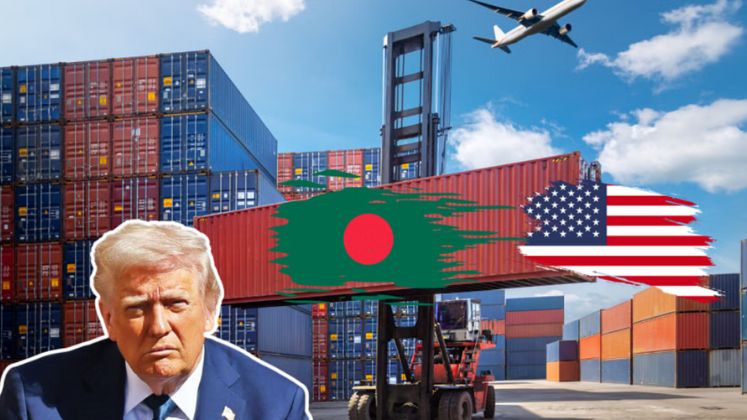
The United States Trade Representative (USTR), the primary body responsible for trade negotiations in the US, has yet to specify a date for the third and final round of tariff talks with Bangladesh, raising concerns over the limited time remaining.
Bangladesh sent its position paper to the USTR on Tuesday and requested to hold negotiations on 26th July to reach an agreement on favorable tariff rates for its exports. However, as of Wednesday, the USTR had not confirmed any date for the upcoming negotiations, according to a senior official familiar with the process who requested anonymity. The official indicated that negotiations are likely to be scheduled between 27th July and 29th July.
This development comes amid mounting urgency, as the Trump administration is scheduled to implement new tariff rates for affected countries starting 1st August. The tight timeline has pushed Bangladeshi exporters and officials to explore alternative measures, including efforts to hire a US-based lobbying firm to advocate for lower tariffs.
A group of local garment exporters is actively seeking to engage a lobbying firm in the US to influence tariff negotiations. However, progress has been slow, with the private sector facing time constraints and no government involvement in hiring such firms so far.
Experts and industry leaders have expressed concern over the situation. Zaidi Sattar, chairman of the Policy Research Institute of Bangladesh (PRI), voiced support for private sector efforts, stating that if a lobbying firm is hired, PRI would assist by sharing relevant economic and trade information. Masrur Reaz, chairman of Policy Exchange Bangladesh, highlighted that some other countries have successfully employed lobbying firms to negotiate lower tariffs and emphasized the urgency for Bangladesh to do the same.
Reaz also pointed out that the Bangladeshi private sector has been unable to make significant progress due to the limited time, and there are doubts about the effectiveness of hiring a lobbying firm at this stage. Nonetheless, some business leaders are still in the US attempting to secure representation.
The US is Bangladesh’s largest export market, with apparel exports worth US $ 8.2 billion last year. If the 35% tariff rate is imposed, Bangladesh’s garment industry, comprising over 1,300 factories directly exporting to the US could face substantial challenges, potentially losing work orders and market share.
As the deadline looms, industry stakeholders remain hopeful yet anxious about the outcome of the upcoming negotiations and the potential impact on Bangladesh’s vital garment sector.