
Not only is the garment export of the country on the rise, but even the stock lot business, which was initially a fringe activity, is now developing into an organized business seeing good growth in recent times. It is obvious that many of the events which have impacted the industry over the last year are in some way responsible for the growing importance of the stock lot business, but the fact remains that with stock lot enquiries increasing in recent months, companies/persons dealing in the same are very upbeat for the future.
One of the most underrated channels which insiders claim is actually huge is the business through the stock lot route; and while 30-40% of this business is accounted for as exports, the remaining is through ‘contacts’ and unaccounted for in total export of any manufacturing destination. It is no secret that every garment exporter manufacturing for international retailers/brands is producing around 5-7% extra pieces per style for adjustment of any rejections or unwarranted shortfall that may occur when final packaging is done.
Also there are many incidences of goods being rejected on various pretexts both before shipment and after reaching port of destination. It is these goods that find their way into the stock lot market which is a parallel market in itself. Most of the time the goods are rejected for a quality problem, sometimes it is really minor, for example colour is not approved, sometimes the goods are just unsellable in the importer’s distribution channel, because there are too many visual defects or because the products are unsafe to the user. Sometimes the importer (or its customer) cancels the order because of excessive stock or financial problems.
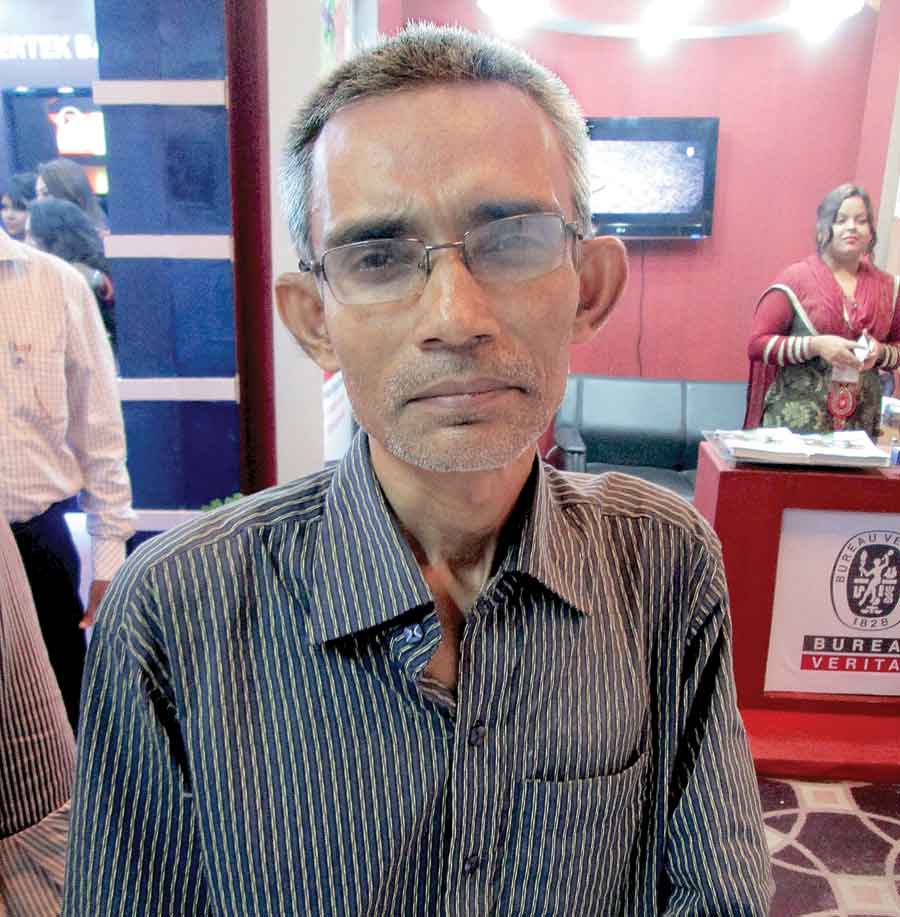 Among the many reasons behind the increasing stock lot business in Bangladesh is the growing interest in such products, mostly coming from small wholesalers and buyers from emerging markets. Tanvir Yasin, MD, Pentagon Fashion Wear, who was earlier taking this business as a part-time venture along with his export business in fresh apparels, is now focusing equally on the stock lot trade. “If I talk about the past few months, advertisements in local newspapers of foreign buyers interested in stock lots have increased substantially and we have seen a very good growth in this segment. After all we are offering them same quality product at 30 to 50 per cent less price. There is no other alternate across the world for cheap price garments apart from Bangladesh’s stock lot,” says Tanvir. The company has 18 buyers who regularly pick up stock lots.
Another reason for increase in this business is that suppliers are now more active in this area, recently many small suppliers have come into this business and they are very active on social media to attract the buyers for the same. As this business has less investment and less risk, quick payment, and no compliance issues, it attracts many companies/individuals. A 100 per cent acrylic sweater costs just US $ 2.5 in stock lot and buyers negotiate a lot on this price too. With Bangladesh already offering one of the best ‘price bands’ in the world on fresh goods, stock lots are real ‘value for money’, as opportunity buyers are usually more interested in low prices than in high quality, they are more ready to take risks than most importers. But some of them appoint inspection companies to confirm quality.
[bleft] “In past few months, advt. in local newspapers of foreign buyers interested in stock lots have increased and we have seen a very good growth in this segment.” [/bleft]
Yet, quality is still a critical issue in this business as it moves on relation between buyers and suppliers and if there is quality complaint, buyers don’t deal in future with that particular company/supplier. Increasingly, buyers are now asking for 100 per cent quality check before the consignment is shipped. One of the factors which keep business flowing for many exporters/buyers in the stock-lot market is that there is no duplication of goods, as factories sell lot of goods to a single dealer. Store labels are removed, cut or blacked out in accordance to requirements of the brands/chain stores. This is in order to protect the intellectual rights of the original high street chain store and to prevent unauthorized store-returns. The labels with washing instructions and fabric content are however retained.
Farhaduddin of Adelia International has been dealing in stock lots for more than a decade and he agrees that now this segment is towards its boom, the company has buyers from Denmark, Belgium and UK who take stock lots on a regular basis. “Since there have been a lot of delays in shipments over the last one year due to many internal and external pressures, this has enhanced the availability of stock lots and created more opportunity for such buyers to expand business. We send at least one or two shipment of stock lots every month now and it is becoming a regular kind of business. Though our top priority is still of fresh orders, but we can’t ignore and take this business lightly anymore,” sums up Farhaduddin.
Though the market is dependent on already placed orders with little left for individual preferences, it is still very fashion driven. Some of the brands that command good demand in the stock-lot market in the UK are Adams, George at Asda, Autograph, Asos, Aware, Bay Trading, BHS, Bon Marche, Burton, Debenhams, Dorothy Perkins, Evans, Gap, George, John Lewis, Jane Norman, Marks & Spencer, Miss Selfridge, Monsoon, Mothercare, New Look, Next, Per Una, Principles, Red Herring, River Island, Sainsbury (TU), Tesco (F&F),Top Man, Top Shop and Wallis.