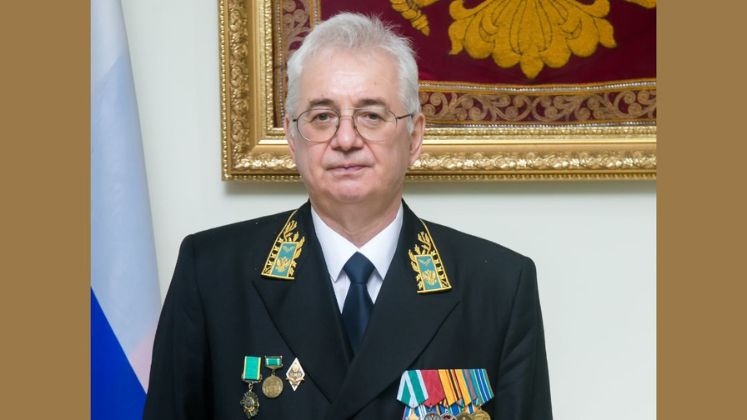
Russia is keen to work with Bangladesh in all sectors to serve the people of both countries, according to Alexander Mantytskiy, the Russian ambassador to Bangladesh.
“I reiterate that the Russian Federation operates on the premise that the recent change in the Bangladesh government is an internal affair of your country. We have shown a willingness to continue working together in all spheres for the benefit of the peoples of Russia and Bangladesh,” he said while addressing the SputnikPro workshop on Tuesday.
According to the Russian envoy, Bangladesh receives a significant amount of its wheat and fertilisers from Russia, which helps ensure Bangladesh’s food security. Energy and agriculture continue to be the main areas of cooperation between the two nations.
In addition, Gazprom International Ltd. has been working on extraction and exploration projects involving gas. He said that Russian businesses are prepared to investigate the Bangladeshi market for solar energy and to export crude oil and LNG (liquefied natural gas).
“We are eager to unlock new avenues of mutually beneficial collaboration. Our companies are ready to provide Bangladeshi partners high-tech solutions applicable across multiple spheres, including transport, traffic management, medicine, agriculture, smart cities and public safety.”
Terming the Rooppur Nuclear Power Plant (RNPP) a flagship project of the Russia-Bangladesh energy cooperation, Mantytskiy said they are disappointed over the recent articles circulating in the Bangladeshi media regarding an alleged embezzlement in the project.
“These so-called reports are completely false and misleading. Rosatom has already publicly denied these provocative statements. Corporation’s transparency in procurement system and adherence to anti-corruption policy are regularly confirmed by external audits.”
The Russian ambassador criticised the comparison between the expenditures of the two projects – RNPP in Bangladesh and Kudankulam NPP in India, saying the conditions, locations, soil composition, and weather conditions of Bangladeshi and Indian construction sites are completely different from each other.
Mantytskiy said that they believe those who write and spread fake news about the alleged embezzlement at the RNPP intentionally attempt to discredit the much-anticipated project and undermine steadily developing and mutually beneficial relations between the two friendly states. He stated that each US dollar invested in the RNPP construction project will bring $4.3 to the GDP of Bangladesh.