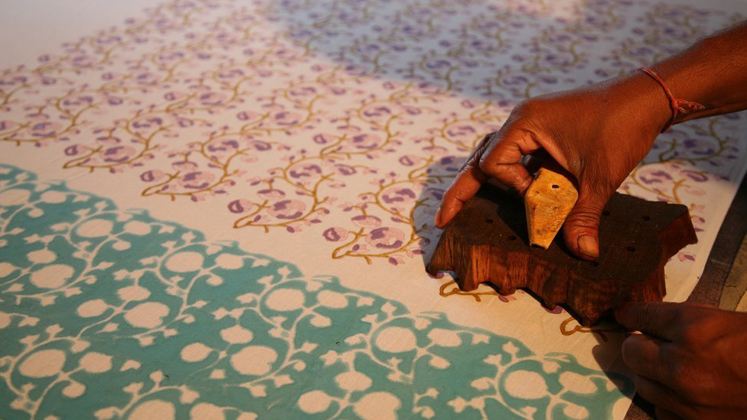
Hand block printing, one of the traditional crafts for value addition on fashion garments and home furnishing, is a hot selling item for Jaipur-based fabric and garment manufacturers.
Demand this year is at least 20 per cent higher in this segment compared to 2019 and 2018.
This demand of hand blocked products (garments as well as home furnishing items) is entirely from domestic market and that too from various regions – be it from South or North. Notably, there isn’t any special reason for the same.
Printing firms of the Pink City are so busy in hand block work that they are refusing the printing orders of apparel exporters and preferring the hand block work.
Aseem Singla, Director, Fashion Images Overseas, Jaipur told Apparel Resources, “We have never seen such boom in demand for hand block. Printers are refusing our orders as they are busy with hand block for domestic market.”
Printers are giving priority to the hand block as they don’t have to focus much on compliance aspect or delivering high quality as per export parameters.
Industry sources told that to complete huge demand, some of the firms are using screen prints or allied ways of printing and selling in the name of hand block.
“Normally customers cannot figure out difference in hand block and similar work done by screen print, which is around 3 times cost-effective compared to hand block print. But firms committed for their products use hand-block done by traditional expert community for the same,” says Anuj Mundra, CMD, Nandani Creation. Nandani Creation is one of the leading tunic manufacturers and online retailers of Jaipur.
Notably, Jaipur is one of the leading hubs for craft like hand block. This traditional process of hand block printing on textiles with rich colours has been practised in Rajasthan for around 500 years.
It was introduced to the Jaipur region by the Chipa community, majorly located in the village of Bagru, an area famous for vegetable dyes and mud resist block prints. Sadly, the subsequent generations have not been taking much interest in the art, as a result of which the expertise of this art is gradually getting lost.