Bangladesh’s apparel export increased by 28.02 per cent to US $ 19.900 billion compared to that in the same period of the previous fiscal year even as knitwear exports increased by 30.91 per cent to US $ 11.161 billion (in July-December 2021-22) as against exports of US $ 8.526 billion during the corresponding period of the preceding fiscal while woven apparel exports, albeit slow in comparison, increased 24.50 per cent to US $ 8.739 billion.
The opening up of economies worldwide is reflected aptly on Bangladesh’s export figures. Meanwhile, according to estimates, if the present growth trend continues, which is a given feel most within the industry considering the pent-up demand from brands and retailers, Bangladesh is but all set to surpass the export target of US $ 35.144 billion, laid down for the ongoing fiscal year.
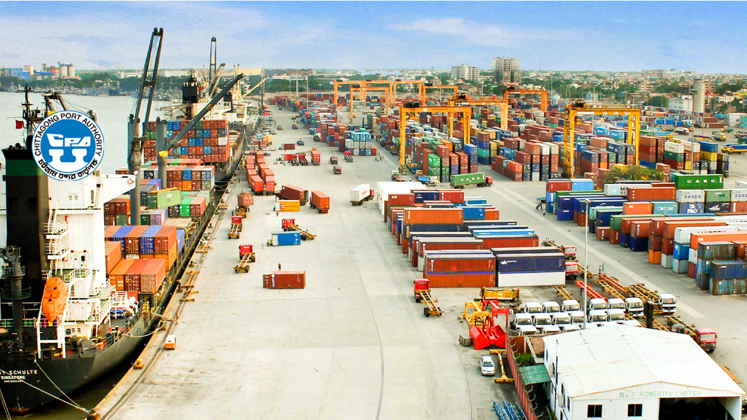
Rebounding strongly from the sluggish export of last one year or so, the industry is already challenged with a host of issues, including the so-called inefficiency of the ports, especially at the Chittagong Port, which handles more than 90 per cent of Bangladesh’s imports and exports including apparel shipments and raw materials requirements.
Lead time worries…
“First of all, there is not enough machinery/equipment to handle the export-import activities; most of the equipments that are there are old and lack effectiveness. There are other bottlenecks too in terms of cargo handling, which further eat into valuable lead time,” felt MD of Plummy Fashions, who called for induction of latest equipments to overhaul operations.
Echoing the concerns of the businesses in general, President of the Bangladesh Textile Mills Association (BTMA), Mohammad Ali Khokon, said, “We are concerned to learn that the recovery of import-export businesses post-pandemic lockdown is hampered by slow pace of work at the Chittagong port…,” adding many shipping lines are reluctant to send their vessels to Chittagong due to delays in unloading goods.
Because of such delays, businesses are incurring losses in terms of paying demurrage for overstaying and goods not being attended to at the port, pointed out the BTMA President.
Working under tight timelines — spanning from order receipt to delivery — their apprehensions are very much understandable as missing delivery deadline means inviting a slew of compensation demand from the clients.
Reducing dwell time to increase exports…
Highlighting how improvement in transport and logistics could help Bangladesh boost its export, World Bank transport expert Tatiana Peralta opined one-day reduction in dwell time (ship’s stay time) at Chittagong Port would increase exports by 7.4 per cent.
Addressing a discussion on how to reduce logistic costs to enhance Bangladesh’s trade competitiveness, Peralta said lack of efficient port infrastructure was behind the poor logistics here.
“About 95 per cent containers are de-stuffed at the port leading to congestion,” said Peralta holding responsible such delivery system for the ‘chaos’ in the port’s activity.
“We urge the port authorities to conduct the unloading, loading and shipping of goods with as little delay as possible, so that businesses, big or small, need not pay hefty overstaying fees on top of the already expensive process of importing and exporting goods (using shipping containers),” called upon the concerned authorities for Bangladesh garment makers while urging the customs department to not hold businesses hostage by lingering procedural tasks beyond the stipulated time.
“Losses due to delays will eventually affect the whole economy and slow down our recovery….,” they maintained even if explaining the particulars of how and what causes such hold-ups, Managing Director of Abruan Group Harun Ar Rashid said, “…it takes around 7 to 10 days from ETA (estimated time of arrival) for clearance (of consignments) while in case of China it may go up to 14 days.”
The aggrieved garment manufacturer further claimed officials concerned many a time take somewhere around 15-25 days for audits while 4 to 7 days’ time to unload a container, has become the new normal.
Moreover, the unauthorised cost that one has to incur in the process is 2-3 times the acceptable norms, Harun claimed.
Authorities at the task…?
In a bid to automate procedures to cut time and business cost, the Chittagong Port Authority (CPA) has reportedly launched an electronic system to enable importers to receive goods faster even if the document in question, called ‘delivery order’, is one of the many papers used in the import process, which the shipping agents and freight forwarders issue to importers so that they can receive the consignments from the port.
Initially six leading shipping lines on an experimental basis were supposed to start issuing the delivery orders from 1 December even if on 22 November, the CPA contacted the leading shipping agents, namely APL Bangladesh PVT Ltd., Maersk Bangladesh Ltd., Continental Traders BD Ltd., Continental Traders, Ocean International Ltd., and MSC Mediterranean Shipping Company Bangladesh Ltd., asking the shipping lines to issue electronic delivery order (EDO) for clearance of import consignment on experimental basis.
Gradually, all the shipping agents and freight forwarders would be brought into the system, claimed the port authorities.
Bangladesh Freight Forwarders Association Vice President Khairul Alam Sujan while conceding scope of fraudulences in manually-issued DO was high, hailed the CPA for the timely step while Muntasir Rubayat, Director of the Bangladesh Shipping Agents Association said making the whole process paperless is what was needed the most.
Muntasir highlighted the need to link all concerned parties in this paperless endeavour to gain the most out of the exercise.
Infrastructure wise too, developmental work is on, thanks to which, port officials claimed turnaround time will be reduced in the next few years even as latest data from the United Nations Conference on Trade and Development (UNCTAD) suggests in 2020, the turnaround time of a container ship was 1.8 days in China, 1.42 days in India, 1 day in Malaysia and 0.7 day in Singapore while it took 2.46 days or 59.04 hours for a container ship this year to unload and load goods after berthing at the Chittagong Port, which is the shortest time in six years while in 2016, the turnaround time of a container ship at the port was 2.87 days or 68.88 hours.