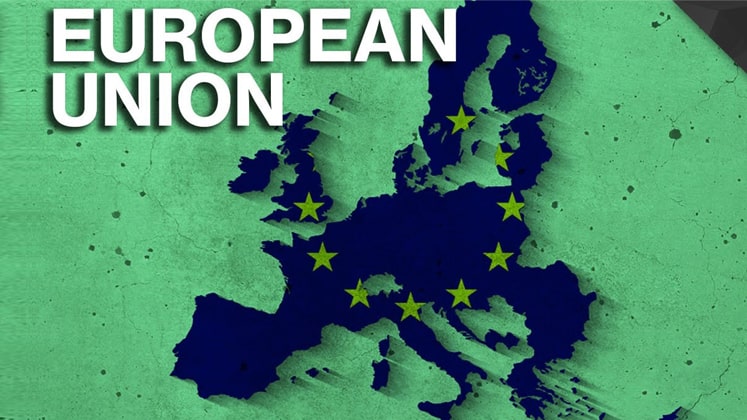
Recently, Bangladesh has called upon the European Union (EU) to extend the current zero-duty benefit even after its graduation to a developing country from that of a least developed nation (LDC). The Commerce Ministry has sent a letter to the EU in this direction requesting the continuance of EU’s generous Everything but Arms (EBA) scheme meant for the LDCs.
“In the letter, we did not mention any particular period or any particular scheme. We sought the continuation of the current EBA, as we have been facing crisis in different ways due to the coronavirus pandemic,” stated Commerce Secretary Md. Jafar Uddin, adding, “We are ready to graduate to a developing country from an LDC in 2024 as per our previous decision.”
So, what is the significance of the EU and its duty-free facility for Bangladesh, which it wants to continue even after the graduation? To put it in simple words, the importance of European Union from Bangladesh’s perspective is anything but vital. It is not only the largest export destination for the country’s apparel offerings, but also the second-largest source of FDI to Bangladesh. From 2008 to 2015, the EU imports from Bangladesh have almost become threefold. Riding high on the zero-duty benefit, Bangladesh’s exports to the EU have made significant progress over the years, which helped it to a great extent to become the second biggest apparel exporter globally, after China. According to data from Bangladesh’s Export Promotion Bureau (EPB), Bangladesh exported garment items worth US $ 21.13 billion to the EU in 2018-19 fiscal year – up from US $ 19.62 billion and US $ 17.75 billion in the previous two fiscal years.
Thanks to the trade privilege, Bangladesh is able to save around €2 billion in duties annually, according to some estimates, which the country can ill-afford to let go of, more so when the pandemic has emerged as a major challenge for its economic well-being. The fallout of the crisis is already exacting a huge toll on the garment manufacturing industry of Bangladesh after large-scale order cancellations by global buyers have forced many to bow out of the business, while many others are struggling to procure new work orders that can keep them afloat. In such a scenario, the trade privilege is even more significant.
As per experts, Bangladesh’s export will decline by 5.7 per cent annually if the EBA is not extended and the local exporters will have to face an 8.7 per cent duty to the EU, which would be a very hard blow to its already fledgling economy. More so, as 74 per cent of Bangladesh’s export earnings come under the preferential trade as an LDC, of which a massive 64 per cent comes from the EU and 10 per cent from Japan, Canada and other developed countries.
“Our expectation is that the EU will extend its EBA for Bangladesh at least for 10 more years after the official graduation in 2024,”underlined Mohammad A Momen, Director, Bangladesh Garment Manufacturers and Exporters Association (BGMEA), adding, “We have invested billions of dollars (USD) in the sector and backward linkage industries. We need more trade benefits from the EU and other developed countries for our development. The Chinese garment sector is 80 years old, whereas the business began in Bangladesh only 40 years ago. So, extension of the trade privilege for us is logical.”
It may be mentioned here that after graduation, Bangladesh would continue to enjoy the trade benefit for a period of 3 years, up to 2027, if it graduates in 2024. However, experts are sceptical, if it would be enough for the RMG sector to survive and sustain – which alone contributes 84 per cent of the national export and directly employs 4.1 million workers – considering the impact it had to undergo in view of the COVID-19 outbreak.
Normally, the EU does not give trade benefits under the EBA after a country’s graduation. So, after 2027 (if Bangladesh graduates to a developing nation by 2024), the country will have to be either granted the GSP Plus or the extension of the current EBA to enjoy the zero-duty benefit to the European Union.
Bangladesh needs to think for the GSP Plus status to the EU after the graduation, said Ahsan H Mansur, Executive Director, Policy Research Institute.
The EU has already granted GSP Plus to many countries after the graduation, but to avail this benefit, Bangladesh needs to improve in four core areas – protection of environment, labour rights, curbing corruption and human rights. Moreover, Bangladesh will have to ratify the 27 UN Conventions for the EU trade facility. It may be mentioned here that many a time in the last couple of years, the EU has expressed its dissatisfaction over the existing labour rights scenario in the country. Even though Bangladesh is said to have strived to improve the labour rights situation in the country and comply with the European Union’s instructions and guidelines, it failed to fully satisfy the EU on this.
Recently, as per reports, the EU has been carrying out an online survey aiming to prepare a new trade benefit scheme for the poorer nations, including Bangladesh. Based on the online survey, the EU will take decision as to whether they will extend the GSP facilities or not.
Also, there is close competition from one of its rivals in this direction after Vietnam signed a free trade agreement (FTA) with the European Union. The Vietnam’s National Assembly officially approved the EU-Vietnam Free Trade Agreement (EVFTA) on 8 June, which is expected to take into effect as early as in August 2020.
Once implemented, the EVFTA will eliminate nearly all tariffs (over 99 per cent) between the European Union and Vietnam. Experts say the EVFTA is expected to give Vietnamese companies a host of opportunities to raise exports. However, in order to completely capitalise on the offer, they do have to follow the strict criteria. Vu Duc Giang, Chairman, Vietnam Textile and Apparel Association (VITAS), said companies in the sector believe in the prospect of the exports to the EU after the EVFTA comes into force, as tariffs will be cut to zero per cent.
“However, businesses need to be thoroughly prepared to make use of the opportunities and have a solid grasp of the regulations within the agreement, because the EU is a demanding market with strict requirements on product quality and design,”Phi Viet Trinh, General Director, Ho Guom Garment JSC, said, adding that in order to benefit from the preferential tariffs under the EVFTA, products must have a certain proportion of materials originating from the EU or Vietnam. Therefore, management agencies and businesses alike must take certain action to maximise the opportunities.
Given the existing circumstances, Bangladesh is reportedly working hard towards signing Preferential Trade Agreements (PTAs) with countries like Nepal, Bhutan and Indonesia. “The wide coverage of products under the PTAs means the agreements are nearly Free Trade Agreements,” underlined Jafar Uddin, while adding that the British Government has already assured the Commerce Ministry that it would continue providing the existing trade benefits even after its separation from the European Union.
Now whether the EU would decide to continue with its EBA scheme for Bangladesh or whether the latter is able to sign substantial numbers of FTAs with other countries that could help it counter the implications if EU decides otherwise, is yet to be seen.