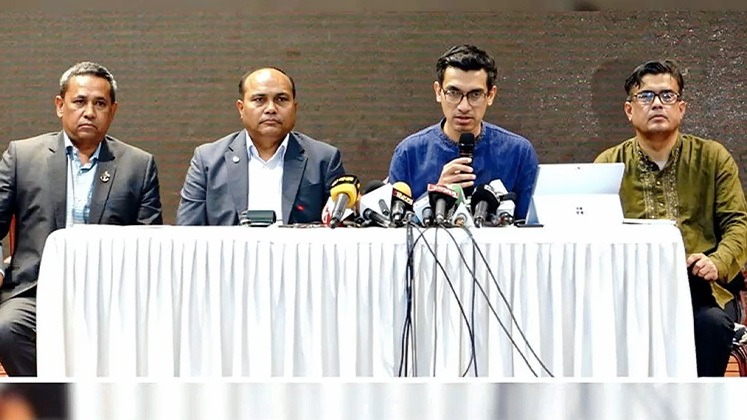
The interim government has approved a historic public-private partnership (PPP) agreement with APM Terminals BV, a Netherlands-based subsidiary of the multinational shipping giant Maersk Group, to design, finance, build and run the Laldia Container Terminal at Chattogram Port for 30 years, marking a significant milestone for Bangladesh’s maritime and trade infrastructure.
APM Terminals will invest approximately US $ 550 million in the final agreement, which is scheduled to be inked next week, making it the biggest European foreign direct investment (FDI) in Bangladesh to date. According to Chowdhury Ashik Mahmud Bin Harun, Chief Executive Officer, PPP Authority, the company will also pay Taka 250 crore as signing money.
When finished, the Laldia terminal will provide over 800,000 TEUs of additional yearly handling capacity, relieving traffic at current ports and establishing Chattogram as a more effective and competitive regional gateway. December is when construction is scheduled to start and operations are anticipated to start by 2029.
The terminal will be fully owned by the Chittagong Port Authority (CPA), with APM Terminals acting as its sole operator. The facility will be returned to CPA after 30 years, with the possibility of a performance-based contract extension.
Ashik Mahmud Bin Harun, who also leads the Bangladesh Investment Development Authority (BIDA), noted that the new green terminal will accommodate vessels twice the size of those currently handled at New Mooring Container Terminal (NCT), significantly reducing freight turnaround time and per-unit shipping costs.
In addition to improving infrastructure, the project is anticipated to create thousands of indirect jobs in transportation, warehousing and allied logistics industries in addition to 500–700 direct local jobs. Bangladesh will earn US $ 21 for every TEU handled, increasing to US $ 23 per TEU for volumes over 900,000. This will also provide a consistent influx of foreign currency revenue.
The Laldia terminal, which was built using a revenue-sharing concession arrangement, is thought to be a key component in luring additional foreign capital to Bangladesh’s logistics sector. Additionally, it will function as a demonstration project that highlights Bangladesh’s capacity to organise and oversee major PPP projects in accordance with international best practices.
In line with Bangladesh’s Nationally Determined Contributions (NDCs) under the Paris Agreement, the project promotes more environmentally friendly and climate-resilient port infrastructure by integrating energy-efficient equipment and sustainable construction standards.
According to industry watchers, this move would help Bangladesh’s export sector — especially its garment industry — meet just-in-time delivery obligations, shorten lead times and improve its standing in global value chains.