The recent crisis brought on by the COVID-19 pandemic has unraveled many unforeseen facets of the global buyers. The spate of order cancellations, demanding extended payment terms and discounts, and in some cases withholding payments had a devastating impact on the Bangladesh garment manufacturing sector.
Export debacle, factory closures and workers’ retrenchment have become the order of the day. In such a scenario, survival has become a major worry for the garment manufacturers, especially for the small and medium-level players, who don’t have deep pockets to help them keep afloat in such trying times.
If one may recollect, a month or so ago, the parent company of Sears Holdings was threatened with legal action after it allegedly refused to settle more than US $ 40 million of outstanding debt with its garment suppliers in Bangladesh. Lawyers for 19 factory owners demanded that Transformco, a privately held company owned by American billionaire Eddie Lampert’s ESL Investments hedge fund, immediately settle payments amid claims that Transformco ‘willingly misrepresented’ its finances to convince suppliers to extend it credit. Further, according to the lawyers, more than US $ 21 million of their clients’ products have already been shipped and were being stored by Transformco’s carriers at the US ports.
The case with Transformco has been an aberration when manufacturers chose to take legal recourse, which most of the times is not so, as manufacturers mostly try to figure out an amicable solution even if it means incurring losses, just to keep the business going.
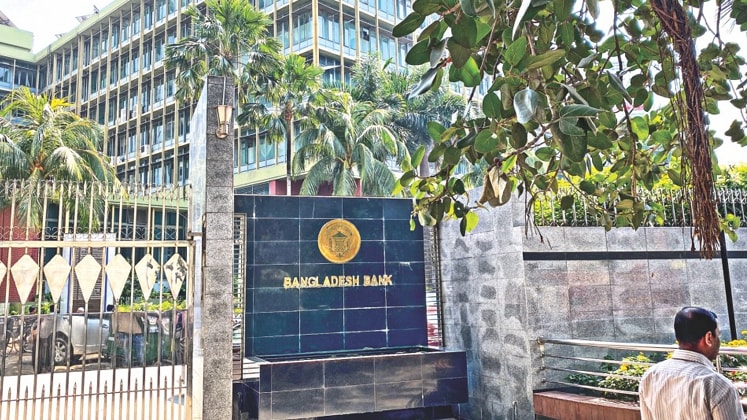
In light of the same, Bangladesh’s central bank – Bangladesh Bank’s new initiative of payment guarantee for exporters has come as a big relief for the apparel manufacturers. The Bangladesh Bank has recently introduced international factoring for the exporters — a new method that ensures payment guarantee for exporters, according to the central bank — which according to the experts is a potent mode of accelerating the country’s exports and reducing exporters’ risk of collecting their products’ worth.
It may be mentioned here that exporters in Bangladesh currently have to undertake sales contracts without payment guarantees from foreign importers. As a result, exporters run risk of payment defaults by importers. However, after the introduction of the payment guarantee initiative by the central bank, banks dedicatedly running foreign-exchange-related businesses will be allowed to let exporters ship goods on sales contracts under open account credit terms within the statutory period, if otherwise not extended from the date of shipment. It means exports will be executed against payment undertaking or payment risk coverage by international factoring companies or foreign banks for settlement of export bills.
The policy is a simplified version of financing under factoring and supply chain to exporters against their export with external payment undertaking. The costs by exporters against payment undertaking or payment risk coverage and interest with relevant charges for early payment shall not exceed a 6-month London Interbank Offer Rate (LIBOR) plus 3.50 per cent annually, the central bank’s notice underlined.
This policy would keep exporters free from the risk of payment default, as per Prashanta Kumar Banerjee, Director, Bangladesh Institute of Bank Management.
It may be mentioned here that businesses are now forced to go for exports on sales contracts without payment guarantees where some risks remain on getting their earnings. But the factoring will cover the risk and the importer’s bank will provide the payment in case of failure of the importer to make the payment on time, Prashanta explained.
The factoring helps importers too, as they do not need to invest money before receiving the products. This is why a good number of foreign importers had earlier showed reluctance to import goods from Bangladesh due to the absence of the factoring method. But with the central bank’s new initiative, it would be a different ball game now.
The policy will help exporters have access to appropriate finance up to the need in terms of local value addition. Back-to-back payments will be settled on receipt of final payment on maturity, the Bangladesh Bank underlined. Banks have now been allowed to extend early payment facilities to exporters on non-recourse basis out of their own funds against payment undertaking and payment risk coverage from external sources.
“Factoring exists in Bangladesh unofficially for sometime now. But it is good that it has been officially recognised by the central bank,” Fazlul Hoque, MD, Plummy Fashions Limited and ex-President of Bangladesh Knitwear Manufacturers and Exporters Association (BKMEA) told Apparel Resources. He underlined that exporters have not been taking much advantage of the same, as business has been more or less smooth with hardly any issues in terms of payments from the buyers. But it was only until COVID-19 struck. Ever since, there have been umpteen cases related to payments from the buyers’ end. Also, that certain amount had to be paid to the factoring/discounting entities – around 1 to 2 per cent – manufacturers have not been too keen on availing the same, as profit margins are already very thin.
However, now with banks tying up factoring entities, such a facility will become more popular, benefitting both the manufacturers and the financial institutions, felt Fazlul as it would ensure garment makers’ payment guarantee, while on the other hand, bank’s money which is channelised to the manufacturing companies in forms of loans and other financial assistance to facilitate production will also be safeguarded.
Recently, just a day after Bangladesh Bank issued the guidelines on international factoring, the Eastern Bank Ltd. (EBL) rolled out a novel export factoring solution as part of its efforts to reduce the risks that Bangladeshi exporters face when it comes to collecting their goods’ worth.
With this, EBL became the first lender in Bangladesh to introduce it. The bank signed a letter of intent with German-headquartered trade finance provider Tradewind GmbH to make the service initially available to the country’s garment exporters. Under the agreement, the bank will collaborate with Tradewind for export factoring where local exporters will be able to obtain their deferred receivables from overseas importers, said an official of the lender.
The process is faster, more secured and will reportedly protect the interests of Bangladeshi exporters while supporting the garment sector’s ambitions in becoming a leader in the textile manufacturing and sourcing world.
Now, under the factoring solution, Tradewind will provide the payments to the exporters on behalf of the importers, which means the exporters will get their earnings soon after their products are shipped, as the factoring solution would keep exporters free from the risk of a payment default.
This, in turn, means Tradewind will provide the payments to the exporters irrespective of whether the importers make the payments on time or not. Meanwhile, insurance companies will cover the risk of Tradewind.
It may be mentioned here that an exporter currently has to wait for anything from 15 to 20 days to up to several months to get paid for their goods, but the latest method will help them avail it just after the products have been shipped.
“Initially, we will provide the facility only to our clients. Customers of other banks will get support from the factoring in the near future by way of using our platform,” maintained Managing Director of EBL, Ali Reza Iftekhar, who went on to add that Tradewind is a company with a good reputation and track record and is regulated by the German Federal Financial Supervisory Authority, which began its journey 20 years ago and has since expanded its global presence to over 20 offices across 13 countries in four continents.
Hopefully, in coming days, more and more banks would start offering the same, which would be a great respite for the garment manufacturers, who otherwise have to be always on their toes to deal with payment delays and cancellations from buyers.
What is factoring?
Factoring is a process by which a business sells to a financial institution the value of accounts receivables for which it has not yet received payment. It is the process of purchasing an invoice from an exporter in one country and collecting it later from his buyer who is in another country. This means that the exporter has been paid upfront, and the buyer can pay later.
Different types of international factoring
- Buyer-verified transactions
- Buyer-confirmed transactions
The difference between these two types of trade finance relates to the allocation of risks between the buyer and the exporter, and therefore, also affects the risks which the trade financier is taking.
Features of factoring:
- In factoring, there are three parties namely the seller, the debtor and the factor.
- It helps to generate an immediate inflow of cash.
- Here the full liability of debtor has been assumed by the factor.
- Factor has the right to take any legal action required to recover the debts.