The global commitment to safeguard workers in Bangladesh from fire and other safety hazards has gone from strength to strength with the number of signatories to the Accord for Building and Fire Safety in Bangladesh, designed to make all garment factories in Bangladesh safe workplace, crossing 150 companies spread across 20 countries in February 2014.
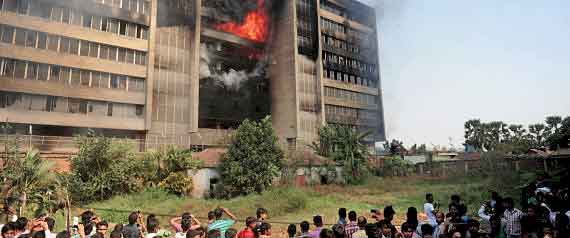
Post what is world-wide known as the ‘Rana Plaza tragedy’ in April 2013 that killed over 1,100 workers, Bangladesh has been under the scanner for safety issues at the workplace. Taking a proactive lead, an independent Agreement between international trade unions IndustriALL and UNI Global, Bangladesh trade unions, and international brands and retailers (companies) was signed in May 2013, which is now referred to as the ‘Bangladesh Accord’. International NGOs, including the Clean Clothes Campaign and the Workers’ Rights Consortium, International Labour Rights Forum and Maquila Solidarity Network are witnesses to the Agreement. H&M, C&A,Primark and Tesco are among the first retailers to endorse the Accord.
[bleft] As signatories to the Accord, companies will each contribute an equitable share of the funding required, starting from US $ 1,000 up to a maximum contribution of US $ 500,000 per annum. This funding will be specifically used for three purposes – administrative, training and inspection. [/bleft]
The International Labour Organisation (ILO) acts as the independent chair to the Accord, which has signatories drawn from Europe, North America, Australasia and Asia. Its aim is the implementation of a programme for reasonable health and safety measures to ensure a safe and sustainable Bangladeshi RMG industry for a period of five years. According to the provisions of the Accord, signatories shall develop and agree on the Implementation Plan within 45 days of signing the Agreement, which covers all suppliers producing products for the signatory companies, and requires suppliers to accept inspections and implement remediation measures in their factories.
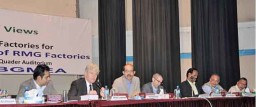
With all systems in place and strong support from the industry, the factory assessments as conceptualized under the Accord have begun. “The Accord on Fire and Building Safety in Bangladesh launched the first phase of inspection involving fire and structural integrity and it will inspect over 200 apparel factories in the next three weeks from which its signatories source products,” informed Rob Wayss, Executive Director of Bangladesh Operations. Engineers hired by the Accord will complete initial inspections of 1,600 factories by the end of September 2014.
With many in the industry opposing some clauses of the standards on the onset of inspection as those are expensive and difficult to follow, Jyrki Raina, General Secretary of IndustriALL Global Union, a federation of global trade unions, said the Accord will be flexible in inspections in some cases, as garment makers are saying the standards are too strict, “We will be flexible in inspections, as garment makers have been complaining about some of the clauses, especially setting up the sprinkler system in the factories. We will allow more time in inspection, but we will never compromise on the safety of the workers,” said Raina.
As signatories to the Accord, companies will each contribute an equitable share of the funding required, starting from US $ 1,000 up to a maximum contribution of US $ 500,000 per annum. The share is based upon a sliding scale, relative to the individual company’s volume of sourcing from Bangladesh, and relative to the annual volume of other company signatories. These funding will be specifically used for three purposes – administrative, training and inspection. US $ 12 million has been fixed for administrative purposes alone every year. Interestingly, The Bangladesh Government has nothing to do with financing in the fund, although it is part of the Accord.
“Under the Agreement, signatory retailers are bound to stay with the garment makers until inspections are completed in the next five years. If any factory building requires renovation, operations may stop for some months and the workers will become unemployed; but the workers will receive their salaries that will be paid by the retailers and garment makers,” said Raina. The total cost of factory repairs is expected to cross US $ 3 billion in five years, according to a preliminary estimate.