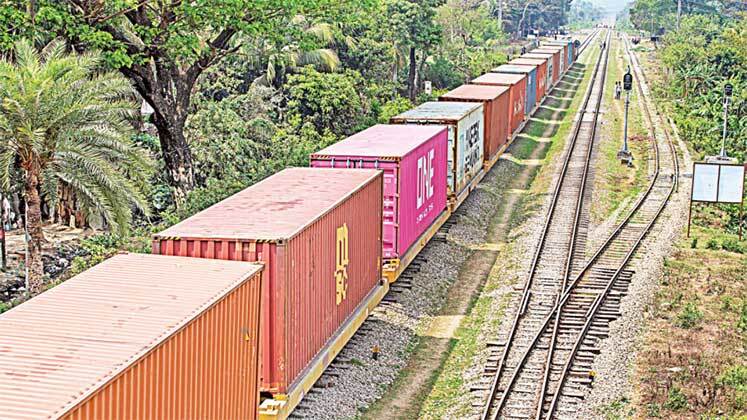
Container transportation between Chattogram port and the Kamalapur Inland Container Depot (ICD) in Dhaka has been severely disrupted in recent months, largely due to an acute shortage of locomotives at Bangladesh Railway, creating mounting difficulties for importers and logistics operators.
Port officials said the problem has persisted for almost a year but began to intensify in October, reaching a critical stage in December. Data from the Chittagong Port Authority (CPA) and Bangladesh Railway show a sharp decline in the number of container trains operating on the route during the final quarter of the year.
Between January and September, an average of more than 112 container trains operated each month, with volumes peaking at around 140 trains in March and April. This fell to 84 trains in October, 95 in November and just 74 in December. In December, only 37 trains ran from the Chittagong Goods Port Yard to the Dhaka ICD, with the same number operating in the reverse direction.
CPA Director (Operations) Md Omar Faruk said the port required at least four pairs of container trains per day to move roughly 200 twenty-foot equivalent units (TEUs) of import containers and ensure smooth clearance of ICD-bound cargo. Based on this requirement, more than 200 trains a month are needed to maintain normal operations.
Officials at the Kamalapur ICD said no container-carrying trains operated for nine days in December because locomotives were not made available by the railway. During the month, only one pair of trains operated on nine days, two pairs on 11 days and three pairs on just two days.
The disruption has led to a significant backlog at Chattogram port’s ICD-designated yard for Dhaka-bound import containers. While the yard has a capacity of 887 TEUs, the number of containers stored there rose to 1,658 TEUs as of yesterday, almost double its capacity.
A CPA official said the port had been forced to store ICD-bound containers in areas reserved for export containers arriving from Dhaka, as well as in more distant yards. The official said this had increased handling time during train loading and substantially raised operational costs.
Business representatives said the disruption had placed a heavy burden on importers. Khairul Alam Suzan, former vice-president of the Bangladesh Freight Forwarders Association, said containers unloaded from vessels around four weeks earlier were still waiting to be transported to Dhaka due to the backlog. Md Faruk Alam, general secretary of the Dhaka Customs Clearing and Forwarding Agents Association, said at least 1,300 TEUs of ICD-bound import containers had been stuck at the port for about four weeks, resulting in substantial demurrage charges for importers.
Bangladesh Railway officials said freight operations had returned to normal levels from last week. Md Sabuktageen, general manager of the railway’s Eastern Region, said three to four pairs of container trains had been operating daily over the past few days. He attributed the December disruption to the diversion of locomotives for additional passenger services during a period of heavy travel demand, which limited the availability of engines for freight operations.
The backlog is expected to be cleared within the next 10 days if the current pace of operations continues, he added. The Eastern Zone currently has 131 locomotives, although more than 20 are under repair.