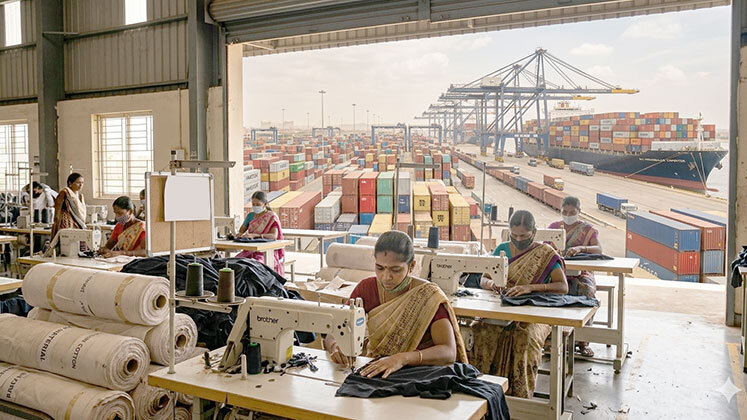
Textile manufacturing units in Tamil Nadu’s Perambalur district are facing mounting financial pressure as raw material prices continue to rise sharply amid the ongoing conflict in West Asia, raising concerns over production cuts and potential job losses.
Industry sources indicate that the prices of key inputs such as polyester fibre and synthetic yarn—both derived from petroleum products—have increased significantly in recent weeks. The surge has been attributed to disruptions in crude oil supplies and shipping routes in the Gulf region. Polyester fibre prices, in particular, have risen steeply, with similar upward trends observed across other synthetic materials used in textile production.
The situation has been compounded by delays in imports and escalating freight costs, placing additional strain on small and medium-sized enterprises (SMEs). Export-oriented units are especially affected, as disruptions to established shipping routes have led to delays in cargo movement and difficulties in meeting delivery timelines. Freight rates have also increased substantially as exporters shift away from Gulf-based airlines, which were previously preferred for their cost efficiency.
C. Balakrishnan, a merchandiser at a Karur-based textile company, stated that raw material costs—particularly dyes—had risen by 15% to 30%, while polyester prices had increased by approximately Rs. 40 (US $0.43) per kilogram. He added that the cost of other essential inputs, including elastic and packaging materials, had also escalated sharply. He noted that manufacturers were unable to pass on these higher costs to buyers due to intense competition, resulting in shrinking profit margins.
As a result, several units have scaled back production, while others are operating intermittently in an effort to manage rising input costs. The financial strain is particularly acute for smaller units with limited working capital, many of which are struggling to sustain operations under current conditions.
A Karur-based firm, Stellar Fashion Incorp, which operates a manufacturing unit in Perambalur producing undergarments, is among those facing significant challenges. The company employs around 200 underprivileged women and relies heavily on elastic materials, making it especially vulnerable to cost fluctuations. Management has indicated concerns that a prolonged crisis could directly impact workers’ livelihoods.
Industry stakeholders have warned that if the current situation persists, the combined effect of rising input costs, supply chain disruptions and constrained margins could have broader implications for employment in the region. Textile manufacturing remains a key source of livelihood in Perambalur and surrounding areas, and sustained disruptions could place considerable strain on the local economy.