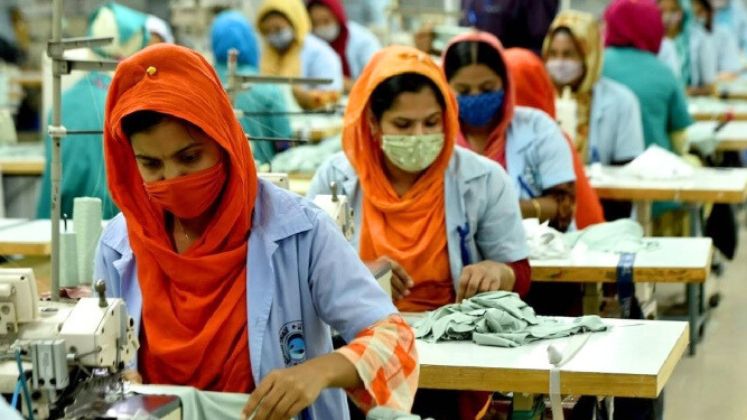
According to a recent World Bank assessment, Bangladesh may increase female worker participation by up to 21 per cent, which would increase its manufacturing output. Considering Bangladesh’s comparatively high baseline labour productivity in comparison to other South Asian nations, this anticipated development is noteworthy.
Notwithstanding the successes in the apparel sector, the report highlights a sizable gender disparity in the larger manufacturing sector, where the female labour participation rate remained at 37 per cent in 2022 and 2023. Barriers that keep more women from joining the workforce include supply-side limitations, restrictive regulations, and conservative social standards.
The World Bank’s findings are supported by economists, such as Professor Selim Raihan of the South Asian Network on Economic Modelling, who also highlights other demand-side barriers to women’s employment. They draw attention to the fact that many businesses lack workplace policies that are conducive to women’s equality and that companies are frequently hesitant to hire women.
The paper also points out that tackling supply-side and demand-side barriers could help close the gender employment gap that currently exists in the manufacturing industry. The need for improved transit alternatives, safety and security concerns, and the disproportionate amount of caregiving that falls on women are some of the major obstacles.
The World Bank urges governments, the private sector, and communities to work together to implement the necessary reforms and remove current obstacles, emphasising that increasing female labour force participation is essential for Bangladesh to realise its full manufacturing potential.