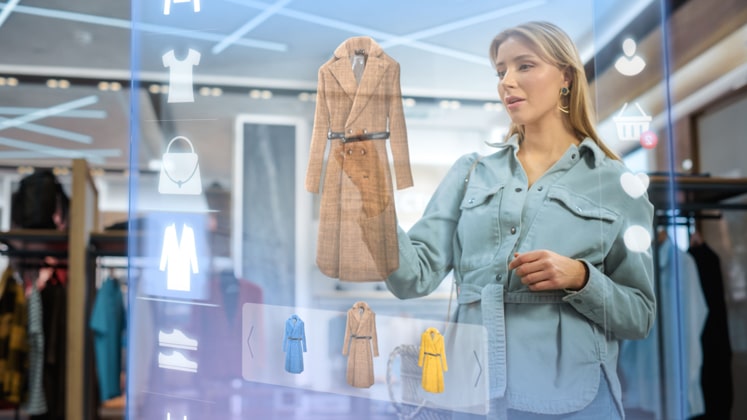
Digitisation, 3D sampling, blockchain and RFID are some of the significant tools of the textile and apparel industry to improve the bottom line and ensure transparency across the textile value chain for the end consumer. These tools are examples of how technology is being used for ‘Good’. Apart from the digitisation of various processes, technology is also supporting in sustainability. Sourcing of sustainable fashion products increasingly requires full supply chain traceability to ensure the integrity of sustainability claims. So, sustainability and traceability are two sides of the same coin and our purpose is to accelerate the realisation of 100 per cent sustainable fibre pledge by providing radical transparency in the textile value chain.
Right from cotton to the final product, technology is supporting sustainability and collective efforts are the key in this regard as certification bodies, social enterprises to top business groups and tech-based exerts have joined hands. For example, the textile processing standard for organic fibres – Global Organic Textile Standard (GOTS), European Space Agency (ESA) and AI company Marple, a German software development firm, have launched a new demonstrator project that aims to show the potential of remote satellite monitoring of organic cotton cultivation systems. The project will run across the distinct cotton-growing regions in India, with the first results expected by the end of 2023.
In a similar development, London-based CottonConnect, a pioneering social enterprise, reimagined the future of supply chains and Haelixa from Switzerland pioneered developing and commercialising physical product traceability solutions to ensure complete end-to-end supply-chain transparency.
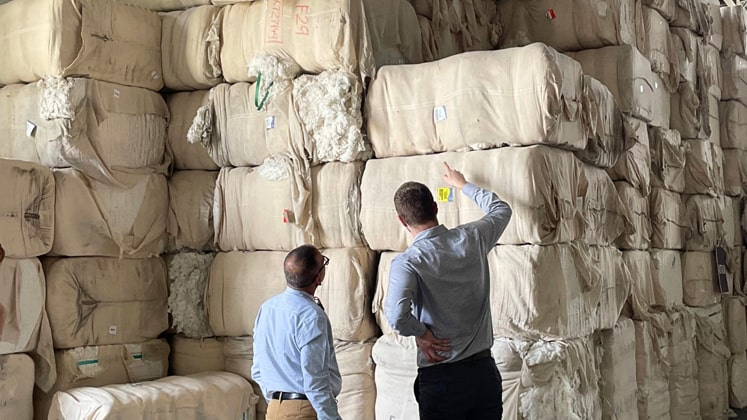
Through these initiatives, cotton farmers in Rajasthan and Punjab will get the benefit of traceability. It will allow cotton fibres to be fully traced using digital and physical traceability solutions. During the project, the DNA marker is applied at the ginning stage; when the cotton fibre is separated from the seed, the lint cotton is sprayed with the DNA marker.
Once the marker adheres to the fibre, all the material manufactured from that cotton can be tested at any point in the supply chain, proving that the same DNA-marked fibre was used to manufacture specific garments. It can then be digitally traced through CottonConnect’s proprietary software tool, TraceBale, based on its ‘bottom-up’ data gathering approach, providing visibility to the cotton journey from the farm group to the finished product.
To provide traceability and transparency solutions, Birla Cellulose, the pulp and fibre business of the Aditya Birla Group, a leading sustainability-focused Man-Made Cellulosic Fibres (MMCF) producer, has collaborated with TextileGenesis, a blockchain-enabled digital traceability platform.
It is worth mentioning here that Birla Cellulose’s blockchain-based and molecular tracer-backed platform ‘GreenTrack – Fibre Traceability tool’ was launched in 2019 and now it has 90+ brands and 1500+ value chain partners on board with over 56,000 MT of fibre tracked across the globe. However, brands included on the TextileGenesisTM platform are different from those on the GreenTrack platform.
Leading Indian company Arvind is also amongst the users of TextileGenesis. Apart from TextileGenesis, there are a few other platforms also that are developed by India which effectively support traceability.
InfiniChains, a start-up that provides traceability solutions, led by blockchain technology, to various industries including fashion, is founded by Parth Patil, Ravi Agrawal and Jitesh Shetty.
Its traceability dashboard ‘Credible’ allows brands to visualise the supply chain for sourced products, check claims associated with them and inspect the origin of the raw materials. Credible is said to be a next-generation technology platform built from the ground up for fashion brands that drastically turn their purchase order (PO) into a lens! A lens that gives brands deep insights into the traceability of the material and upstream processes to the seed and all this happens through technology that uses blockchain and AI models to enable automation and collaboration across upstream suppliers.

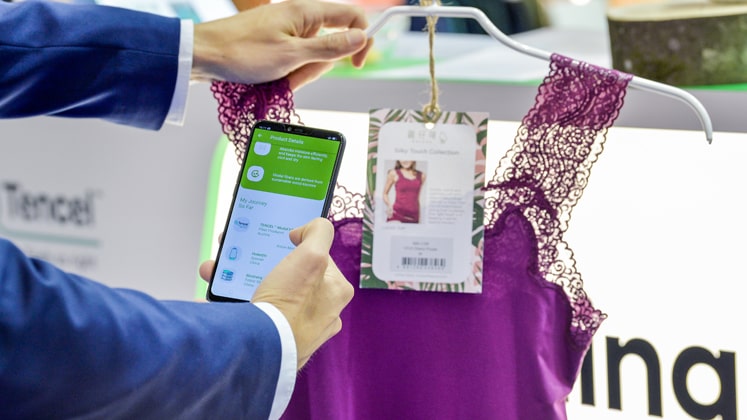
The company was one of the first to enter the Indian apparel industry in collaboration with leading garment maker Pratibha Syntex to eliminate challenges in their textile supply chain. In the successful pilot project, every garment had a tag with a QR code, which could be scanned through an app and the entire journey of the garment from farmer to the end product was visible. One could donate directly to the farmer through a payment gateway or else the donation could be given to a cause like plantation, women’s education, etc.
TrusTrace is another company founded by Indians – Shameek Ghosh, Hrishikesh Rajan, Madhava Venkatesh and Saravanan Parisutham – aiming to make the fashion supply chain more informed and transparent for retailers, brands and consumers.
Through SaaS model, TrusTrace enables companies to trace the entire product journey from fibre to garment to fibre – maximising impact while keeping everyone in the know-how. This includes production facilities, product certifications, product sustainability labels and footprint computation across garment manufacturers, fabric manufacturers, wet processing units, spinners, fibre manufacturers and beyond.
Giants taking steps
Responsible Sourcing Network and Shahi Exports have announced their collaboration in promoting due diligence towards ethical cotton sourcing practices in the garment industry. YESS (Yarn Ethically & Sustainably Sourced) is an initiative by Responsible Sourcing Network that has dedicated several years to developing rigorous due diligence standards to achieve a forced labour-free cotton supply chain for the garment and textile industry.
“As India’s largest apparel manufacturer and exporter, Shahi is committed to producing goods using ethical, fair and sustainable practices. We are thrilled to embark on this journey and align ourselves with global standards of due diligence. We recognise that efforts towards traceability require industry collaboration and we are confident that YESS will provide valuable support in achieving this goal,” stated Anant Ahuja, Head of Organizational Development at Shahi Exports.
Realising the importance of traceability and ESG transparency in 2021, textile giant Welspun India launched one of the largest traceability and ESG transparency rollouts of the textile industry – Wel-Trak 2.0 Blockchain. The upgraded platform has been designed to help the stakeholders – from retailers to farmers and manufacturers to suppliers, traders, certifying bodies and end consumers – to track raw materials throughout the supply chain back to its origin.
Supporting companies through digitisation
Few top Indian textile and apparel companies are exploring NextGen technologies to solve business problems and meet ambitious organisational aspirations, whether it is advanced workflow technologies with deep learning capabilities, Robotic Process Automation (RPA), AI, ML or AR.
Apparel is essentially made of fabric and trims and to get the sample approved by brands, the sample has to be physically sent to them. An alternate process is to create a digital twin of the same garment using 3D and VR technology and send these for approval to speed up the approval process by around 90 per cent. This improves turnaround time and customer experience during sampling.
Digitisation is no longer a fancy tool to impress customers, but an absolute necessity to ensure quick reaction time from vendors and add flexibility to operations. There are Indian tech companies that do not have direct relation to sustainability or transparency initiatives but their support has digitised the apparel manufacturers, retailers, brands and sourcing companies. It has helped companies to become more efficient and profitable.
BlueKaktus, is a well-established Indian company that specialises in business optimisation solutions through its AI-based technology platform that enables companies to reduce costs, have a faster speed to market and improve productivity across the entire fashion value chain (right from yarn to retail store). Through its software, it serves manufacturers as well as brands, retailers and sourcing companies. Leading brands, retailers and e-retailers like Lifestyle, Myntra, USPA, Amazon, Arrow, etc., are delivering superior customer experiences using its technology.
World Fashion Exchange (WFX) also has been at the forefront of building tech solutions specifically for fashion businesses. Its cloud-based software helps garment manufacturers and brands overcome challenges, increase productivity, produce better quality products, have faster lead times and reduce costs.
There are apparel manufacturers like Laguna Clothing, Avanti Overseas, Banswara Syntex, R K Industries and a few others that are using shopfloor real-time monitoring tools, executing MES to track the shopfloor process in real-time.
Brands and retailers’ thrust
Various international brands and retailers have their thrust on traceability solutions and there are good examples of such initiatives. Developed in collaboration with BESTSELLER, Kering and Zalando, Fashion for Good today has launched the Viscose Traceability Project, which applies innovative blockchain technology to trace viscose in the textile supply chain spanning eight countries.
VF Corporation – the company owning brands like Vans®, The North Face®, Timberland® and Dickies® – has achieved its goal of publishing traceability maps for 100 of its brands’ most iconic products in FY ’22 and the company will continue to expand its traceability programme, making progress against its goal to trace five key materials through 100 per cent of the supply chain by FY ’28.
The use of sustainable technology at store level
It’s a widely known fact that technologies can enhance sustainability manufacturing practices; however, when it comes to the retail front, many brands and retailers have also adopted innovations that can help make stores greener and sustainable.
Apart from offering stylish and environment-friendly clothing, fashion retailers have started supporting sustainability by opting for ‘greener stores’. They are employing energy-saving technologies, focusing on water efficiency and reducing CO2 emissions.
Furthermore, the use of LED fixtures, rammed earth and recycled fabric insulation shows their commitment to sustainability extend beyond product lines, incorporating organic and sustainably sourced furnishings, biodegradable mannequins and an air conditioning system with nano-carbon technology.
The retailers also leverage data analytics to predict demand and produce inventories that’s exactly needed. Data analytics gain insights into customer behaviour, preferences and trends. This can enable retailers to personalise the shopping experience, optimise inventory management and forecast demand. For example, the fashion brand Zara uses artificial intelligence to analyse customer data and optimise its inventory management, resulting in reduced stockouts and improved sales.
Data gathering and analysis: Metaverse technology can gather information on consumer behaviour and preferences, which can be used to guide the development of environmental-friendly business practices like cutting waste, improving supply chain management and conserving energy.
AR/VR also in focus
Virtual fashion shows: These reduce the need for costly physical events that require transportation, lighting and set construction. This can lessen the carbon footprint of events like fashion shows.
Digital product sampling: This allows users to interact with and try on virtual goods before making a purchase. This can minimise waste and the need for physical product samples.
Sustainable product design: By giving designers tools to make virtual prototypes and test various materials and designs, metaverse technology can support sustainable product design. This can lessen waste and the negative effects of the product development process on the environment.