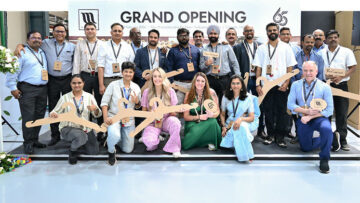
In an effort to bolster Rajasthan’s garment export sector, the Garment Exporters Association of Rajasthan (GEAR) has established a dedicated training and research facility aimed at addressing the industry’s persistent shortage of skilled and semi-skilled labour.
The newly formed GEAR Training & Research Foundation will focus on delivering industry-aligned skill development programmes while also undertaking research to better understand global market requirements and enhance export competitiveness.
Industry stakeholders in the state have long struggled to source adequately trained personnel, with shortages of skilled operators, pattern makers, computer-aided design (CAD) specialists, and quality control professionals emerging as critical constraints on production and export growth.
Rakshit Poddar, President of GEAR, stated that the institute was intended to directly address the shortage of skilled manpower by offering structured, high-quality training programmes. He noted that the training modules would encompass a broad spectrum of roles within the garment sector, including tailors, master trainers, pattern makers, quality controllers, checkers, merchandisers, and designers.
He further explained that course durations would remain flexible, ranging from short-term programmes of 15 days to more intensive courses lasting up to three months, depending on curriculum design and faculty inputs.
On the funding model, Poddar indicated that training costs would be shared between candidates and industry participants, adding that the decision not to offer programmes entirely free of charge was intended to ensure greater commitment and seriousness among trainees, thereby improving outcomes and employability.
The institute aims to train between 1,000 and 1,500 students annually across multiple disciplines, creating a steady pipeline of industry-ready professionals for the garment sector.
GEAR has mobilised approximately Rs. 3.5 crore (US $372,000) for the initiative from its members and is planning to approach relevant central and state government agencies for additional support.