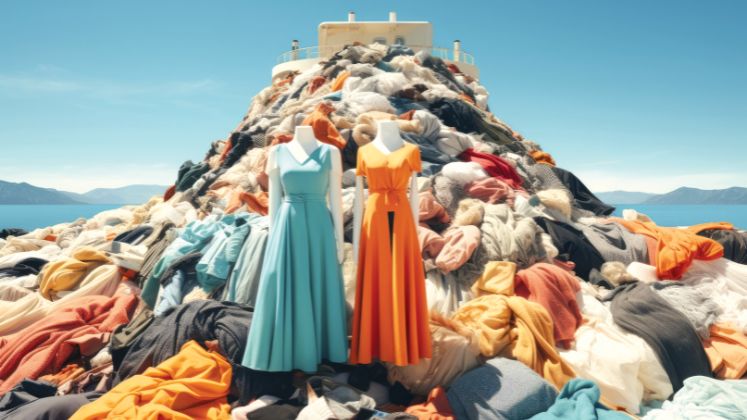
It’s often said that what you throw away says more about you than what you keep and nowhere is that more relevant than in Bangladesh’s garment industry, where millions of tonnes of fabric scraps pile up each year.
On an average, 10% to 15% of fabric is lost during cutting, and in Bangladesh, that adds up quickly. The industry generates around 577,000 tonnes of waste each year, including 250,000 tonnes of pure cotton, enough to produce an estimated 1.25 billion garments. But a change is underway. Manufacturers like Pearl Global Bangladesh are taking decisive steps to turn cutting waste into a valuable raw material, proving that circular practices can work on the factory floor.
The key ingredients driving this transformation are strong leadership, cross-functional collaboration and a willingness to challenge the status quo.
“We have embarked on an innovative journey to transform cutting waste into value. Recycling textile waste is not just about managing leftovers, it is about creating impact by reducing landfill contribution, lowering carbon emissions, decreasing reliance on virgin raw materials like cotton and polyester and saving significant amount of water, energy and chemicals,” said Vikas Mehra, CEO, Bangladesh Operations, Pearl Global.
| At Pearl Global, sustainability is not a buzzword, it is a core responsibility. From the factory floor to the boardroom, every step counts. Because the future of fashion lies not in fast consumption, but in thoughtful creation, resourcefulness and collective action. –Vikas Mehra, CEO, Bangladesh Operations, Pearl Global |
The company operates nine manufacturing units in Bangladesh with an annual production capacity of over 54 million pieces, producing a wide range of products that include woven and knit garments, denim, sleepwear and loungewear, activewear and athleisure, as well as tops and bottoms for men, women and kids.
Change always starts at the top, and at Pearl Global Bangladesh, it was Vikas who set the tone. With clarity of vision and hands-on leadership, he highlighted the strategic importance of recycling, engaged production and store teams through ongoing dialogue and inspired a culture shift towards sustainability and responsibility. With this change, teams on the cutting floor began to see waste not as disposable but as valuable.
“Raw materials like cotton are finite and resource-intensive and the first step towards change begins where garments are born at the cutting table,” stressed Vikas. To turn this vision into action, the Pearl Global team developed a simple yet powerful system, carefully designed to slot into existing workflows without causing disruption to production or compromising on product quality.
The process begins with the segregation of cutting waste style-by-style and colour-by-colour, followed by simultaneous bagging and clear labelling with marker pens.
“Pearl Global Bangladesh has handed over 120 metric tonnes of fabric cutting waste in 2024 for recycling, diverting it from landfills and giving it a second life in the supply chain,” highlighted Vikas. While challenges remain, efforts like these indicate that the RMG industry has viable pathways to adopt circular models.