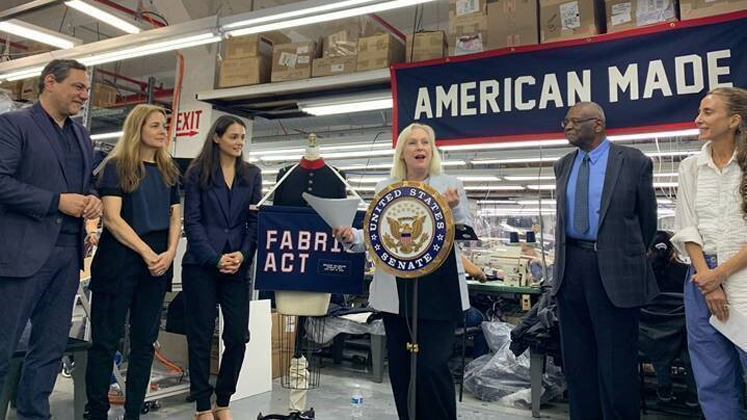
The USA has introduced Fashioning Accountability and Building Real Institutional Change (FABRIC) Act recently that would protect nearly 100,000 American garment workers and help revitalise the garment industry in the country by improving working conditions and reforming the piece-rate pay scale.
Passed by the US Senator Kirsten Gillibrand, the FABRIC Act proposes to address key issues through five central pillars: restructuring pay rates and providing minimum wage as a floor with productivity incentives on top; establishing new liability measures that compel major retailers to become allies in combating workplace violations; introducing recordkeeping and transparency measures; incentivising reshoring; and creating a domestic garment manufacturing grant programme.
The US garment workers are said to have faced unsafe working conditions, wage theft and piecework pay, which often prioritises fast fashion over the safety of workers. Supply chain disruptions caused by the pandemic have only exacerbated these ongoing issues, which are disproportionately shouldered by women (in the US cut-and-sew apparel manufacturing industry, women make up 61 per cent of workers), people of colour and immigrant workers.
“It’s time to take bold action at the federal level to change the fabric of the American garment manufacturing industry. The United States was once home to a booming apparel manufacturing industry, and it’s time to re-examine how this industry has evolved over the past 50 years and change how we treat our workers,” commented Senator Gillibrand.
Gillibrand further added, “From designers to managers to workers, women overwhelmingly play a leading role in this important industry. However, garment workers in the United States are often underpaid, overworked and put in unsafe conditions. Protecting the garment workforce is a sustainability issue and has direct impacts on environmental sustainability, community development, gender equality and economic prosperity. This legislation would thread the needle of protecting workers’ rights, putting an end to abusive pay rates and ensuring equitable compensation for garment workers, while also making historic investments in domestic garment manufacturing so we can not only make American, but buy American.”
It’s worth noting here that, at its peak in April of 1973, the US apparel production industry employed 1.4 million people and the number has drastically reduced to just 93,800 as of April 2022.
Another issue that the FABRIC Act will address is rising apparel imports from China that have increased by over 10 times in last 30 years. The new act aims at giving a huge push to nearshoring/reshoring so as to reduce dependency on China.
US $ 40 million grant programme is there in the FABRIC Act to ramp up Made in American production, with funding available for workforce development and machinery upgrades. Nonprofits can access the programme as well. Also, a 30 per cent reshoring tax credit will be given to companies.