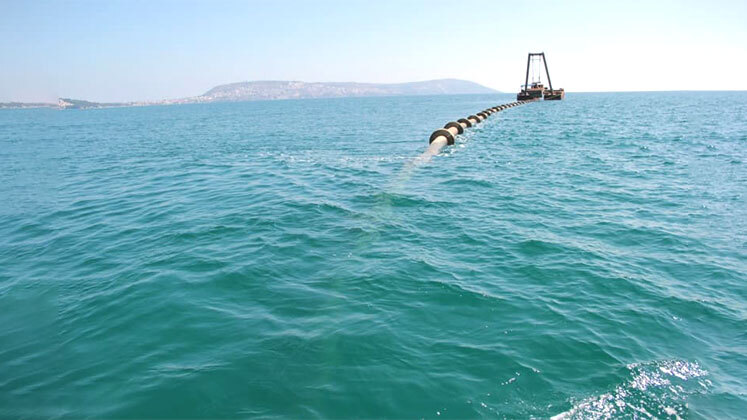
The Gujarat government is moving closer to launching the ‘Surat Cluster Deep Sea’ project, a major environmental initiative aimed at benefiting more than 400 textile processing, powerloom weaving and other industrial units in and around Surat.
The pilot project proposes the disposal of around 600 million litres per day (MLD) of treated industrial effluent from Kadodara GIDC, Eco Textile Park, Palsana GIDC, Pandesara GIDC and Sachin GIDC. Under the plan, treated wastewater will be discharged into the sea through a pipeline, with the state government bearing 80% of the project cost and the remaining 20% to be funded by participating industrial units.
A key meeting on the project was held at Pandesara GIDC between textile industry representatives and the Minister of State for Forest, Environment and Climate Change, Pravin Mali. Discussions focused on industrial growth, sustainable development and emerging opportunities for the textile sector. As outlined under the Surat Economic Development Plan, effluent treated at Common Effluent Treatment Plants (CETPs) in GIDC industrial estates in and around Surat will be transported through a common pipeline and released into the sea approximately 10 kilometres offshore at a depth of around one kilometre.
The government has indicated that industrial units located outside GIDC areas will be required to connect to the nearest GIDC facility. Units that fail to comply may face closure, as the state plans to adopt a stricter stance against polluting industries across Gujarat.
At the meeting, the Minister of State highlighted the efforts made by industries in the Sachin and Pandesara GIDC areas towards environmental protection and acknowledged initiatives undertaken under ‘Mission Life’. He noted that while the textile sector continues to grow in compliance with regulatory norms, it must also be prepared to capitalise on opportunities arising from the ongoing industrial transformation.
MLA Manubhai Patel said the State Government maintained a supportive approach towards industrial development. He called for improved road infrastructure in GIDC areas to facilitate transportation, expedited completion of the Deep Sea project and the establishment of a skill development centre to provide locally trained manpower for industries.
The meeting was attended by officials from the Gujarat Pollution Control Board, including the regional officer from Palsana, representatives from KIM and Kadodara, presidents of various industry associations, textile industrialists and processors, who shared their views on the project.
The South Gujarat Textile Processors Association has submitted a proposal to the state government, following which the authorities are expected to issue a tender, allowing the project to move into the execution phase.