Floreal Bangladesh, a subsidiary of the renowned global textile conglomerate CIEL Textile, has established itself as a leading sustainable apparel manufacturer in Bangladesh. Specialising in high-end knitwear products, Floreal Bangladesh operates as a cutting-edge manufacturing facility with an impressive capacity of approximately two million high-end knitwear apparel products per year. The company’s commitment to sustainability encompasses its products, processes, people and the environment.
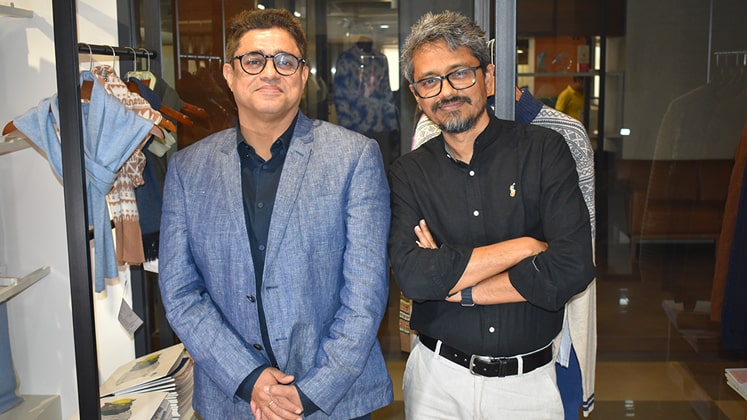
Recently, a team from Apparel Resources (AR) had the privilege of visiting Floreal Bangladesh’s remarkable premises located in Dhaka. During the visit, insightful interviews were conducted with Ashwini Vij, the CEO, and Sanjeev Mishra, Director of Marketing. These interviews provided valuable insights into the company’s progress across various facets of its operations. Furthermore, the team obtained significant information regarding the current order scenario and Floreal Bangladesh’s long-term growth strategy. Here are some notable excerpts from those discussions.
AR: How is the global apparel market situation right now from Floreal’s business perspective? Is the current order scenario hampering your long-term order projections?
Ashwini: The current market conditions have been sluggish and the situation in Ukraine since February of last year has had a ripple effect on Bangladesh. This has led to operational challenges and increased costs, particularly due to rising gas and electricity prices.
Furthermore, customers have become more cautious about their expenses, resulting in a slowdown in the retail market. As a result, order confirmations have been delayed this year as customers carefully evaluate the market situation and opt for a more risk-averse approach compared to the previous year. Although certain markets are faring reasonably well, the UK market has been impacted by a slowing economy and currency fluctuations.
While some stability is gradually returning, a complete recovery to pre-pandemic level is not anticipated in the near future. The recovery process will be gradual rather than sudden, unlike the post-pandemic period. Japan is expected to perform well, while Asia remains challenging due to the impact of fuel prices on currency exchange rates, leading to a significant depreciation of the Bangladeshi Taka over the past year.
Consequently, companies that produce large quantities of clothing have witnessed a decline in their order volumes. The medium and low-end market segments have been particularly affected, impacting major retailers as consumers exercise caution in their fashion purchases. On the other hand, the high-end market segment has shown growth, evident from the figures and trends. Although the medium-high segment will also experience an impact, it is hoped that the severity will be relatively lower.
The next six months are expected to pose significant challenges, given the low dollar reserves in Bangladesh. However, despite facing our own challenges, we have successfully implemented specific strategies for a few of our customers, which has resulted in their satisfaction and confidence in our capabilities.
AR: How dependent are you on raw material imports from China? Does it make sense for Floreal to move away from China and start developing sourcing capabilities in Bangladesh itself?
Ashwini: Despite our frequent discussions and efforts to reduce our dependency on raw materials from the Far East, the reality is that we still heavily rely on China. However, we are actively working on diversifying our sourcing locations and gradually reducing our reliance on China. This includes promoting locally manufactured yarns and raw materials to our clients, which is showing positive progress.
Shifting away from China is not an easy task, given their dominance in the industry for several decades. Establishing alternative clusters in different parts of the world requires substantial investment and large-scale factories, which China excels in. While we may be able to make a small shift of 5 per cent -10 per cent, expecting a significant shift of 20 per cent is unrealistic. Any country attempting such a drastic shift would face immense challenges. Currently, Vietnam lacks the capacity, and Bangladesh is still working on developing its infrastructure, although we anticipate significant progress in the coming years.
However, it is worth noting that Bangladesh has witnessed remarkable growth in exports, particularly in the last few years. Despite the challenges posed by the pandemic, exports had reached US $ 32 billion and are now US $ 44 billion. We are optimistic about surpassing the US $ 50 billion mark this year and Floreal is proud to contribute to this value. Nonetheless, transitioning away from China cannot occur overnight and will require a considerable amount of time and strategic planning.
AR: Floreal Bangladesh is quite strong on the sustainability front. Please share with us your recent initiatives.
Ashwini: This year, Floreal Bangladesh is undertaking several initiatives to drive progress within our company. A primary focus for us is promoting sustainability throughout our operations, encompassing three key pillars: talent, sustainability and digitisation.
Firstly, we are dedicated to fostering a diverse and inclusive workplace culture that empowers our employees to reach their full potential. Investing in our talent is essential for staying competitive and adapting to the evolving technological landscape. To address the challenge of finding the right talent, we have introduced the International Graduate Program (IGP) in collaboration with esteemed universities in India and Bangladesh. Through this program, we select the most promising textile students and offer them a six-month internship, followed by consideration for the international program. This provides valuable experience and contributes to our sustainability goals.
While talent resources may be limited in some countries where we operate, such as Mauritius and Madagascar, we are actively working to overcome these challenges. In India, for example, there is a strong interest in technology, but there is a preference for white-collar jobs over blue-collar positions. We are committed to finding innovative solutions to attract and retain talent in these regions.
In terms of sustainability, we recognise the significance of protecting the environment and minimising our ecological footprint. We are implementing measures to reduce waste and emissions, as well as adopting responsible sourcing practices for materials and resources. Despite the cost implications, we are taking ownership by promoting sustainable materials and products. We are also improving factory compliance and engaging in corporate social responsibility (CSR) initiatives aligned with our environmental, social and governance (ESG) goals. For instance, we organise health camps not only for our employees but also for the local community, building rapport and fulfilling our responsibility to the environment and surrounding communities.
Water conservation is another area of focus, especially in Bangladesh where water scarcity is a concern. To address this, we actively engage in tree plantation and water conservation efforts. Additionally, we prioritise the use of gas over coal for our boilers and ensure our manufacturing processes are environmental-friendly. We have also initiated conversations with our buyers to shift towards using recyclable or degradable materials, helping to build trust and promote sustainability. We even share our sustainability initiatives, such as the Eco Index and educate buyers on our efforts to reduce environmental impact. We understand cost constraints and provide alternative options when necessary, fostering a strong reputation and driving sustainable practices.
Lastly, digitisation plays a crucial role in improving efficiency, reducing waste and maintaining competitiveness. We have implemented 3D technology in our product development, resulting in significant raw material savings and increased speed to market. Moreover, our state-of-the-art washing area is equipped with European washing and finishing equipment that minimises water usage and chemical discharge.
By prioritising talent, sustainability and digitisation, Floreal Bangladesh is committed to driving positive change within our company and contributing to a more sustainable future.
AR: How do you convince a buyer that implementing sustainable practices actually incurs a lot of cost for which they need to contribute also?
Ashwini: In response to your question, our motivation to implement sustainability initiatives stems not from external pressure, but from our genuine recognition of its importance as the way forward. We firmly believe that sustainability is a fundamental aspect of the fashion industry, much like the expectation of garment quality. While some factories may comply with sustainability standards solely due to buyer requirements, our commitment to sustainability is driven by our own internal beliefs. We belong to the first category of factories motivated by our intrinsic values.
Moreover, the growing global conversation around sustainability has compelled brands to pursue sustainable practices. It is no longer merely a desire but a necessity for brands to incorporate sustainability into their operations. This encompasses not only environmental considerations but also the social impact of their actions. The environmental aspect involves reducing resource consumption and minimising waste, thereby lessening the industry’s ecological footprint. The social aspect pertains to the well-being and welfare of employees, communities and society as a whole.
For instance, the discharge of water contaminated with chemical pollutants can have adverse effects on the surrounding community. As responsible companies, it is our duty to take proactive measures to lessen such impacts on both the environment and the people it encompasses. Ultimately, sustainability must become an integral part of the fashion industry to pave the way for a more sustainable and resilient future.
AR: Digitalisation is one of the important strategies for Floreal as you mentioned. How do you envisage it to uplift your business operations keeping technology and humans in sync with each other?
Sanjeev: In the post-Covid era, manufacturers have become increasingly aware of the significance of digitisation in the realms of sales and marketing. Today, there are numerous ways by which both our company Floreal and our competitors are progressively adapting to the current market scenario.
At Floreal, we pride ourselves on being well ahead of our competitors in terms of our advanced digitised developments in sales and marketing. Leveraging software solutions such as Clo3D, Browzwear and Adobe Substances, we have embraced a sustainable approach to sampling, effectively replacing physical sampling with virtual sampling. In addition, we have integrated platforms like Clo-Set and our own home-grown applications, which offer brands much flexibility to engage in real-time data transfer, facilitating seamless communication, comments and approval processes.
| Floreal Bangladesh is undertaking several initiatives to drive progress within our company. A primary focus for us is promoting sustainability throughout our operations, encompassing three key pillars: talent, sustainability and digitisation. |
While these software solutions have proven to be highly effective, we have taken a step further at Floreal by mixing multiple software applications to maximise their output. This integrated approach not only contributes to sustainability and cost-effectiveness but also significantly reduces our carbon footprint. We have already embraced 3D proto sampling, and in some cases, we have even transitioned to conducting 3D for sales man sampling. As our CIEL textile group’s statement is ‘go beyond’, we have started utilising virtual fitting extensively, which has proven to be a significant advantage in numerous cases. Our customers greatly appreciate these innovative approaches, which not only streamline communication but also expedite production lead times, ultimately giving us a competitive edge and driving sales growth.
Furthermore, as part of our digitisation efforts, we have incorporated a digital ‘try-on’ method, complemented by augmented reality (AR) technology into our marketing strategies. This cutting-edge approach has proven to be instrumental in increasing our sales and enhancing our overall marketing efforts.
Floreal has diligently embraced the digitisation of sales and marketing, leveraging a combination of software solutions, 3D sampling, virtual fitting and innovative marketing techniques like AR. These initiatives not only contribute to sustainability and cost-effectiveness but also position us as pioneers in our industry, constantly adapting to the evolving needs of the market and delivering exceptional value to our customers.