Last year, Fashion Revolution India went full steam ahead with digital dialogues and produced a series of talks called ‘The Shift’ where they were joined by designers, artisans, retailers, garment workers and industry experts in dialogue with sustainability advocates to deepen the network’s understanding about the impact of Covid and the organisation also rolled out a campaign called ‘Crafting Connections’ with the British Council that is still ongoing. The team will be releasing a policy report in the coming months about their Crafting Connections work jointly done by Fashion Revolution and the British Council. They also supported the global #payup campaign and #vocalforlocal. The Founders humbly say that simply put, Fashion Revolution is still in the embryonic stage in India and the team has a lot of work to do.
The big work
“It has been seven years since I took the role as Country Head and this year became the official Co-founder of Fashion Revolution India together with my colleague Aliya Curmally. In order to remain truly community led, we have coordinators in different cities and we have partners countrywide that come together to generate campaigns like #WhoMadeMyClothes, #WhatsInMyClothes and #WhoMadeMyFabric with a local interest,” comments Suki Dusanj-Lenz, Co-Founder & Country Head, Fashion Revolution India.
She then goes on to add, “The industry has responded very positively and some with cautious curiosity. Overall the industry has often asked us to collaborate with them and I would say that the real reason why the industry has responded so well is because they acknowledged all of the consumer led engagement that our campaign has generated. During Fashion Revolution Week in April 2020 alone, we reached over 391 million people; for this year, our count is still on. Numbers like this can’t be ignored and this is a huge reason why Fashion Revolution has become the world’s fastest growing sustainability campaign in the fashion industry. We release an impact report every year. We don’t, however, take on every offer that comes along. We like to dodge the ‘greenwashers’ but we also know how important it is to get in the same room and make change happen by aligning and sparking a dialogue with them.”
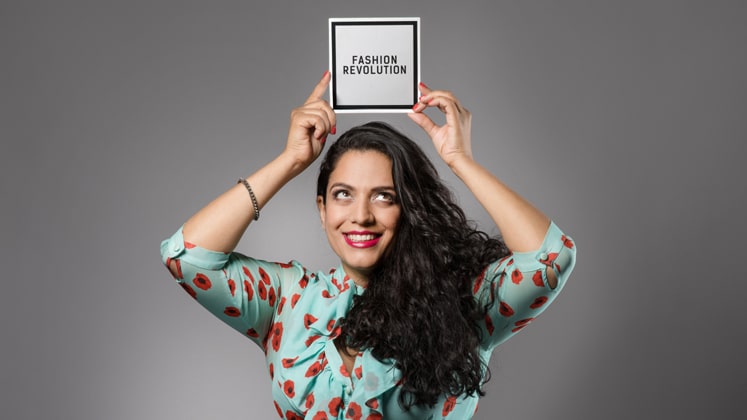
Makers, sellers and consumers of fashion have to all trigger a change in order to ensure better governance of the fashion industry. Suki is happy that some of the biggest designers, manufacturers and retailers are all getting to know about Fashion Revolution but she says that knowing about them is one thing but pulling the finger out to make change is all that really counts.
Also Read: To vegan or not to vegan! That is the question: India’s move towards vegan fashion
Garnering an impact
Approximately 1,200 students from schools that are a part of the Fairtrade India Schools Programme participated in classroom activities to understand fair fashion during Fashion Revolution Week this year, and learned about the need for transparency. They wrote to CEOs of Fairtrade brands to celebrate their commitments to fair fashion as well as ask #WhoMadeMyClothes that are truly inspiring.
“I joined an online event with Fairtrade India and some of the students were vocalising their thoughts and views. I would let them run the world. They ask all the right questions and from what I heard want all the right changes for a better world in fashion. Working with students and educators is the most beautiful part of our work. Fashion Revolution will continue to campaign for a revolution in the way the industry works, for the health of the earth and the oceans and for our own prosperity and well-being. We cannot continue to extract dwindling resources from an already stressed natural world, pollute our land and our oceans, fall far short of climate change targets, dump our waste on the shoulders of countries we have culturally depleted and ignore inequality and human rights abuses in every part of the industry,” Suki avers.

Retailing ethical clothing
“The price points for sustainable or ethical clothing are comparable to buying premium high street fashion brands, and less than designer brands, but overall it is a niche segment. It is a growing aesthetic and for those people for whom fashion also makes a value statement about who they are. Ethical and sustainable brands are evolving their aesthetics and showcasing their values and thus their audience will grow. We run our annual campaign during Fashion Revolution Week to raise awareness amongst brands, consumers, retailers, students and the media so that more people are aware that there is ethical versus unethical fashion,” mentions Aliya Curmally, Co-founder & Head of Strategy Fashion Revolution India.
She further adds that the key challenges in the fashion market in India today are the uneven post-pandemic recovery of markets and the need for stabilisation of wages for workers.
“Our current projects deal with Strengthening Markets for Artisanal Fashion and around Textile Waste Management. We are also looking at Efficiency in production around energy and water, as well as Wellness for Workers and Safety of Women in the Workplace. We will be launching a platform to highlight some cutting-edge and model practices from across the world as a showcase for brands and designers to draw inspiration from. We are also working with the faculty and students at Pearl Academy and other partners to design a handbook on how to tackle textile waste. We have in the past worked with textile brands to consult on where to send textile waste and have it brought back into another designer’s supply chain through upcycling,” Aliya states.
Unity in diversity
When asked how do the team at Fashion Revolution handle India’s diverse fashion market, Suki highlights, “Through collaboration and saying it how it is. Keeping it simple and accessible for people to understand. Take our #WhoMadeMyFabric campaign for example. We worked with the Tamil Nadu Alliance to kick off this campaign. Tamil Nadu is the largest producer of cotton yarn in India with over 2,000 mills employing 280,000 workers that supply international fashion brands. Approximately 90 per cent of the female workforce is under 25, and face problems such as pay below the minimum wage, sexual harassment, dangerous working conditions and excessive overtime. With the help of grassroots organisations in Tamil Nadu, we reached out to workers making clothes and fabrics for the fashion industry to ask them what they think about their work and what changes they want to see.”
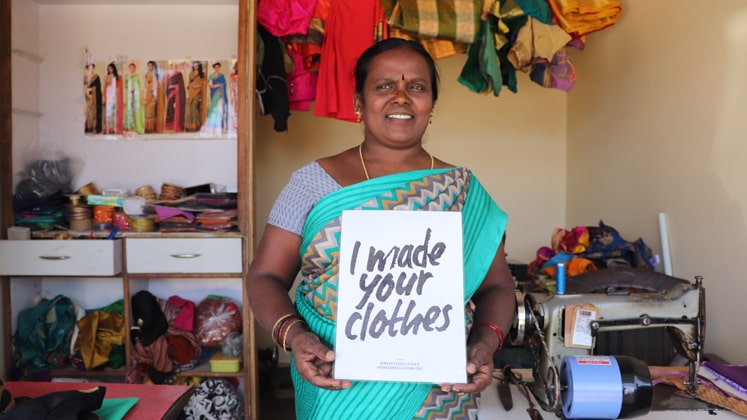
“As a producer of cotton, India has long been a pivotal part of the world’s textile supply chain. As we campaign for a global shift towards sustainable fashion, we are acutely aware of the value of India’s traditional fibres and textiles, which is even more a reason to ask #WhoMadeMyFabric to evolve our #WhoMadeMyClothes campaign” concludes Aliya.