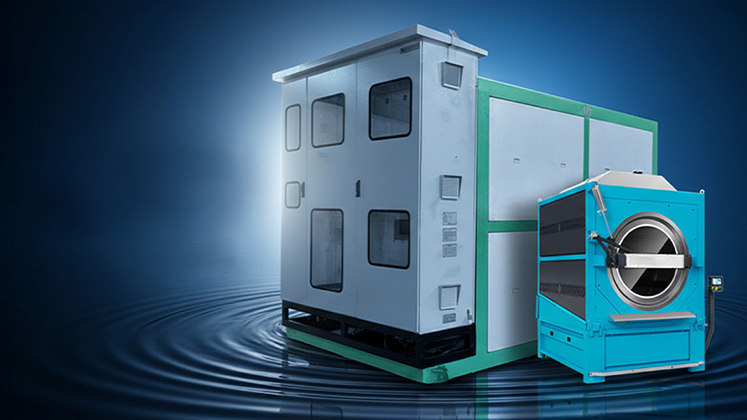
Sustainable fashion manufacturer Epic Group has taken a significant step towards carbon-free production with the installation of high-temperature industrial heat pumps at its apparel facility in Bhubaneswar, India.
The company is now operating heat pumps that use refrigerants to transfer heat—functioning in a manner similar to air conditioners but in reverse. These systems are considered among the most efficient forms of electric heating, often delivering two or more units of heat for every unit of electricity consumed.
Conventional heat pumps typically produce hot water at temperatures of around 90°C, insufficient for industrial dryers that require pressurised steam temperatures exceeding 150°C. To bridge this gap, Indian deep-tech start-up TRIGeN Decarbonisation has developed specialised heat pumps capable of generating pressurised hot water at 135°C to support Epic Group’s laundry processes.
Italian machinery manufacturer Tonello has also modified its industrial dryers to operate using pressurised hot water at 130°C, enabling seamless integration with the newly installed heat pump system.
A notable advantage of the technology is its ability to provide cooling as a byproduct. Epic Group is using this cooling function within its laundry facilities to maintain comfortable working conditions, particularly during periods of extreme heat, helping ensure suitable temperatures for workers.
Epic Group has funded a pilot project to refine the technical parameters of heat pump operation and to evaluate the associated capital and operational costs. The initiative requires enhanced electrical infrastructure, including larger transformers, upgraded switchgear and backup generators powered by renewable energy. According to the company, the pilot is expected to displace 12,500 metric tonnes of CO₂ over its lifetime.
Epic Group’s executive vice-chairman, Dinesh Virwani, said the company remained strongly committed to decarbonising its operations and supporting the wider industry’s transition. He stated that the success of the pilot would help drive broader adoption of heat pumps across the fashion sector, with early adopters setting a pathway that could reduce costs as the technology scales.