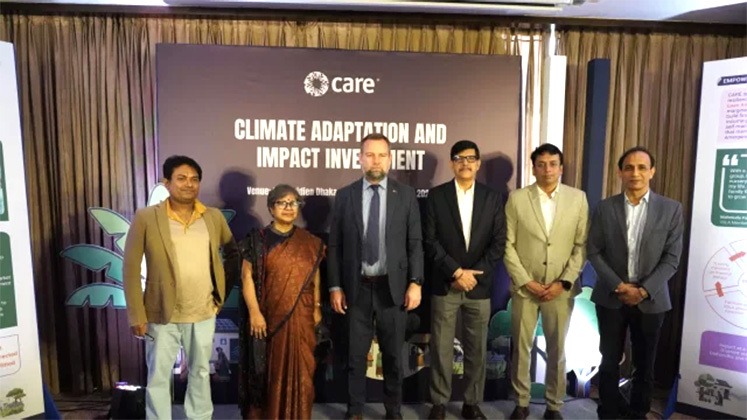
CARE Bangladesh convened a national forum on climate adaptation and impact investment in Dhaka, calling for a fundamental shift away from traditional humanitarian aid towards long-term, investment-driven solutions to address the country’s escalating climate risks.
The event brought together senior representatives from government and the private sector, development partners, civil society organisations, the media and community leaders to explore new approaches to building climate resilience, particularly for vulnerable populations.
Discussions centred on the need to move beyond grant-based assistance to revenue-generating, self-sustaining and commercially scalable models. Organisers said such approaches were essential to attracting impact investment and delivering durable outcomes for climate-affected communities.
Addressing the forum as a special guest, Danish Ambassador to Bangladesh Christian Brix Møller highlighted Bangladesh’s global reputation for adaptability and innovation in responding to climate change. He said Denmark would continue to share its expertise, technology and experience, while also learning from Bangladesh’s resilience-driven solutions.
A key feature of the programme was an interactive session in which local leaders shared firsthand experiences of grassroots adaptation initiatives. Participants discussed investment opportunities in livelihoods, women-led resilience programmes, climate-smart agriculture and disaster preparedness, areas identified by organisers as having strong potential for rapid and scalable impact.
Speakers also noted that traditional aid models alone were increasingly insufficient to keep pace with intensifying climate threats. They underscored the need for enabling policy frameworks, cross-sector partnerships and greater mobilisation of private capital to drive climate innovation.
Closing the forum, Kaiser Rejve, Director of CARE Bangladesh’s Humanitarian and Resilient Futures Programme, thanked participants and reaffirmed the organisation’s long-term commitment to advancing climate-resilient development in Bangladesh.