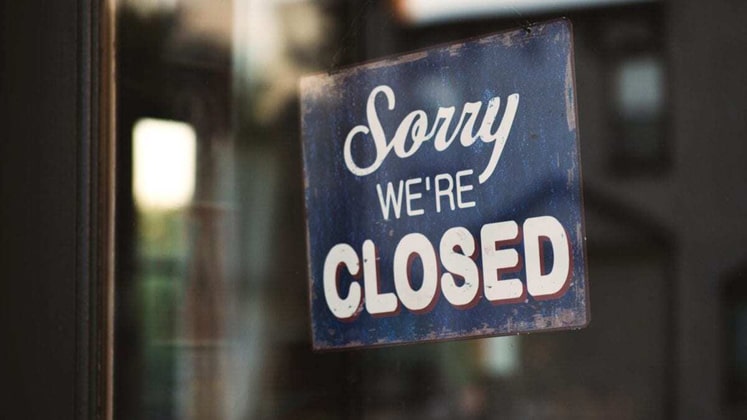
While the deadly pandemic has wreaked its havoc on every big and small industry, fashion and apparel sector too hasn’t been spared.
Store closures, no sales, migration of dollars from physical to digital retail and poor balance sheets are eventually leading many fashion retailers to go for bankruptcy filing under Chapter 11 – especially in last 4 months. Yes it’s worrying, but it is not bad.
In simple language, Chapter 11 is an attempt by the company to restructure its debts so as to pay all financial obligations. Now that shows intent of the firm to pay its debts, which is always a good indication.
In other words, companies are allowed to stay in business and work out methods to pay all its debts. It may be difficult to survive now, but it definitely gives an opportunity to revive and win.
Take a company like Centric Brands, which licenses several famous labels like Tommy Hilfiger, Calvin Klein and Under Armour, among others, which came to bankruptcy court with a ‘restructuring support’ agreement with all its secured lenders already in hand.
DIP financing of US $ 435 million may now help Centric Brand to emerge from Chapter 11 as a private firm.
That’s good for the brand! Chapter 11 is definitely not an end for any label. Every bankruptcy does not lead to outright liquidation; in fact firms can use bankruptcy as an open opportunity to change everything into their favour financially. And Centric Brands seems to be on its way to do it.
Then there’s Macy’s that is relying hard on digital sales and results are coming slowly. That’s probably the reason why despite store closures and poor Q1, Macy’s has ruled out bankruptcy and is now all set to reopen lot of their stores.
Also Read: Billion dollar losses strain Macy’s financials for Q1 2020; says bankruptcy is out of the picture
Similarly, many industry experts believe Chapter 11 will allow JCPenney to make good turnaround plans and help come out of the crisis strongly. JCPenney has been seeking US $ 1 billion in bankruptcy financing and is not in good shape – not surprising considering the retailer witnessed 88 per cent slump in April in Y-o-Y sales. However, many still feel JCPenney may come out of this and revive successfully.
Yes, one cannot deny that the deadly pandemic has definitely led to mass store closures and poor sales forcing several companies to file Chapter 11 and therefore attracted lot of world attention especially over the last few months.

In fact May 2020 saw a rise of 28 per cent in Chapter 11 filings from April, as per American Bankruptcy Institute. That’s not good news! While May saw bigwigs like JCPenney, Centric Brands and Neiman Marcus file for bankruptcy, the numbers have been huge since February.
Renowned designer jeans brand True Religion Apparel Inc., was one of the first fashion labels to file for Chapter 11 bankruptcy this year in Delaware. The liquidity shortage that the brand was facing since last year got worsened with the closure of stores in March and April due to coronavirus – leaving the retailer with bankruptcy as the only option.
Also Read: True Religion files for bankruptcy; second time since 2017
Dallas-based Neiman Marcus was next to proceed with bankruptcy protection after inking an agreement with majority of its creditors, which may help the retail biggie to end its current debt of US $ 4 billion.
Heavily burdened with debt from a private equity buyout, COVID-19 proved to be the final blow for J. Crew. The retail giant filed for bankruptcy in early May with plans to convert nearly US $ 1.7 billion in debt to an equity stake in the company. “The company projected US $ 900 million slump in sales after store closures in March,” said Michael Nicholson, COO, J. Crew.
Also Read: J. Crew may file for bankruptcy by the end of the week!
Similarly, Canada-based footwear giant Aldo did not pay rent for its stores for April and May, as the lockdowns have drained the cash reserves thereby forcing the retailer to seek protection.
Another Canada-based firm Reitmans – a renowned womenswear retailer – filed for bankruptcy protection under Companies’ Creditors Arrangement Act to allow restructuring of the retailer. That’s a shocker for a firm that employs 6,800 people and has nearly 600 stores across the globe.
Then there’s one of oldest US-based menswear retailers, Brooks Brother, which is in talks with several banks for potential bankruptcy that could come anytime soon.
It’s not just with US or Canada fashion labels; UK retailers like Debenhams, Autonomy Clothing, Laura Ashley too have collapsed into administration (as they call it in the UK).
While Debenhams entered into administration in April, Autonomy Clothing went into administration in March after closing all its stores. Autonomy Clothing hasn’t showed any indications of reopening any of its stores now. Cath Kidston is another retailer that has fallen into administration but the retailer has secured a deal to buy back the brand.
These are tough times and every fashion retailer is facing it, but as said before, it’s not the end. There is an opportunity to revive and that’s the silver lining in this cloud of insolvency.
It will be interesting to observe where the fashion retail sector heads to in next 3 months, how many survive and – importantly – how many revive.
The industry is waiting with bated breath.