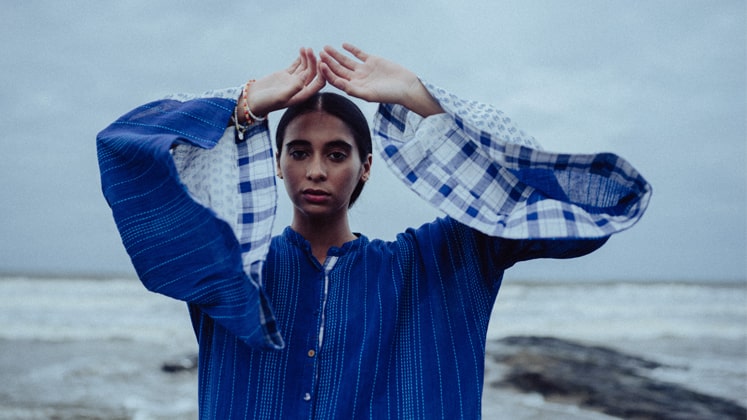
Technology can be looked at both ways – good and bad. It has its own set of pros and cons. It’s how you use it to your advantage which will make you stand out. Definitely from the pandemic perspective, we can look at technology as a big boon, “as it helped us to grow closer to our artisans and buyers, as the communications were based on WhatsApp, Zoom, Botim, Viber, Social Media due to the prevalent social distancing norm. I can definitely say for sure, that our reach has widened, and we also now have a far higher global audience as compared to pre-COVID. But if you had to compare technology used in the process of making and weaving textiles, then I can say with assurance nothing can beat a fully handmade product in its glory, as it embodies luxury and sophistication,” Chetan Daruka, Founder, Lotus Veda mentions.
Also Read: Luxury Athleisure: Is the market ready for the bigger price tag?
Two sides of the coin
Chetan feels that powerlooms creating yards and yards of fabric don’t offer the same richness, finesse, execution and most important factor to savour the idea of a handmade product which may have a back story while creating it, as compared to a more slow handmade weaved fabric.
“When we work on sustainable slow fashion model or concept, our entire ethos of the brand is based on responsible fashion. Adopting to a more technological process, barring using social media, we feel that somewhere it dilutes our aesthetic. Yes, also as the saying goes, adapting is the only way forward, as long as it doesn’t interfere with your ideologies, beliefs and cause. In today’s time it is very important to balance it out. Standing out on one end will not work out especially with today’s climatic change. During COVID, our entire supply chain, let’s say from our weavers, artisans, production unit, distributors, logistics, office staff, marketing and social media teams and buyers, were virtually performing e-meetings via apps like Zoom and Google Meet. We are still concluding some meetings via online platforms. Our approach for now has become more towards digital than personal or one-on-one basis. Various groups were created on WhatsApp for ensuring a streamlining of logistics and seamless productions. All discussions pertaining to the weaves, textiles, designs were communicated via various technological platforms. Since our customer base has drastically become more global, it has become much easier to connect with them. We don’t have to wait for a global customer to visit the physical store. All he/she can do is approach us on social media platforms, carry forward the conversations, direct them to our website and they can order an outfit just via a click of their fingertips. If concerned about the fit, we have our master tailors and experts who explain, how the measurements are to be akin, if someone is not aware about the same. If due to any unfortunate unforeseen event, the outfit doesn’t fit you, we are more than happy to exchange the same. We have a team who looks into returns, exchanges and customer feedback,” he adds.
Technology is forever evolving, and we have to adapt and evolve with it. It will have to co-exist. The world has changed after COVID and we have started seeing things differently. The younger generation who currently hold the buying power are more tech-savvy and inclined and dependent on technology. There is a tilt and Chetan believes that brands and designers alike, people who will have a balanced approach will be able to make a difference.

Nanki Maggo Papneja, Co-Founder, Limerick stresses that technology is definitely a blessing but one needs to have the right balance so it doesn’t interfere with the working environment.
“Our label and philosophy has always been about amalgamation of the new and the old so for us to strike that perfect balance between the old techniques and modern technology, it is something we can’t do without. I can’t say about the whole industry but we are quite receptive to the new technology and things that enables us to give back to nature and society. Very definitely. Keeping COVID in mind, technology enabled us to get back on our feet in no time. Not only that, we were able to help the society through various charities. Because of the pandemic and the lockdowns, we were forced to close our stores and had to move online. If there was no technology, I’m not sure what we would have done in a situation like that,” Nanki adds.
Technology at rescue
Talking about the technology application in their label, she says, “Apart from digital printing, we use a lot of laser cut techniques in our embroideries and surface ornamentation.
None of these are possible without the right technology at our disposal. The very fact that we are able to retail to people across the world and customise for them is only and only because of technology. But one shouldn’t forget that there is always a human who the customer would prefer over technology. So again technology gets us to the right people but then eventually it is human effort that makes it a success. Yes, it does play a major role in the future but one needs to strike a balance between man and machine.”
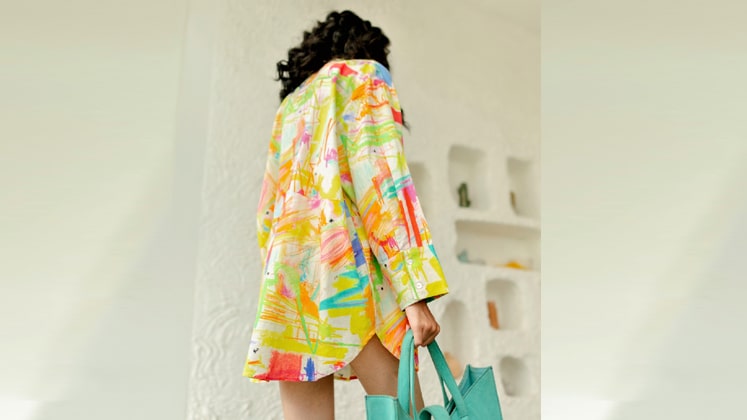
Rhea Bhattacharya, Founder at Drawn readily mentions that because Drawn was launched during the pandemic, technology has been their greatest ally. “We’ve managed to launch and run the entire brand virtually. Technology has enabled us to research, visualise and execute. It’s helped us create and communicate faster as well as build a meaningful relationship with our team and customers. While it is far more efficient, nothing will replace the joy of in-person and handmade.”
Rhea then mentions, “The past year has been a HUGE learning for everyone. We have all had to adapt and roll with the punches – everyone from our karigars to the printers to our masterjis have had to adapt to move forward. Our entire collection was designed virtually, our manufacturing was supervised virtually, and all our communication has been online. We wouldn’t be here if we didn’t have access to technology that enabled us to launch and build our brand.”
“Zoom, ProCreate and Photoshop are the tools that help us stay on track. Technology has given us access to unlimited data and insights. It has enabled us to get to know our consumers better – where they live, what their interests are, likes, dislikes. These insights play a critical role in the shaping of our product and communication. All feedback from the consumer is instant, and that really helps keep us on track. Technology will play an even greater role than it already does. Now consumers are going beyond just product pitches and are looking for more meaningful experiences that enable them to engage with the brand in a more intimate and unique way. Technology gives us direct access and the right tools to be able to offer them that,” she signs off.