Stella McCartney Limited has filed its results for its latest financial year and they show the company bouncing back from the pandemic, although still loss-making.
McCartney’s label remains relatively small compared to the global giants of luxury fashion. But McCartney has a profile that transcends the size of its operations and is more closely watched than businesses of similar size.
The company’s revenue jumped 23 per cent to just over £ 40 million. Turnover had been £ 32.5 million in the previous year.
The profit sharing figure with Stella McCartney Italia SRL was £ 22.8 million, or 57 per cent of the total sales. With the Stella McCartney Kids licence (which it had secured a licence agreement with Simonetta SpA for its Kids line in 2021), royalties increased to £ 10.8 million, or 27 per cent of total revenue. Concurrently, physical store sales increased to £ 6.3 million, accounting for 16 per cent of total income.
Operating loss decreased to £ 8.76 million from £ 30.3 million in the prior year, a significant improvement, according to the company, which also indicated that it was “confirming the trajectory towards break-even”. Significant increases in the gross margin, “driven by adjustment in business formula and by a decrease in operating expenses by 17 per cent, which was driven by rationalisation of structure and costs,” were the main factors contributing to the operational loss reduction. Pre-tax and net losses came to £ 10 million from £ 32.7 million the previous year.
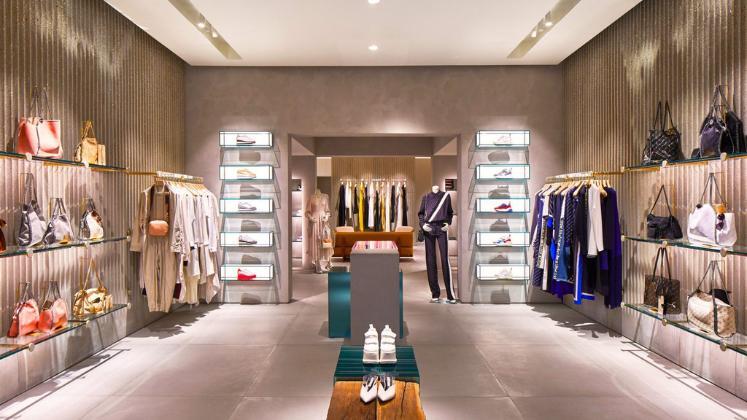
There were just two directly run sites left for the company at the end of the year due to no new store openings. However, its primary focus was on “local clienteling initiatives and like-for-like business… to mitigate the low level of international tourism.”
Additionally, it carried out a few key initiatives, like maintaining the improvement of its online customer experience in the year that followed the breakdown of its cooperation with YNAP in 2021.