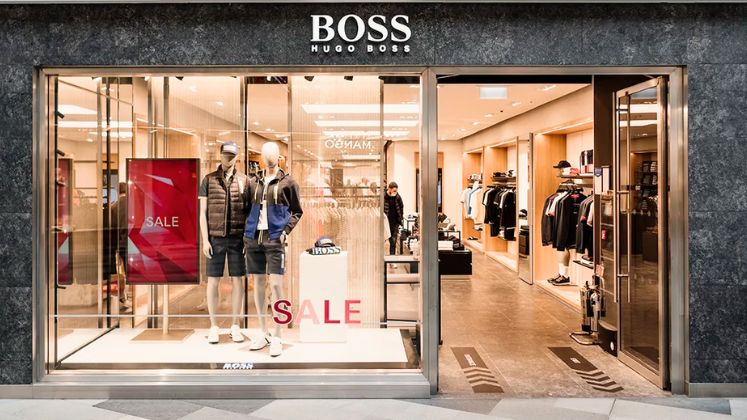
Hugo Boss may postpone its key sales and profit targets past 2025 when it releases its second-quarter results, with investors closely monitoring updates on trading conditions and cost-cutting strategies.
Shares in the company dropped by up to 10 per cent in July after it revised its full-year sales and earnings forecasts downward, citing a decline in global consumer demand, particularly in China and Britain.
In March, the company had already warned that its goal of reaching € 5 billion in annual revenue by 2025 might be delayed, although it still anticipated achieving an EBIT margin of at least 12 per cent next year.
Felix Jonathan Dennl, an analyst at Metzler Capital Markets in Frankfurt, noted, “Apart from updates on current trading, which will be carefully monitored by investors, an update on Hugo Boss’ mid-term targets is also possible.”
Few analysts, comprising Dennl, expect Hugo Boss to hit its mid-term sales target 2 to 3 years later than originally forecast, and to reach its mid-term EBIT margin goal after 2028.
“If Hugo Boss can’t provide more visibility, the revenue and EBIT targets should be in doubt,” Alexander Zienkowicz, senior analyst at Mwb Research said.
In an average of estimates last updated ahead of the company’s preliminary results in mid-July, analysts had forecast sales of 4.65 billion euros and a working profit of €519 million for 2025, matching to an EBIT margin of 11 per cent.
Joerg Philipp Frey, an analyst at Warburg Research, highlighted that cost reductions will be a major focus. He noted a 21 per cent increase in marketing expenditures and higher retail costs in the second quarter compared to last year, despite a decline in quarterly sales.
The high-end fashion brand has been growing, boosting marketing spend and launching 102 new POS (points of sale), comprising own stores, “shop-in-shops,” and outlets in 2023. This effort strives to address a slowdown in sales growth, which has led to the company’s share price nearly halving this year.
Zienkowicz commented, “To improve the share price, Hugo Boss needs to show active management of current challenges and a reliable recovery plan.”
The luxury sector is experiencing weaker sales and margin pressures as inflation causes shoppers to cut back on high-end fashion purchases. The situation is worsened by a property slump and job uncertainty in China.
Earnings reports from luxury companies this quarter, including LVMH and Kering, have highlighted these sector-wide difficulties.