The year 2021 was supposed to be the year of revival of various industries hit by the pandemic and the subsequent lockdown that lasted months in the previous year. Not only did the year fail to stabilise the falling economy and the markets, the second Covid wave is continuously leading to further losses to various segments, to economy, to the entire country. However, not all is lost. While the ongoing pandemic immobilised whole of India, fashion somehow is continuing to evolve. The lockdown and restricted movement across various states has, in fact, triggered new trends in fashion. Categories like loungewear, sleepwear, athleisure and even swimwear, are creating their own niches as people are yet again restricted to their homes and are looking for comfortable and specialised clothing.
According to RedSeer, within branded segments, few ‘breakout categories’ like branded mid-premium lingerie, branded athleisure (includes loungewear and activewear) and branded ancillaries (includes swimwear and shapewear), are likely to witness highest growth to become an over US $ 2.5 billion opportunity by 2025.
Fitness enthusiasts are also opting for swimming, which is considered as a healthy and low-impact activity that has many physical and mental health benefits such as alleviating stress, building endurance, muscle strength and cardiovascular fitness. This has led to a considerable growth in the swimwear segment which is likely to grow further.

Harshad Daswani, Founder, The Beach Company, asserts, “With the changing social-economic demographic in our country, a younger population today than it was before, and of course access to travel destinations, we have seen a strong evolution in this segment. Earlier, swimwear was not considered a part of your essential wardrobe, and now as fashion trends evolve, there is a large uptake in India for this segment too. Globally, the category is witnessing growth with rising interest of consumers in swimming as recreational and fitness activities.” A report by Research & Markets suggests that the global market for swimwear and beachwear estimated at US $ 19.5 billion in the year 2020, is projected to reach a revised size of US $ 27.6 billion by 2027, growing at a CAGR of 5.1 per cent over the analysis period 2020-2027, amid the COVID-19 crisis.
What’s making the splash in the segment?
The category has been rising for quite some time now across the globe courtesy increase in tourism and growing popularity of water sports and poolside or beachside vacations. Even as the world is going through a pandemic, the travel enthusiasts are heading to beach destinations like Goa or Maldives, which is further increasing the demand for beach and swimwear.
Swimwear protects the wearer from chlorinated water in swimming pools and sea water, which contains salts that are harmful for skin. Brands and manufacturers are continuously innovating to fulfil the growing need not only of swimwear but also beachwear and resort wear.
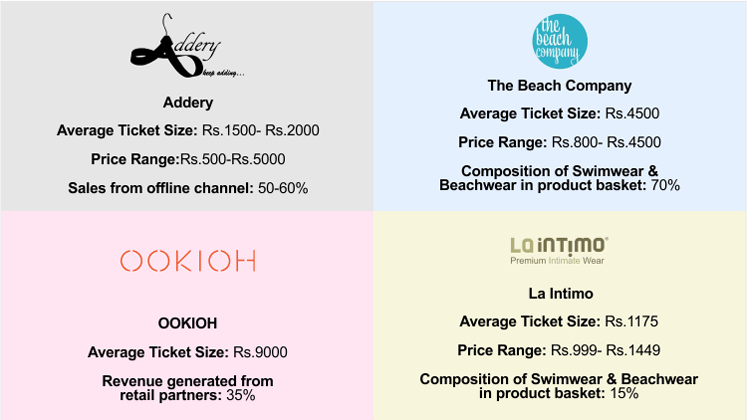
Vivek Agarwal, Founder, OOKIOH, asserts, “The swimwear market has been growing at a consistent rate of 5-6 per cent over the past decade in mature markets such as the US and Europe, but the beachwear segment has seen a higher growth rate, with some markets seeing double-digit growth. Like the rest of Asia, India has seen double-digit growth in both swimwear and beachwear because of the growing middle-class, higher spending power and a cultural shift.”
He then goes on to add, “I believe we will continue to see two different growth trajectories in India – lower-priced beachwear and both low and higher-priced swimwear for women, and lower-priced swimwear for men. India, by large, is still a price-sensitive market, and swimwear isn’t a category where one can expect higher spending in the near term. On the other hand, beachwear can be used on multiple occasions, and thus will see more spending. We will continue to see higher-priced designer collaborations or collections catering to deep-pocketed customers. This category of buyers has been buying swimwear from International labels and is open to high-quality swimwear with an Indian flavour to it and because of the ease of buying.”
Awareness of fashion is the greatest attribute to the growth of this segment. The recent years have seen rapid changes in fashion trends and also an increase in disposable income of consumers, resulting in purchase of different kinds of swimwear products based on their comfort, activities and fashion appeal. Swimwear brands offering value-added features such as convenient cuts and trendy prints and enhanced slimming effects are registering better sales. Furthermore, the category owes its growth to increasing people’s interest in fitness. The beauty and spa industry is also encouraging swimwear culture in some countries.

Yogesh Mittal, Managing Director, La Intimo (EliteString Apparels Private Limited), agrees while he adds, “There has been a significant growth of swimwear and beachwear industry in last 4-5 years as more and more people are travelling and taking vacations. A new category ‘resortwear’ has also evolved which is getting lots of traction and is a mix of both swimwear and beachwear. Also, e-commerce has played a pivotal role in expanding the market for swimwear and beachwear making a wide range of products available at a single click. La Intimo has launched its range of swimwear and beachwear in July 2018 and in July 2019 and since then we have seen CAGR of 110 per cent year-on-year in this segment.”
With growth in the segment, besides the already established ones like Marks & Spencer, Next, Decathlon, Speedo, a number of brands and labels in the likes of The Label Life, The Beach Company, Flirtatious, Addery, NothingSwim and sustainable ones like The Summer House, PA.NI Swimwear, Verandah, etc., have been registering great sales in the Indian market. A lot of designers like Shivan & Narresh and Masaba Gupta and others too have shown their expertise in the segment.
What’s selling?
Swimwear and beachwear have evolved drastically over the years. What started as a buttoned up neck, tea-length hems and ruffled bloomers for swimwear in 1800s, changed to high-waist swimsuits and halter neck bikini tops in pop colours and prints in 1990s, and finally the present which is all about colour, fresh cuts and extra detailing ranging from feminine ruffles to cute bow details and animal prints.
Shreyal Jain, Proprietor, Addery, maintains, “From wearing two-piece fully covered swimsuits to traditional frilled skirts to bikinis and designer wear monokinis, we have seen the trends change completely. Girls and women are slowly adapting to the western style dressing and are more open to try out new looks. At Addery, they ask for swimsuits (bikinis and monokinis) along with co-ordinates and long flowy dresses being a lot in demand and one of the fastest moving products. Addery as a brand has been in the market since 2016 with 2 outlets in Mumbai that contribute to around 50-60 per cent of its overall sales while the remaining comes from its online marketplace. We have about 15-20 per cent of our stock under swimwear and beachwear category which contributes to about 30 per cent of our revenue annually.”
According to most retailers in the segment, consumers are opting for multifunctional one-piece and cover-ups, which are also perceived as a fashion statement, thus propelling the growth of the swimwear market. The year 2021 will look at swimwear trends like sequins, neons, metallic-rinsed pastels, eccentric prints, cutout details, butterfly sleeves and high waisted bottoms, among others.
Besides the consumers’ growing affinity towards trendy, multifunctional swimwear and beachwear, there has been a drastic increase in demand for eco-friendly, sustainable collection.
Harshad Daswani says, “While the awareness of fashion is the greatest attribute to the growth of this segment, thanks to social media and easier access to travel, consumers are now also opting for sustainable shopping options in the category. We use a very large range of fabrics for our fashion segment, with prices starting at Rs.800 for synthetic fabrics, and going upto Rs.4500 for our organic/sustainable cotton range. We are seeing a large shift in buying trends to eco-conscious choices. We have found a huge shift in shopping habits. Although value for money is still a major driver, people are also searching for eco-responsible options which leave a lower carbon footprint such as organic cotton, recycled polyester, or even garments made with ethical standards in place. In this regard, the fastest growing segment has been the beach cover-ups which offer a versatile dressing option and can be worn as a swimwear cover-up or even as a dress.”
Surf brand O’Neill is the most recent one to create its Blue sustainable collection, a women’s swimwear line with Hyosung’s Mipan regen nylon. The nylon is 100 percent recycled from reclaimed waste, while the Global Recycled Standard of the Control Union in the Netherlands gives a nod to the fibre for its energy-saving benefits.
Talking about trends, Vivek Agarwal apprises, “This category’s trends are very location-specific. For example, men’s trunks do well in the US, and speedos perform well in Europe. Similarly, women’s one-pieces sell more in Europe compared to the USA. Asia, I believe, will see a mix of both – trunks and shorts doing well for men while a combination of one-pieces and high-waist and padded options for women. Australia has a similar consumption pattern as the US, while Latin America is unique.”
OOKIOH was started with the idea of offering fun and sustainable swimwear under US $ 100 and the brand continues to do so with its US $ 98 priced sets. This collection, made in China, is made from recycled fishing nets, i.e., recycled polyamide. Last year, OOKIOH also introduced a new higher-priced collection, made entirely in Los Angeles – from fabric (composed of recycled nylon and recycled plastic bottles) to manufacturing, and retails for US $ 158.
How to keep it afloat?
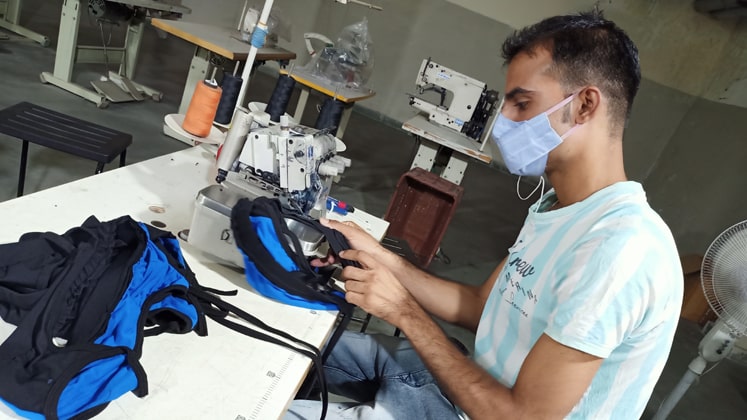
Something what resonates with and is important for this category is stretchability and that comes with the right choice of fabric. Lycra, spandex, polyester, nylon, cotton, crochet, chiffon are basically used to manufacture beach and swimwear garments.
Yogesh Mittal’s manufacturing firm EliteString Apparels Private Limited offers 90+ options of monokini, bikinis and sarongs in 15+ sizes, with styles like thongs, hipster, shorts, strapless, one sided strap and many other experimental designs.
“We have used 5 different fabrics in our range which include monochrome, jacquards, polyester, digital prints, space dyeing. All these fabric contain spandex to give enough stretch and fitting to the wearer. Swimwear and beachwear involve a lot of detailing and only an expert team of tailors can give the desired quality and finish. The entire process is very labour-intensive and involves at least 10+ types of machines to get the final product. In India, there are very few companies which have capabilities and capacities to produce them. We have specialised machines for handling each and every process involved in manufacturing of swimwear. Most of the machines are Japanese and some are Chinese. Swimwear and beachwear are the types of products which come in contact of water, moisture, sand, sweat, air and are used in varied conditions like salt water, different depths of water, exercise, scorching sunlight, etc. So, not only raw material but construction has to be such that it can tolerate all these conditions and still perform for substantial time. The machines that are being used in our factory ensure that enough stretch is maintained at seams so that it can withstand all the pressure and extreme conditions,” he informs.
A report by Research and Markets maintained that polyester is projected to grow at a 5.9 per cent CAGR to reach US $ 10.1 billion by 2027. Also, after an early analysis of the business implications of the pandemic, growth in the spandex segment which currently accounts for a 21.9 per cent share of the global swimwear and beachwear market, is readjusted to a revised 5 per cent CAGR for the next 7-year period. The category requires intrinsic research and innovation in terms of fabric choice, machines being used, etc.
Shankar Bhandalkar, Sr. Research Analyst, Consumer Goods at Allied Market Research, maintains, “The rise in demand for trendy and fashionable sports apparel by the middle-aged individuals segment has led the companies to launch new swimwear products to cater to the demand of the customers engaged in water-based sports. Thus, manufacturers are investing highly in R&D activities and focusing on innovations to balance between the comfort and the features of swimwear as they both have a high impact on a consumer’s purchase decision.”
Ebbs and flows in swimwear segment
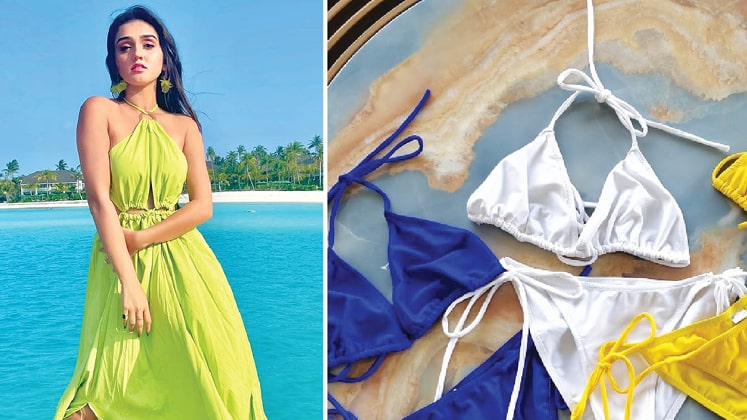
The size of the Indian travel market is definitely growing but beach travel, though increasing, is still very small. While people are slowly heading back to beaches, sunshine and poolside loungers (with of course another short break due to the ongoing movement restrictions across the country), many have already started hunting down the ideal swimwear for their upcoming vacations. This sure says that the segment is slated for growth in the months to come.
The swimwear market in the country has opened up to social challenges. As India’s working class expands, foreign travel is common now. According to the Flip Flop Report 2013 by Expedia.com, India ranked third at 71 percent in the beach vacation survey. The market is also experiencing rise in the men’s section, even while women’s swimwear continues to represent 70 percent of the total market.
However, the category still has its share of challenges to face along the way. Shreyal Jain, says, “Cut throat competition in pricing is the biggest challenge for this category. Other than the pricing issue, we still have a lot of girls and women with the conservative mindset who are not comfortable trying new designs and moving from traditional swimsuits to monokinis and bikinis. While we have evolved and moved to new styles, it becomes difficult to capture that market. Another challenge is definitely the impact due to COVID-19. The revival strategies we are swearing by are stocking up more inventory, being price sensitive, offering unique designs, etc.”
The seasonality of the segment is another huge challenge, which has made it essential for brands in the segment to develop a resortwear line and other accessories to get consistent sales throughout the year, which requires a lot of capital and when you combine it with the limited time to sell, the cost of marketing during summer shoots through the roof, it doesn’t give much room for brands to develop their voice. Furthermore, price volatility of raw materials such as polyester, nylon, polypropylene, spandex, neoprene and other fibres and the cost of designing swimwear having desired texture, design, look and other fashion attributes affects the swimwear market size to a greater extent.
“The future for this category is good. With rising income levels, and with the vaccine now being wider spread, we have the opportunity to make better choices going forward. The market is poised to grow at 40 per cent annually which is a very healthy growth rate and with a focus on sustainability, we can achieve great domestic and export potential being a fabric producing country,” Harshad Daswani concludes.