The global luxury market has demonstrated remarkable resilience despite ongoing macroeconomic and geopolitical challenges, with a total value of US $ 1.5 trillion in 2025, according to Euromonitor International’s World Market for Luxury Goods 2025 report.
The industry is undergoing a profound transformation, moving from a purely product-focused approach to one centred on experience-driven engagement. Fflur Roberts, global insight manager for luxury goods at Euromonitor International, observed that “wellness, lifestyle, and emotional resonance are emerging as new markers of status” in the evolving luxury landscape.
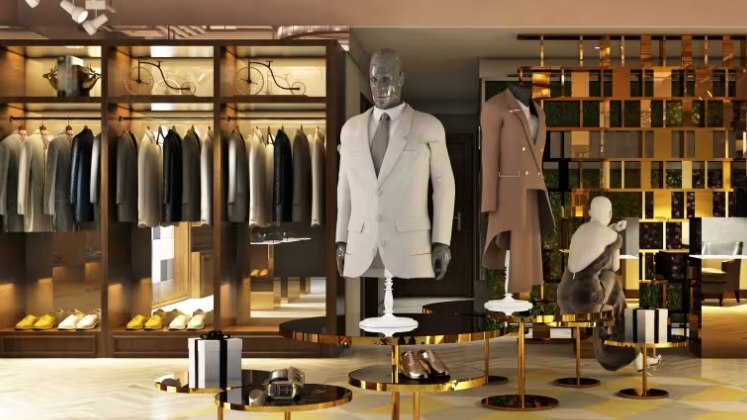
Physical stores continue to play a pivotal role, accounting for 81% of personal luxury goods sales in 2025. In particular, 52% of high-income shoppers now prefer in-store fashion purchases, up from 36% in 2023, highlighting the enduring appeal of in-person engagement.
Several emerging markets are driving growth, with South Africa leading at 15%, followed by India at 10%, and the United Arab Emirates at 9%. India is poised to become a major player, with its luxury market projected to reach US $ 12.1 billion by 2025 and an expected compound annual growth rate (CAGR) of 74% over the forecast period.
Luxury spending is increasingly shifting towards experiential categories, as younger consumers prioritise unique experiences over physical products. Experiential luxury, including high-end travel and hospitality, grew 8% in 2025 to reach US $ 103 billion, making it the fastest-growing segment.
The sector is also seeing rising influence from the 60+ age group, whose increasing affluence is driving demand for sophisticated offerings such as wellness travel and age-inclusive luxury skincare. This shift, combined with the move towards lifestyle and experience as status markers, is prompting brands to transform stores into cultural destinations that provide premium hospitality and concierge-level service.
Roberts concluded that future growth in the luxury market “will depend on its ability to adapt to these evolving consumer opportunities” by rethinking premium experiences with a focus on longevity and conscious indulgence.