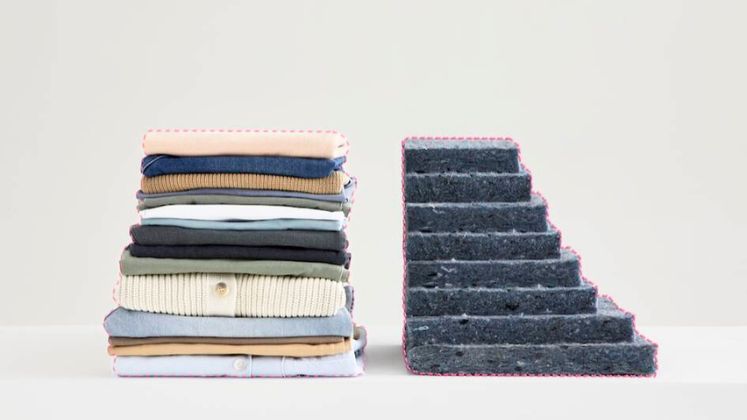
In a bid to tackle textile waste and support vulnerable communities, the “Cotton Lives On” recycling program is making a strong appeal to UK fashion brands and retailers to join its expanding sustainability initiative. Launched in 2022 by Cotton Council International and Cotton Incorporated, the cost-free program offers a practical solution for diverting unwanted cotton away from landfills and transforming it into essential aid for the homeless.
Inspired by the impactful US campaign “Blue Jeans Go Green,” which has successfully recycled millions of denim items, “Cotton Lives On” aims to replicate this success within the UK market. The program invites brands to contribute old or unusable cotton items, defined as containing at least 85 per cent cotton. These donations undergo a process of sorting and material separation before being repurposed into a non-woven cotton pad.
Already gaining traction within the UK fashion sector, “Cotton Lives On” boasts the participation of notable brands such as Charles Tyrwhitt, Hush, Whistles, Hobbs, L’Estrange, Anthropologie, Paige, Bianca Saunders, Nexvision, and Me+Em.
Kim Kitchings, Senior Vice President of Cotton Incorporated, expressed enthusiasm for the program’s growth, stating, “We are thrilled to see so much interest and participation in the Cotton Lives On recycling programme for 2025. By joining the programme, fashion brands, retailers and consumers can help keep cotton’s circularity going by diverting cotton waste from landfill, while also helping people at risk of homelessness by providing them with a roll mat made from the recycled cotton.”
The initiative has forged a crucial partnership with Devon-based natural bedding supplier Naturalmat, who expertly convert the donated cotton into comfortable and practical roll mats. These vital resources are then distributed to individuals facing homelessness through the established UK charities Shelter and Single Homeless Project.
To date, “Cotton Lives On” has demonstrated tangible impact, having collected almost 8,000 kilograms of cotton and provided approximately 100 roll mats to those in need. Each roll mat effectively utilises 6.4 kilograms of otherwise unusable cotton, equivalent to the material found in around 45 T-shirts.