Image Courtesy: https://perfectsourcing.net/
The apparel sector has put out some demands for the next Union Budget 2024 through the Apparel Export Promotion Council (AEPC), the leading organisation for marketing garment exports in India.
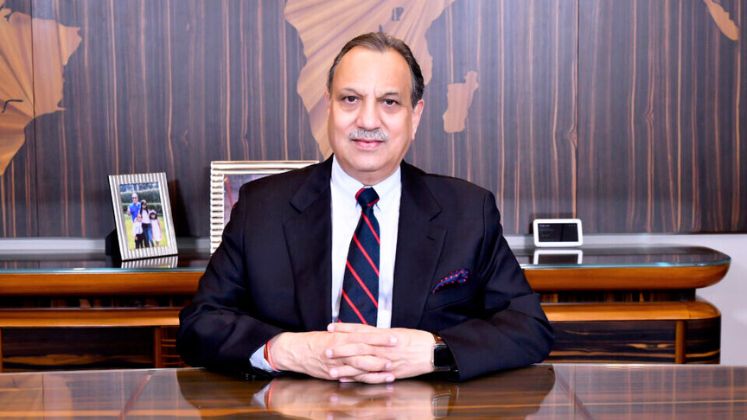
Sudhir Sekhri Chairman AEPC said, “The long-term policy for garment industry related schemes will provide stability in the policy regime and will be a pro-active step to help garment exports from the country.”
He went on to say that one of the main expectations from the Union Budget is a 5 per cent rate for all exporters under the Interest Equalisation Scheme for a minimum of five years.
Mithileshwar Thakur, Secretary General AEPC observed, “This labour-intensive sector needs the right push and all the support from the Government as it holds the key to the generation of massive employment opportunities for the youth and empowerment of women, which in turn can drive the change in the socio-economic landscape of the country.”
Some of the demands that the AEPC wants include:
For a period of five years, AEPC proposes raising the rates under the Interest Equalisation Scheme to 5 per cent for all apparel exporters. As a result, the apparel business will be more competitive on the global stage.
It is recommended that the Import of Goods at Concessional Rates of Duty Rules (IGCR Rules) encompass all varieties of embellishments and trims.
It is recommended to increase the duration to one year for the use of trimmings and embellishments imported under the Import of Goods at Concessional Rates of Duty Rules (IGCR Rules).
Under the IGCR, imports via courier mode shipments ought to be eligible for duty-free treatment as well. Currently, only shipments made via cargo mode—not courier mode—are eligible for duty-free trimmings and embellishments under the IGCR.
Custom duty on high-end textile machinery should be reduced. The custom duty should be brought down to zero percent for three years to enable technology upgradation. Subsequently, a high tariff wall should be raised on import of textile machinery to encourage foreign investment in textile machinery manufacturing.
Other requests include:
Request to make uniformity in GST for the entire value chain – A uniform GST of 5 per cent across the value chain for all fibres. Request to provide subsidized loans for readymade garment manufacturers who incorporate organic, locally sourced inputs and invest in green technologies. Incentivize factories for traceability initiatives in the raw material supply chain. Relocation compensation to companies moving to hinterlands from the Industrial complexes and cities. Request to provide direct tax concessions to apparel manufacturers adopting ESG and other international quality norms and compliances. Request to provide budgetary support for branding and marketing of Made in India products