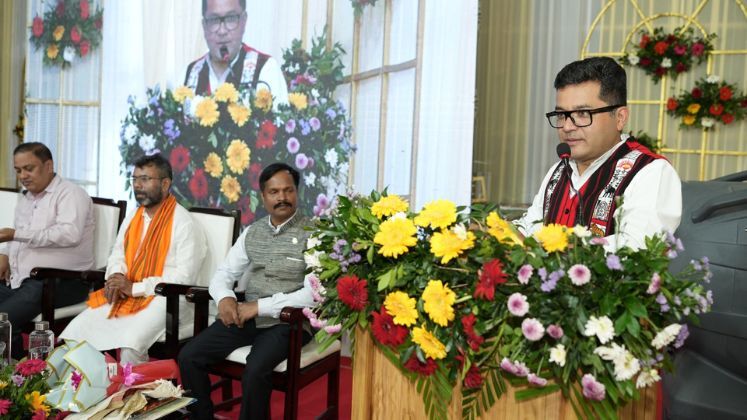
Pabitra Margherita, Minister of State for Textiles, has emphasised the importance of bolstering the northeastern region’s sericulture industry and encouraging more local people to grow silk.
Margherita highlighted the importance of Muga silk, a commodity with a Geographical Indication marking, to the northeastern state’s cultural identity and the role played by the Central Muga Eri Research and Training Institute in Jorhat, Assam.
The Minister was addressing the Central Silk Board’s CMER&TI silver jubilee celebration in Lahdoigarh, Jorhat.
He promoted the hiring of more field assistants to increase awareness and inspire locals, emphasising the necessity of bolstering sericulture in the northeast to increase output and include local populations.
Along with calling for the establishment of cutting-edge laboratories and the introduction of crop insurance to protect stakeholders, he also emphasised the importance of creating villages centred around the Muga and Eri clusters and involving young people in Eri culture in order to reinvigorate the sector.
Margherita recommended looking into the National Livelihood Mission for assistance in boosting Assamese mulberry output and guaranteeing the safety of native weavers.
According to a press release, a commercial loose-egg production technology in Eri-culture was introduced with the goal of empowering Seri entrepreneurs and encouraging sustainable Eri silk manufacturing throughout India.
In the northeast, sericulture occupies about 1,09,296 hectares of land, with 3,99,789 farmers and 12,491 localities involved. Among the major states engaged in Muga, Eri andd Mulberry sericulture are Assam, Meghalaya, Arunachal Pradesh, Manipur, Mizoram andd Nagaland.