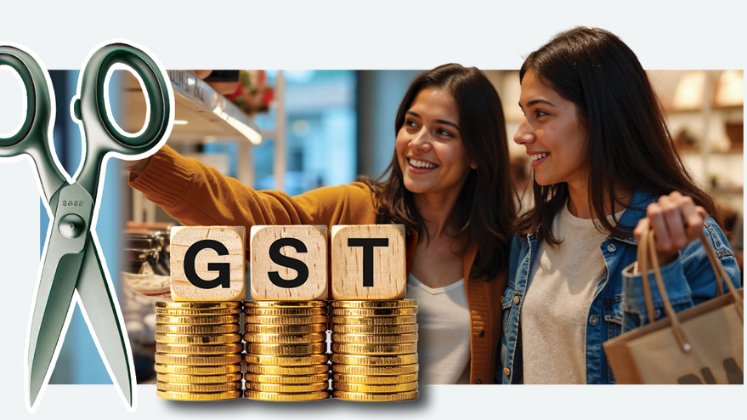
In a move that could give a shot in the arm to India’s retail landscape just ahead of the festive season, the GST Council has approved a major tax relief for the apparel and footwear sector, slashing the GST rate from 12% to 5% on products priced up to Rs. 2,500.
From a macro perspective, the timing could hardly be better. The Indian apparel market is flourishing, with the domestic segment estimated at US $ 120 billion in 2024-25 and projected to hit US $ 180 billion by 2030-31.
The rate cut is also expected to provide the much-needed boost to the beleaguered apparel industry, which has been grappling with the impact of steep 50% tariffs imposed by the US.
The move has been widely celebrated by brands and retailers alike. As per Mordor Intelligence, the mass category held approximately 67% market share in 2024, making it a critical volume driver for the industry.
For players like Raymond Lifestyle, the new tax regime has prompted immediate action. The company has announced price reductions across its sub – Rs. 2,500 portfolio and is even considering repricing certain items to fall within the new slab. “Immediately from 22nd September, we will pass (on the tax benefits) to consumers,” said CFO Amit Agarwal. With around two-third of Raymond’s apparel priced below Rs. 2,500, the impact could be sizeable, especially for branded formalwear. Other domestic brands are expected to follow suit.
Footwear major Bata India has also said it will pass on the benefit of the GST rate cut.
According to Amit Kumar, a fashion retail expert with experience in buying and merchandising at Tata CLiQ, Calvin Klein, Tommy Hilfiger and Diesel, this move will make a large section of India’s apparel and footwear market more accessible to the average consumer. “These GST rate cuts on apparel and footwear are also likely to help offset the impact of 50% US tariffs,” he noted.

Similarly, Akhil Jain, CEO and MD, Madame, a women’s fast fashion brand, welcomed the reform. “By removing the 12% slab and simplifying the tax structure, the government has given brands like ours greater flexibility in pricing while encouraging demand in a highly price-sensitive category,” he said.

“For consumers, it means greater affordability; for manufacturers and retailers, it opens up stronger demand, especially in the value-to-premium category where India’s aspirations are rising fastest. This move is timely, as it will re-energise festive and wedding season buying,” said Amol Goel, Founder and CEO, Louis Stitch, a fashion footwear and lifestyle brand.
Impact on Premium Brands; GST Issues
But not everyone is toasting the rate cut. For premium brands, costs have risen, as items priced above Rs. 2,500 are now taxed at 18%, up from the earlier 12%. This increase could dent the appeal of high-end fashion amongst style-conscious urban consumers. The premium segment, which comprises 18% of India’s US $ 70 billion apparel market, now faces serious cost pressures.
The added burden is expected to squeeze margins for global fashion players like PVH Corp, Marks & Spencer, Gap Inc., Under Armour, Nike, H&M and Uniqlo.
Given that retail typically operates on wafer-thin margins and overheads such as rent remain high, industry insiders warn of margin compression.
India’s Arvind Fashions, for instance, which holds the domestic franchisee rights for brands like Tommy Hilfiger and Calvin Klein, may feel the strain on its local operations. Meanwhile, its affiliate Arvind Ltd., focused on manufacturing for export markets such as the United States, which accounts for nearly 30% of its export volume, could remain relatively insulated from the domestic GST shifts, but may face challenges stemming from global tariff pressures.
The GST rate cut is also expected to have minimal impact on value retailers like Zudio, Yousta, Style Up, InTune, Max Fashion India, Vishal Mega Mart, V-Mart Retail, Citykart, V2 Retail and Baazar Style. This is because most of their products are priced under Rs. 1,000.
For online-first apparel brands, however, the picture is more complicated. As Shashank Agnihotri, Co-founder, Rustorange, a digital-first ethnicwear label, points out, almost 40-50% of an e-commerce fashion brand’s expenses fall under the 18% GST bracket, covering things like digital marketing, logistics, tech platforms and software. Now, with output GST dropping to 5%, but input costs taxed at 18%, many brands will face a growing mismatch. “This leaves us with a 4% input tax credit that we can’t really use under current GST rules because of the conflict between goods and services,” he explained.
The impact is twofold: first, the much-anticipated price benefits may not fully reach the customer, and second, working capital gets tied up as tax credits accumulate without a clear refund path.
Echoing the concern, Vaibhav Singhal, Founder, Data Se, a vertical SaaS solutions provider for e-commerce brands said, “Under Rs. 1,000, GST is still 5%, so the effective change is only on apparel priced above Rs. 1,000, which will now move from 12% to 5%. This delta of 4–5% keeps getting accumulated as input credit, which is a loss to the seller and must be factored in while computing the unit economics of any product. We have brands with crores gathering dust in input credit. It’s a serious omission in the rules that impacts the already stretched working capital situation.”
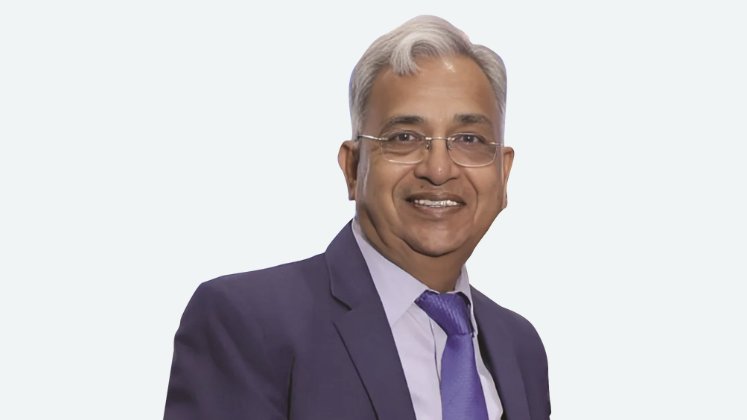
Raising structural concerns, Ved Jain, Past President of the Institute of Chartered Accountants of India, explained, “Suppose a garment trader purchases a garment from a manufacturer for Rs. 2,400 per piece. He pays 5% GST on this, which amounts to Rs. 120. After adding a profit margin of Rs. 200, he sells the same garment to a consumer for Rs. 2,600. Since the selling price crosses the Rs. 2,500 threshold, the trader must now charge 18% GST, which comes to Rs. 468.”
He added, “This means an additional GST liability of Rs. 348 (Rs. 468 minus Rs. 120) on a profit of just Rs. 200. Such a steep jump in tax liability not only makes the transaction unviable but also encourages tax evasion and leads to enforcement complications.”
Akhil Jain from Madame highlighted this concern, adding, “With the GST on input services remaining at 18%, there will be additional blockage of working capital in unutilsed input tax credit for which the industry will be required to seek refund from the GST department on a regular basis.”
The GST cut offers welcome relief for many, but without structural fixes, the industry’s challenges will persist.