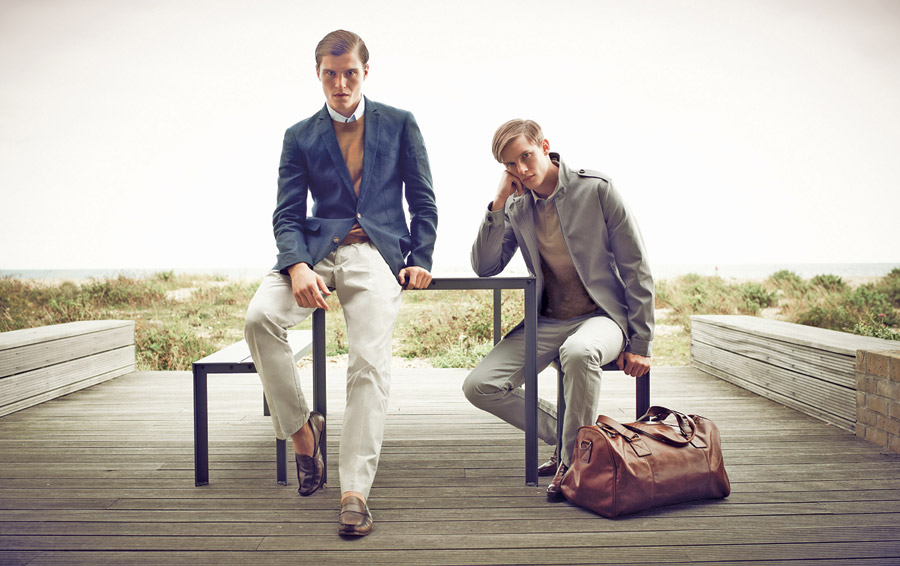
Over the years, menswear is seeing a major surge as the attitude of male consumers continue to change towards fashion, which is no longer restricted to the stereotypical metrosexual men. For the first time ever, menswear is outpacing womenswear and is growing at a faster rate, as more and more men focus on personal appearances pushed by a large disposable income. According to Euromonitor International, the global spending on menswear grew 4.5 per cent to US $ 440 billion in 2014, while the sale of women’s fashion, which is a larger market, reached US $ 662 billion, growing at a slower rate of 3.7 per cent.
 Being termed as ‘The Global Renaissance’, Euromonitor has revealed that over the next five years, menswear is expected to contribute US $ 40 billion to the global apparel market, reaching sales of US $ 480 billion at constant prices by 2019. “Globally, men’s annual disposable income is still 50 per cent higher than women’s,” reveals Magdalena Kondej, Head of Apparel and Footwear Research. These projections are consistent with other studies and reports such as IBISWorld, which claims that menswear is the fastest growing online sales category since 2010. According to IBISWorld, the projections for the next five years have menswear topping the list again and this boom is not expected to slowdown anytime soon.
Historically, fashion has always been associated with womenswear, but over the years with rise of popular television series, internet and celebrity endorsements, men’s fashion has officially gone mainstream. In fact, the rise of internet has played a crucial role in promoting menswear as consumer research firm Mintel reports that one-third of men shop online for clothes, which supports and explains the rise of menswear. Apart from internet, the rapid economic growth of emerging markets like China has been one of the most important drivers of growth in men’s spending. “Consumers in Emerging markets, especially in China are the primary (growth) factors, followed by more attention by brands in terms of product and offers,” informs Luca Solca, Luxury Analyst, Exane BNP Paribas. Supporting the thought further, the Euromonitor report suggests that though Western markets will spend the most on clothing but the future growth will be driven by Asia Pacific; and in some of these key markets, menswear has already overtaken the more traditional female-oriented fashion. “Men are the largest demographic in China’s apparel market, contributing US $ 73.3 billion in sales,” asserts Richard Cohen, CEO of Trinity Limited – the high-end menswear group whose brands include D’Urban, Intermezzo and Savile Row’s Gieves & Hawkes.
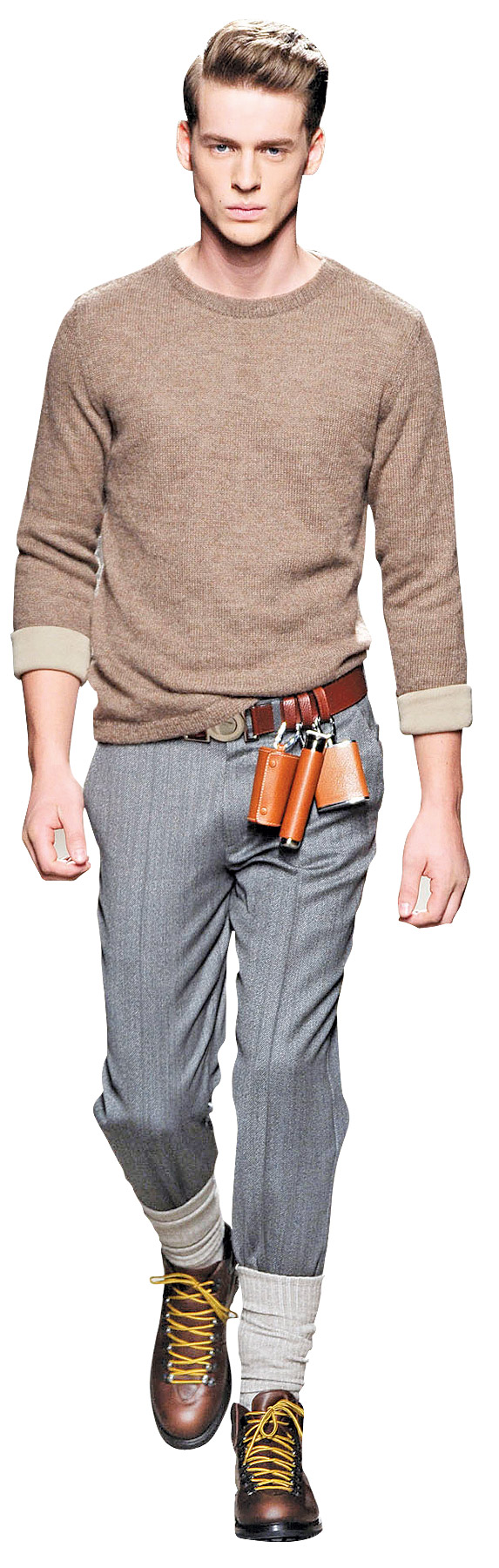
Top trends for Menswear (A/W 2015)
-
Wool coats with soft shoulders to give it a slouchy and oversized vibe
-
Grey the ‘it’ colour, followed by green – forest, dark, military and mint green
-
Layering up knits
-
Square patterns and patches
-
Oversized pockets
-
Shearling, in both dyed and natural shades will get prominence
-
Baggy trousers – high-waisted with far looser cuts
-
One-piece suit
Tapping this potential market, Richemont is making a big push into menswear in particular, with significant investment in Dunhill. “Men are in general becoming more interested in investing in themselves whether it is a new piece of technology, an item of clothing or a grooming product. Up until now Dunhill has been the sleeping giant. The brand has huge potential – we have heritage, expertise and know-how. And we now have John Ray, the ideal Creative Director for the brand, renewed focus and new product categories,” states Fabrizio Cardinali, Chief Executive, Dunhill. Even traditional brands that focused on womenswear have now started opening separate menswear stores, whereas on the other hand department stores have started revamping their menswear section. A number of luxury and mass fashion brands such as Burberry, ZARA, etc. have opened standalone stores to tap into this growing market.
Recently, luxury labels like Coach have also introduced full-fledged men’s collection and for the first time in July 2015, New York will hold its first fashion week dedicated to menswear joining the ranks of London, Paris and Milan. This only goes to prove that this trend is not expected to fade away soon! “Menswear presents a great opportunity for fashion brands looking to diversify their product portfolios and reach out to new consumers. The more effectively brands are able to harness wealth and unique consumption cultures of male consumers, the more successful they will be,” states Magdalena.
Further, luxury brands such as Hermès, Lanvin, Gucci, Ralph Lauren, Dolce & Gabbana, Prada, etc. have also expanded their menswear offerings and are dedicating standalone stores to menswear. In April, Prada, which predominantly is a women’s-focused business has announced that over the next 3-5 years it hopes to double its menswear sale to US $ 2 billion and would add 50 more dedicated men’s shop to its existing 30. Others are following suit such as Kering and LVMH who are making significant investments in their respective luxury menswear brands Brioni and Berluti.
Various brands and retailers alike are thrusting towards menswear which was initially considered as the least profitable segment of the fashion industry. In recent years, the consumer demand for incessant newness and constant feeding of internet has led to menswear becoming a lifestyle rather than a trend.