Analysts and business leaders underscored the urgent need for policy reforms, stronger institutional capacity and the consistent application of fairness and ethical practices across both the public and private sectors to ensure a competitive business environment as Bangladesh prepares for graduation from least developed country (LDC) status.
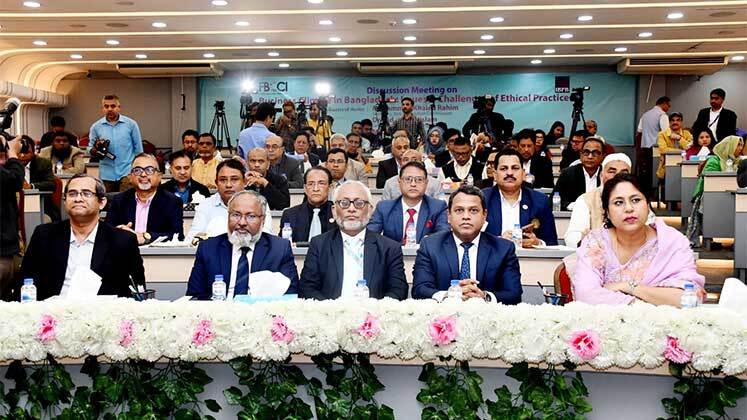
The observations were made at a discussion titled “Business Climate in Bangladesh: Issues and Challenges of Ethical Practice”, held at the office of the Federation of Bangladesh Chambers of Commerce and Industry (FBCCI) in the capital, according to a press release. The event was jointly organised by the FBCCI and the International Business Forum of Bangladesh (IBFB).
Khondaker Golam Moazzem, Research Director at the Centre for Policy Dialogue (CPD), emphasised the need for business process re-engineering to reduce operational costs and improve the efficiency of government agencies. He highlighted the multiple complexities faced by entrepreneurs in areas such as licensing, renewals, registration and customs procedures, and stressed that stronger ethical standards among public officials were essential to improve service delivery.
Mohammad Khaled Rahim, Secretary of the Anti-Corruption Commission (ACC), acknowledged the existence of procedural complexities but said there was scope for simplification. He encouraged businesspeople to submit specific complaints against officials involved in harassment during the service delivery process.
Foreign Secretary Md Nazrul Islam said that while institutional reform was inherently complex, the interim government had already initiated a number of reform measures. He added that behavioural reform among all stakeholders had become a critical requirement.
FBCCI Administrator Md Abdur Rahim Khan urged entrepreneurs to uphold responsible business conduct, pursue fair profits and contribute positively to society, while taking a firm stand against corruption. He assured participants that the private sector’s recommendations on improving the business climate would be formally placed before the government.
IBFB President Lutfunnisa Saudia Khan said ethical business practices were vital for inclusive growth, sustainable development and strengthening Bangladesh’s global standing. She noted that legal measures alone were insufficient to address existing challenges, and that collective efforts, open dialogue and shared accountability were necessary.
During the open discussion session, business leaders highlighted the importance of digitalisation, automation and the implementation of a Single Window system to enhance transparency and accountability. IBFB Director M S Siddiqui pointed out that certain existing laws were inconsistent with policies aimed at easing the cost of doing business, thereby discouraging investment.
The meeting was attended by former FBCCI directors, members of the FBCCI general body, FBCCI Secretary General Md Alamgir, and senior officials and representatives from various chambers of commerce and trade associations.