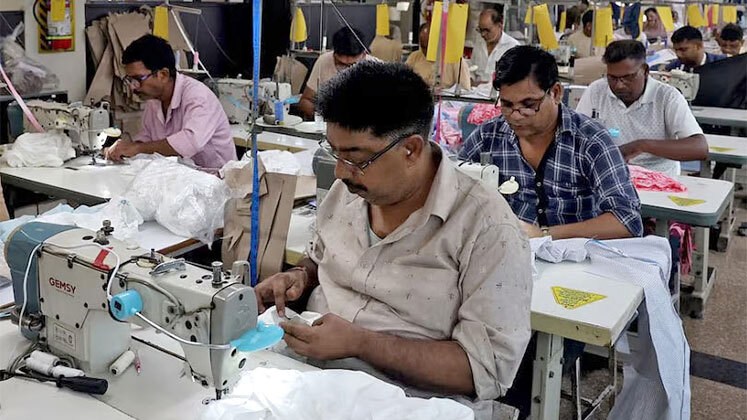
Negotiations between Indian apparel exporters and major US importers have stalled, putting at risk an estimated US $ 2 billion in summer orders for Indian manufacturers, according to industry reports. The deadlock stems from uncertainty over the tariff regime that will apply once India and the United States conclude their long-awaited trade agreement.
In the absence of a confirmed agreement, apparel buyers in the US are reportedly shifting sizeable orders to competitors such as Bangladesh, Vietnam and China, all of which benefit from significantly lower tariff rates than India. Indian textile and apparel exports currently face tariffs as high as 50% in the US market. Industry representatives have warned that missing the crucial summer order cycle could have lasting consequences for exporters.
Despite overall export diversification in other categories, textiles and apparel are struggling to find alternative markets, according to trade data from the Ministry of Commerce and Industry.
A research study by the Indian Institute of Foreign Trade, authored by Professor Sunitha Raju, estimated that a 50% tariff on Indian products would result in a US $ 6.6 billion reduction in US import demand for Indian textiles and apparel—a fall of 67.8%. The study stated that the negative effect would be most severe for fibres, followed by yarn and fabrics, while in absolute terms, made-ups and apparel would account for US $ 5.7 billion of the decline. It also found that competitors such as China, Vietnam and Bangladesh would gain significant market share in apparel, while Pakistan, Mexico and China would benefit in made-ups.
The report noted that even a 25% tariff would reduce US import demand for Indian textiles and apparel by US $ 2.1 billion, equivalent to a 21.6% decline. Made-ups would bear the largest losses, followed by apparel, together accounting for more than 80% of the overall drop.
While the study highlighted that exports are dominated by large firms, it warned that tariff shocks would reverberate across the industry and affect domestic suppliers due to the sector’s high reliance on intermediate inputs. Although only 24% of textile production is exported, the report stated that the indirect impact would still be considerable—amounting to US $ 4.6 billion, including US $ 1.4 billion within the textile sector itself. It further observed that although e-commerce has helped small producers access global markets, any adverse actions by major retailers in response to tariff pressures would inevitably affect smaller exporters.
The industry now awaits clarity on the India–US trade deal, as prolonged uncertainty risks both immediate losses and long-term erosion of India’s competitive position in the US market.