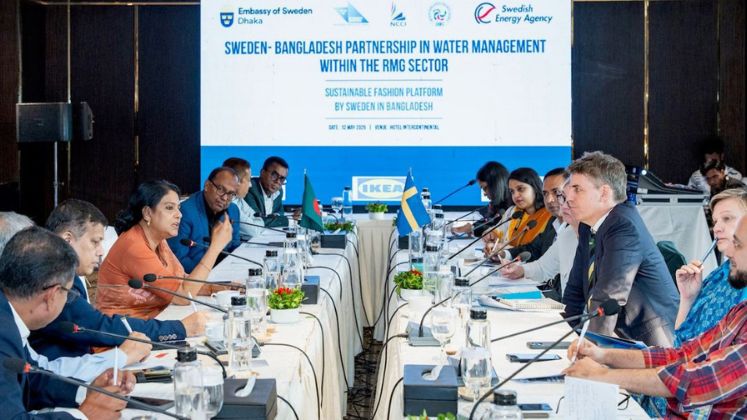
Sweden is intensifying its commitment to sustainable water management in Bangladesh’s ready-made garment (RMG) industry through its ongoing initiative, the Sustainable Fashion Platform. The platform’s 4th High-Level Policy Dialogue, held recently in Dhaka, brought together policymakers, industry leaders, and international stakeholders to address water sustainability challenges in one of the country’s most vital economic sectors
Hosted by Swedish Ambassador Nicolas Weeks, the dialogue focused on promoting sustainable water use within Bangladesh’s RMG industry, a sector heavily reliant on water resources. Ambassador Weeks reaffirmed Sweden’s dedication to supporting environmentally responsible growth in Bangladesh, noting that water sustainability is not only an environmental concern but also a competitive advantage for exporters.
“This partnership can help reinforce Bangladesh’s position as a global sourcing hub,” Ambassador Weeks stated. “As global consumers increasingly prioritise sustainability, investing in greener practices will be critical for suppliers seeking to stay competitive.”
Prominent Swedish retailers such as H&M Group, IKEA, and Lindex, major buyers from Bangladesh, have already aligned themselves with sustainable sourcing practices and continue to push for greener supply chains, the ambassador noted.
Adviser to the Ministry of Environment, Forest and Climate Change and the Ministry of Water Resources, Syeda Rizwana Hasan, highlighted the urgent need for regulatory clarity on groundwater extraction and sector-specific policy support. She proposed the swift establishment of a dedicated working group to manage water consumption across industrial areas, ensuring responsible use in the face of rising demand.
UNICEF Bangladesh Representative Rana Flowers emphasised the need for inclusive and equitable water governance, urging all stakeholders to consider the broader implications of industrial water use on communities and agriculture. “Action today is essential to safeguard access to clean water for future generations,” she said.
The event aimed to build synergies between public and private actors in integrating sustainable water strategies into industrial operations, policy frameworks, and supply chain resilience. It also sought to align industry practices with Sustainable Development Goal 6, clean water and sanitation, and prepare for forthcoming EU regulations on corporate due diligence.
Senior officials from key ministries, including Environment, Forest and Climate Change and Water Resources, joined the event as special guests, reinforcing the government’s interest in aligning industrial growth with environmental stewardship.
The Sustainable Fashion Platform is a joint initiative by the Swedish Embassy in Bangladesh, Business Sweden, leading Swedish fashion brands, the Nordic Chamber of Commerce and Industry, the Sweden-Bangladesh Business Council, and the Swedish Energy Agency. Organised in cooperation with UNICEF, the platform consolidates Sweden’s sustainability efforts in Bangladesh’s RMG sector under a single strategic framework.
This latest policy dialogue marks another step in deepening Sweden–Bangladesh cooperation on sustainable industrial development, aiming to safeguard environmental resources while fostering long-term economic resilience.