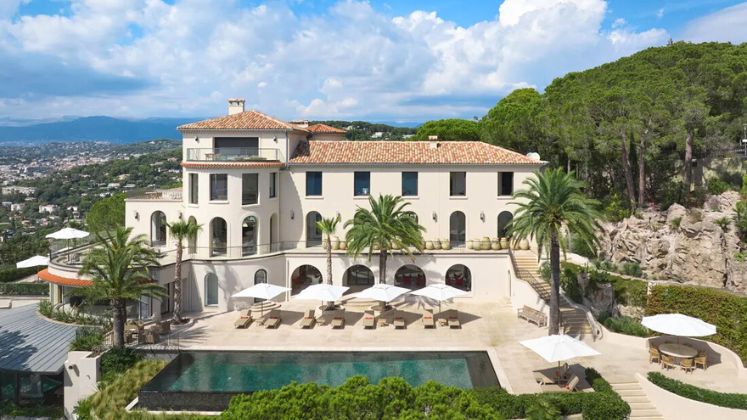
High-end businesses are increasingly investing in experiential marketing assets, as evidenced by the world’s largest luxury goods conglomerate’s deliberate entry into premium real estate on the French Riviera. LVMH has paid US $ 48.51 million for a historic 12-bedroom home in Cannes, making it one of the biggest real estate deals in the city’s history.
The villa will put LVMH in a better position to make a bigger impression during Cannes’ main events, such as the Cannes Lions International Festival of Creativity and its esteemed Film Festival. These events have long been important marketing venues for luxury products, drawing high-net-worth individuals and celebrities from around the world.
This approach, according to industry analysts, is a reflection of luxury companies’ increasing awareness that traditional retail and advertising techniques are inadequate in the experience-driven market of today. In addition to providing a display for LVMH’s collection of brands, which includes Christian Dior, Bulgari, and Louis Vuitton, the property will make money from summer rentals during the travel season.
As part of a dual strategy to acquire top locations and expand their investment portfolios beyond their primary industry, luxury houses are speeding up their real estate acquisitions. Prada’s US $ 425 million purchase of its Fifth Avenue flagship site in New York and Kering’s US $ 1.36 billion purchase of a historic 5,000-square-meter property on Milan’s via Montenapoleone from Blackstone serve as prime examples of this trend.
The approach represents a dramatic change in the economics of luxury retail, as companies increasingly see real estate ownership as a diversification tool and a hedge against growing urban rents. These purchases accomplish a number of goals: they act as conventional retail locations, offer rooms for exclusive client meetings, and establish content hubs for digital marketing, which is especially advantageous for Instagram, where luxury brands record some of their highest engagement rates. The strategy successfully converts retail premises with a single use into assets with multiple uses that can be utilised by various business sectors.