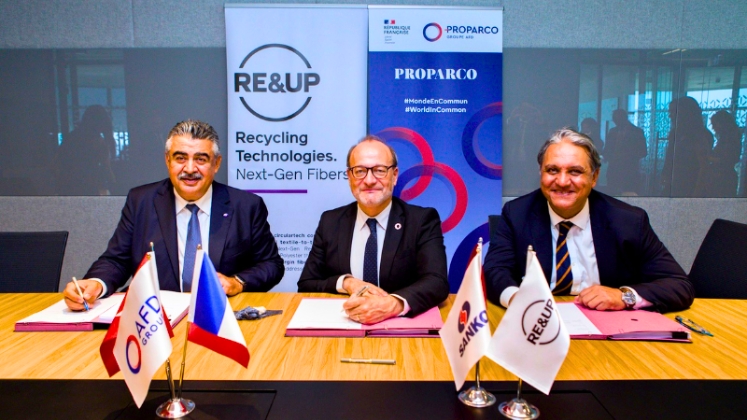
Re&Up Recycling Technologies, a recently established circular fibre company under the Sanko Tekstil umbrella, has taken a € 70 million loan from Proparco, a subsidiary of Agence Française de Développement Group concentrated on financing projects that endorse essential goods and services while fighting climate change.
This funding will allow Re&Up to grow its projects aimed at creating advanced recycled fibre production and increasing its capability for textile recycling. The company strives to diminish its carbon and water footprint through these plans.
Presently operating two factories in Turkey—one in Bursa for recycling polyester and one more in Gaziantep for recycling cotton—Re&Up aspires to open a bigger cotton recycling facility in Gaziantep by summer 2024, indicating its third factory.
The loan will support the building of this new textile-to-textile recycling facility, which will consist of rooftop solar panels for self-production and consumption of energy.
Fatih Konukoglu, chairman of Re&Up, shared, “We express our gratitude for Proparco’s continuing support and investment in their plan for a more sustainable future. We believe that this investment will considerably improve Re&Up’s ability to level up its production of next-generation recycled fibres, planning to reach 1 million tonnes by 2030. This determined goal seeks to set up Re&Up as a leader in circularity inside the textile industry.”
“This partnership reinforces our pledge to diminishing the environmental impact and highlights our strong relationship with Proparco. Jointly, we plan to lead transformative initiatives towards an eco-friendly future in the textile sector”, added Konukoglu.
Proparco, with more than 45 years of experience, working with the private sector, runs through a global network of 23 local offices. Their focus comprises building sustainable solutions in reply to environmental and social challenges around Africa, Asia, the Middle East, and Latin America.
They prioritise sectors like infrastructure (especially renewable energies), financial institutions, agribusiness, health, and education to add to achieving the Sustainable Development Goals (SDGs) agreed to in 2015 by the international community.