The US and Europe have long held privileged positions as massive markets for garment consumption. They have been the traditional markets that have enjoyed a long period of being the regions where exporters and manufacturers have had their eyes on. The rapid growth of these markets combined with a host of lucrative opportunities have held the gaze of Indian apparel companies for a long while.
The impact of Covid-19 in 2020 which caused major shifts in supply chains; the European markets getting affected with recession and inflation; and the Russia-Ukraine war in 2022 causing widespread fuel and energy problems in major European countries, leading to economic stress, worker strikes, increased energy prices and more has created a major paradigm shift in the apparel retail markets across the world. All these have led to a massive overhaul in the way the world does things and how the apparel industry has been affected.
Most recently, the amount of clothing imported into the UK in February 2023 was £ 1.294 billion (US $ 1.62 billion), an 11.51 per cent reduction from a total of £ 1.443 billion for the same month last year. According to the UK’s Office for National Statistics (ONS), clothing imports also fell month-over- month, reaching £ 1.384 billion in January 2023.
The US economy is now hitting the brakes due to the aggressive rate hike cycle pursued by the Federal Reserve, which it advocated over the last year or so to combat inflation and bring price stability. In March, the US central bank raised interest rates again, despite fears that the move could add to financial turmoil after a string of bank failures. It also warned that fallout from the bank failures may hurt economic growth in the months ahead.
As per various reports, a potential economic slowdown is also starting to show up in retail sales growth, which fell 0.4 percent in February. While more and more data suggests that consumers are curtailing their spending, some Fed Presidents don’t seem to mind as they remain focused on bringing inflation down to its 2 percent target.
As per National Retail Federation (NRF), in March, the clothing and clothing accessory stores were down 1.7 per cent month-over-month seasonally adjusted and down 2.2 per cent unadjusted year- over-year.
The latest data on the employment front also shows signs that the consistently outperforming labour market over the past few years is starting to weaken due to the economic slowdown. The ADP jobs report on national employment showed 145,000 jobs were added in March, missing expectations by 65,000 and well below February’s reading of 261,000.
Even the future scenario is not much upbeat as according to the minutes of the latest Federal Reserve Policy meeting which took place on 21st-22nd March, the US economy will likely fall into recession later this year due to the crisis in the banking sector. The collapse of Silicon Valley Bank and Signature Bank in the US has made a significant contribution to down sentiments.
Slow growth on a year-on-year basis according to Eurostat, and lack of any good opportunities in these regions have created an atmosphere where emerging markets may take centre stage. Combined with a steady pace of growth in many southeast Asian countries according to the Asian Development Bank and the GCC, these traditional markets have become somewhat less lucrative than they once were.
Japan, Australia, South Korea, The Middle East (specifically the UAE and Saudi Arabia) and Malaysia are the new markets that should be looked at and explored as the markets of the future where there will be a host of opportunities and steady growth that the traditional markets are failing to achieve.
Athleisure helps Japan’s market to grow
Amongst the biggest emerging markets, Japan has made a name for itself as a large market with a lot of promise. The apparel market size of Japan is around US $ 88.80 billion in 2023 and is projected to grow further at a CAGR of 2.55 per cent for the next 4-5 years. The revenue generated in the market per person is approximately US $ 709.90 with a greater share placed on womenswear.
The popularity of e-commerce for apparel, growing at 10.29 per cent with a projected market value of US $ 267 billion by 2027 as well as the push towards more athleisure-based clothing, has driven much of Japan’s growth post-pandemic. Customers in Japan have increasingly been driven towards online marketplaces for their apparel needs and it is a large part of the market share in the country with a user penetration of around 78.5 per cent according to Statista.
Japan has a wealthy, well-educated population with three times the level of apparel sales per capita as China according to a Rolan Berger report. With the customer population concentrated in the largest cities of Tokyo, Yokohama, Osaka, Nagoya and Sapporo, high sales per capita allows for the efficient distribution of products and stores.
World Co. Ltd., Fast Retailing Co. Ltd. (owner of Uniqlo), Shimamura Co. Ltd., Wacoal Holdings Corp., Comme des Garçons, GU are amongst the major players operating in the region. The apparel market is set to recover by 2024, driven by the strong inflation and increased interest in casualwear such as tops and T-shirts and shorts and trousers according to GlobalData.
Women’s apparel, a high point of Australia’s market
Australia is another market that is often overlooked but still has a high value in the emerging market segment. Revenue in the Australian apparel market amounts to US $ 20.21 billion in 2023. The market is expected to grow annually by a CAGR of 2.04 per cent for 2023-27. The market’s largest segment is women’s apparel with a market volume of US $ 10.90 billion in 2023. In the apparel market, volume is expected to amount to 1.72 billion pieces by 2027. The Australian apparel market is expected to show a volume growth of 1.5 per cent in 2024. Online men’s clothing sales in Australia are expected to be around US $ 1.8 billion in 2023 with a growth rate of 5.5 per cent.
Australia’s major players in this market are Cotton On Group, General Pants Co., The Just Group, Accent Group Ltd., and Sussan Corporation.
Australian women’s apparel and men’s apparel markets are projected to develop at a CAGR of 3.27 per cent and 3.18 per cent respectively from 2021-26. The share of revenue via online sales channels is projected to grow to 46 per cent by 2025.
Sustainable fashion as a share of revenue is increasing in both men’s and women’s apparel. Consumers are increasingly concerned about climate change and the impact of ‘fast fashion’. Women’s sustainable fashion is expected to grow to 8.23 per cent by 2026. Men’s sustainable fashion is expected to grow to 6.8 per cent by 2026.
South Korea’s apparel market driven by K-Pop and its stars
South Korea is also another emerging market that has done quite well post-pandemic with a lot of brands going out and making their mark globally. The size of the market stands at US $ 38.05 billion in 2023 and is projected to grow at a CAGR of around 3.41 per cent for the next few years. By 2027, the number of customers is expected to be around 29.85 million.
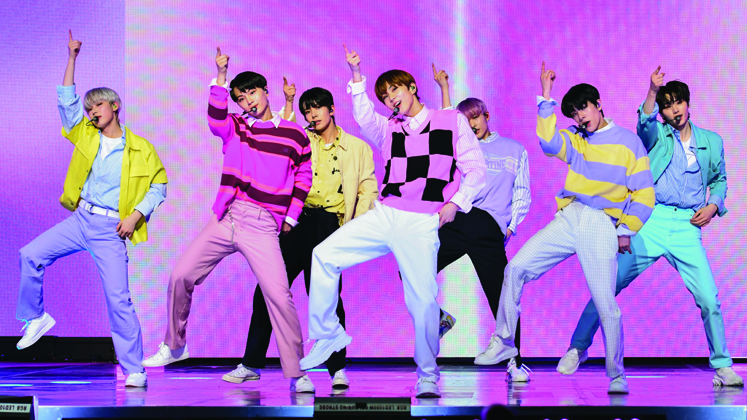
The growth in South Korea has been primarily driven by the K-Pop industry which, in the past few years, has grown to global prominence and its stars are looked at for their fashion sense and style.
A focus on sustainable apparel production has also steered the growth of this market which also plays well with the focus in the EU and US. All in all, this is a market that would be an advantage to look at due to the tremendous growth and popularity it is seeing. The major players operating here are 87MM Inc., Acme de la vie Co., Ltd., Charms Co., Ltd, Ader Error.
Online sales – key drivers of the markets in UAE and Saudi Arabia
The Middle East has always been a large market for a variety of businesses and is also emerging as a great market to focus on for the apparel industry as well. Saudi Arabia’s apparel revenue is around US $ 17 billion in 2023 and is projected to grow at a CAGR of 3.24 per cent.
According to Kearney’s Global Retail Development Index, its e-commerce sector is thriving despite Saudi citizens’ bias toward cash payments. The country’s e-commerce sector is expected to reach US $ 21 billion in 2025.
Some of the big players in Saudi Arabia are Redtag, Al Abdul Karim Co., Imtiaz Al Arabia Co., BRANDS International Ltd., and Ajlan & Brothers.
UAE takes pride in its tourism industry and the luxury items it has in the region. Diversifying its revenue generation has also made it a growing destination for apparel and fashion. Revenue in the apparel market amounts to US $ 9.51 billion in 2023. The market is expected to grow annually by a CAGR of 3.64 per cent.
Some of the biggest players in the UAE are Apparel Group (with brands like Calvin Klein, Levi’s and Tommy Hilfiger); Dubai Holding Group (representing brands like Zara, Stradivarius and Promod); Alshaya Group (with brands like H&M, American Eagle, Victoria’s Secret among others), Azadea Group (with brands like Mango and Massimo Dutti among others), and Chalhoub Group.
It’s predicted that 32 per cent of total market value will be generated via e-commerce and online sales in 2023, driven by the continuing spike in purchase frequency and average order value.
Opportunity for Indian companies
As the world is moving away from China and China+1 policy is being opted for by nearly every retailer and brand, it is high time for the Indian apparel industry to have more thrust in these emerging markets and increase their market share. It will also help them to have a balance in their market and clients.