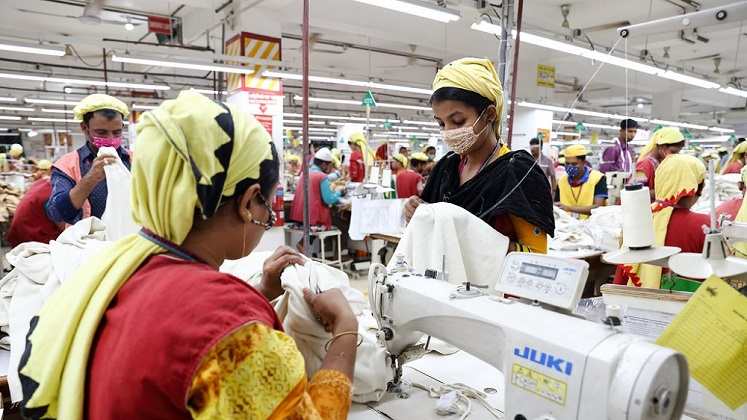
According to reports, Youngone Corporation, a global conglomerate based in Korea, has made massive investments in MMF for clothing in its factories in Bangladesh as artificial materials are now dominating the fashion industry while according to data from the Bangladesh Textile Mills Association (BTMA), local spinners have imported 99,345 tonnes of polyester staple fibre (PSF) in 2020, up 3.4 per cent from 96,077 tonnes a year ago (even during the Coronavirus pandemic) even as 40 spinning mills are reportedly importing PSF fibre to make yarns to produce high-end garments, such as sportswear.
Meanwhile, the import of viscose staple fibre (VSF) also reportedly rose last year even as the spinners reportedly brought in 72,504 tonnes of VSF, marking a 36 per cent year-on-year increase.
Cotton-based apparel export could account for major share of Bangladesh’s entire apparel offerings but the demand for MMF-based clothes is rising globally as more and more people are reportedly buying MMF-based apparels as they are durable, recyclable and reuseable. Moreover, due to lifestyle changes, consumers are also looking for products that are easy to care for and MMF adds to that convenience, say industry people.
With reference to the same, it is worth mentioning that the global trade of cotton-based apparel stood at around 35 per cent and it shrank by 0.5 per cent annually between 2007 and 2017 while the share of MMF-based garments in the global apparel trade was around 45 per cent, and it grew at 5 per cent compound annual growth rate during the decade even as in 2017, the global trade of MMF-based apparel was US $ 150 billion and Bangladesh had a 5 per cent share in the segment, compared to Vietnam’s 10 per cent.
However, if latest trends are something to go by, both imports of the MMF as well as investment in its business are increasing in the country (Bangladesh) consequent to higher demand for polyester and viscose-based garment items worldwide.
Chairman and Chief Executive Officer (CEO) of Youngone Corporation, Kihak Sung reportedly stated about its investment in MMF while interacting with the media recently. Youngone, famous for its outerwear and MMF products, recently started manufacturing polyester fabrics at three factories covering 40,000 square metres each at the Korean Export Processing Zone (KEPZ) in Chittagong.
Besides, Japanese engineers are supposed to come soon to install some new machinery at one of the factories, said Sung who reportedly decided to invest in MMF products due to their rising demand in the international market even as currently, 95 per cent of all the fibres produced by the company (Youngone) is MMF that is used by its own factories and other local manufacturers for a variety of apparel items.
It may be mentioned here that out of the 2,052,000 tonnes fibre import of Bangladesh in 2018, the share of cotton was 93.57 per cent, which highlighted the country’s reliance on the natural fibre, which however, has been changing of late as import of MMF is on the rise over the last few years because of the surge in demand of fabrics made from MMF as an alternative to cotton.
The potential is very high as we are getting a lot of work orders of MMF-based apparels, said the Managing Director of Saiham Knit, Syed Shafqat Ahmed while adding that Bangladesh needs to capture this global market even as according to the Secretary of the BTMA, Monsoor Ahmed, currently more than 120 spinning mills out of a total of 500 have the production facility for PSF and VSF while member factories of the BTMA are reportedly expanding the production facility of PSF and VSF every year as the demand is increasing worldwide, he said.
Meanwhile, speaking to the media, President of the apex garment makers’ body, the Bangladesh Garment Manufacturers and Exporters Association (BGMEA), Dr. Rubana Huq on her part reportedly stated, “While we can’t ignore the importance of the cotton-based market, the MMF-based clothing market bears strategic significance as far as our product diversification and higher-value-addition-led growth strategy is concerned.”
It may be mentioned here that as per reports, the lion’s share of the country’s export principally consists of five key items including trousers, shirts and sweaters, even though manufacturers are now expanding their capacities to produce items from manmade fibres to move towards value addition while also embrace diversification, with focus now increasing more towards making items like lingerie, swimwear, sportswear, etc.
Nevertheless, Bangladesh is still considered a volume-driven player in basics, in the realm of garment manufacturing and exports and the focus on MMF is expected to do a world of good for those who want to move up the value chain to command better price points even as profit margins in the basic products have fallen significantly over the years while the Covid crisis has made it more difficult for the garment exporters as work orders and price margins reportedly took a further beating owing to the pandemic.
Despite the push for MMF, there still remain some challenges it seems, especially in terms of duties to be paid on imports even if BTMA President Mohammad Ali Khokon on his part maintained that the import of MMF needed to be duty-free like cotton as the demand of yarn was increasing.
The imposition of 5 per cent VAT on the sales of yarn is a discouraging factor for the sector, said the BTMA President even as he maintained the price of MMF has increased because many mills were shut in China and India during the peak of COVID-19 last year amidst reports that price of PSF has gone up to around US $ 1.30 to US $ 1.40.
Even a few months ago, PSF was sold between US $ 0.70 and US $ 0.72 per kilogram even as VSF was priced between US $ 1.15 per kg and US $ 1.18 per kg three months ago, whereas the prices now reportedly vary between US $ 2.50 and US $ 2.54.
Meanwhile, speaking to the media, some industry insiders underlined that according to the statistics of 2011-21, the global market share of MMF (man-made fibre) was about 72.7 per cent and expected to increase significantly in the days to come even as the apparel industry of Bangladesh was mainly based on natural fibre still although the consumers’ preference was moving from cotton to man-made fibres due to its better physical properties, durability and versatility, which they say gives MMF a distinctive edge over natural fibre.
Going by the current trend, one can assume that MMF is going to gain strong grounds in the days to come as more and more garment makers take to man-made fibres to cash the emerging opportunities in the global market.





 Bharat Tex Special Report 2026