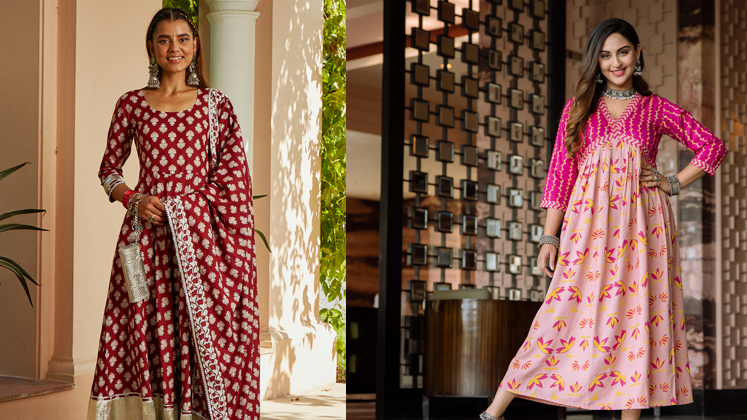
The ongoing pandemic has taken a toll on almost all industries, including the Indian ethnicwear. While the average buying of the consumer reduced considerably, it was even lesser sales in the ethnicwear range given that people were mostly confined to their homes. The Indian ethnicwear and even fusionwear industry relies heavily on ceremonies and special occasions and with marriages, festival gatherings getting cancelled, occasion-specific fashion definitely took a hit. However, with people going back to their normal routines, ethnicwear is once again finding its rightful space back in the Indian market as once being the only attire for women in India, it still carries its aura. According to Statista, the market size of women’s ethnicwear across India in the financial year 2020 was approximately US $ 17 billion and is estimated to reach more than US $ 24 billion by 2025.
Moreover, the new parameters of fashion are comfort, sustainability and affordability. The consumers of today want to invest in clothing that can last longer and support Indian artisans as well. Another pre-requisite is direct connect or relationship building with one’s customer base. The pandemic has definitely created a shift in people’s mindsets and brands as well as start-ups that are being cognizant of these changes to be able to sustain and survive in today’s market. Rustorange is one such D2C start-up that offers ethnicwear for contemporary Indian women. The brand works with young designers of India to curate a fashion space for the contemporary woman of today. “The growing market size of ethnicwear in India is driven majorly by the recession-proof wedding industry in India, special occasions, traditional festivals and office clothing/workwear. From largely being an unorganised market where women used to go to purchase garments from local shops, the trend today has shifted to buying readymade garments from brands. Our product offerings include kurta sets, sharara and gharara sets, lehenga sets, dhoti sets, palazzo sets, dresses, sarees, kurtis, tops and blouses. The quirky and ethnicity we add to our products is our point of differentiation and that takes our average ticket size to around Rs. 1500,” maintains Samik Sarkar, Co-founder, Rustorange.
Apparel Resources (AR) interacts with Samik Sarkar about the brand, its D2C strategies, sustainability initiatives, among other things.
Excerpts from the interview…
How do you see D2C growing in India currently? How are you leveraging this growth for Rustorange?
Samik Sarkar (SS): Today the urban millennial customer wants to have a relationship with the seller and wants to know the brand story. Also their product choices are based on wellness, sustainability, social connect, etc., which traditional Indian brands do not have as product attributes. Hence, modern day Direct-to-Consumer brands are growing rapidly in past 5 years. India today has 600 plus direct to consumer brands. The growth of D2C brands in India is just getting started and is expected to be a US $ 100 billion opportunity by 2025.
Social media now enables modern brands to reach new customers quickly, with e-commerce helping to build a brand faster. Most brands are able to service 80 percent of Indian pin codes in the first year itself, which would have taken a decade 30 years back.
At Rustorange, 90 percent of our sales come from our own website. This helps us listen to our customer and make our business decisions accordingly. For example, our entire merchandise is selected by our customers before they make to final merchandise.

What, according to you, are the key strategies to build a successful D2C brand in this category?
SS: The key strategies for building a successful D2C brand in India are having a clear product proposition and understanding the target customers, having a product with clear differentiation, building customer delight into the product at every step of buying and after sales process, having a clear brand positioning in the market, having deep understanding of messaging and marketing channels you can use to spread the word, including social media, content, influencer marketing, paid or digital advertising, etc.
Tell us about your sourcing and manufacturing processes? How do you ensure the quality of Rustorange merchandise?
SS: Rustorange controls the entire supply chain from griege fabric procurement to fabric processing, fabric optimisation to garment manufacturing. Once the sales team decides a sales quantity for a particular style, the same is fed into a digital planning system. Orders of raw material are placed in advance by suppliers based on a forecast given by Rustorange team. As soon as a new order is allocated to a particular vendor, they would start the fabric processing within 24 hours. The turnaround cycle for vendors is 30 days which can be squeezed to 10 days for bestsellers.
Rustorange controls every aspect of the supply chain from purchase to garment making. Bulk purchase for all our vendors at an aggregate level helps us get discounts on raw material. The fabric planning and garment stitching assembly line design are given by Team Rustorange as some of these vendors lack technical capability to do this at individual level. The entire process is designed in a way that the saved value is passed on to the end consumer. Fast turnaround times help vendors in quick recovery on money investment in working capital. And finally, all our garments are checked on a 13 point quality checklist which ensures proper fit for the customers.
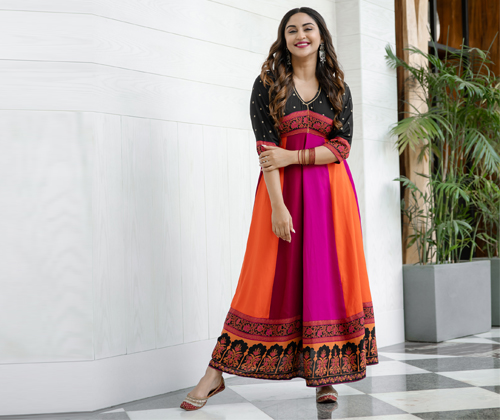
What’s your take on sustainability in fashion right now? What is Rustorange doing on this front?
SS: As per published data, apparel industry is responsible for a shocking four to ten percent of global greenhouse gas emissions every year. It’s the need of the hour to make clothes that are created while protecting the environment. Companies should reduce CO2 emissions and reduce pollution and waste.
The global campaign for having a better planet for tomorrow has led to today’s urban millennial customers’ brand love and brand loyalty to be very much dependent on the sustainability attributes that a brand enables or builds with its consumers. As a modern urban Indian brand, we take sustainability very seriously. All our garments are made of LIVA certified eco-friendly yarns.
What are your marketing and promotion strategies in India? What percentage of the overall revenue goes into marketing and promotions?
SS: There are two major buckets for marketing and promotions for us. The first is performance marketing through Google, Facebook with ads featuring our garments, on cost per impression basis. Second is content marketing wherein we produce great content around our clothes on Instagram, Facebook and YouTube which positions our clothes as high on style. We also do a lot of influencer marketing which helps us create awareness in our target audience and helps in new customer acquisition. Rustorange allots around 15- 20 percent of our net sales for marketing and promotional activities.
How do you set Rustorange apart from the fellow brands in the category? What has helped the brand excel in the segment?
SS: The salient features of Rustorange are as below:
Design uniqueness through democratisation, wherein in order to maintain uniqueness of new designs, existing customers vote for them before actual sale. New design illustrations are voted via Instagram stories by all our followers. Only designs which are above the benchmark make it to final merchandise for soft launch.
Vertically integrated supply chain with high turnaround times lead to great prices and minimal work in progress inventory.
Unlike typical fashion brands, Rustorange does not do ‘human merchandising’. Instead, data analytics and half-a-dozen parameters related to user behaviour are used to predict styles that remain or get removed from Rustorange’s ‘merchandise’.
High velocity of new product development and design selection, wherein the company launches around 150 fresh styles per month. This also helps in keeping a high bar for design selection which results in the merchandise having high buy-to-detail products resulting in high conversion for products.

How did the pandemic affect the business at Rustorange? What are your strategies to navigate through this?
SS: Apart from short team fund flow issued, the Covid pandemic has impacted the business in a positive way. A lot of customers who had never purchased online started trying new brands as they were not able to step out due to travel restrictions. With a lot of companies reducing their marketing spends, a lot of idle media inventory was available which further led to reduced marketing costs. Also, business shutdowns gave us an opportunity to take a pause and holistically look at how we are building Rustorange. We got rid of non-core activities like inventory management, order dispatches and are now focusing on things that really matter. Rustorange is already hitting higher revenue numbers than pre-Covid levels.
What has been your turnover this fiscal?
SS: The company has grown significantly since its inception. From a GMV of Rs 1.875 crore in FY 2016-17, it would be clocking a GMV of Rs. 20 crore in this financial year. Rustorange was developed in a bootstrap manner with total investment of around Rs. 3 crore. It has maintained a healthy PAT in all years.
What are your plans for expansion in terms of retail presence and also product assortment?
SS: We plan to start opening few retail experience centres from next fiscal year. The initial plan is to have one outlet in each of the metro cities of India. Our product assortment will see additions in categories ranging from jewellery, footwear to other accessories by end of this year. In addition, we want to add a separate line for plus size fashion.