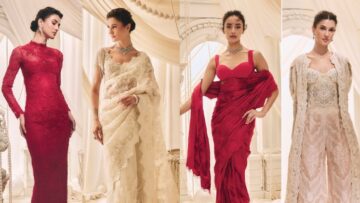
India is slowly closing in to become the sixth largest fashion market globally facilitated by rising number of both national as well as international brands entering this potential market. The past few years have witnessed a number of international retail majors entering this market to be a part of an industry forecasted by McKinsey to be worth nearly US $ 60 billion by 2022, even as India’s GDP is expected to increase by 8 per cent year over year. Contrary to the old perception, fashion is a very serious business in India and contributes aggressively to the country’s economy. Moreover, to remain relevant to the consumers among a slew of brands offering a range of merchandise in line with the international trends, fashion brands have strategised a new way to stay ahead in the race. Today’s brands are increasingly leaning on fashion designers for business associations ranging from signature lines to limited edition special range, and for now, this is the best bet since it adds a newness to the collection and fuses the brand aesthetics with the designer’s sense of style and understanding of what’s in vogue.
Brand loyalty today is as ephemeral as today’s consumers’ attention span. The age of digital connectivity and fashion awareness has changed consumer behaviour for good and they expect brands to create experiences personalised to their distinct fashion needs which has given way to the trend of brand-designer collaborations not only in India but also worldwide. Adidas Originals X Alexander Wang, Uniqlo X JW Anderson, Chopard X Rihanna , are some of the successful collaborations on the international waters even as India, a still new market for this trend, has already had its share of popular collaborations performing phenomenally among the consumers here.
Why collaborations?

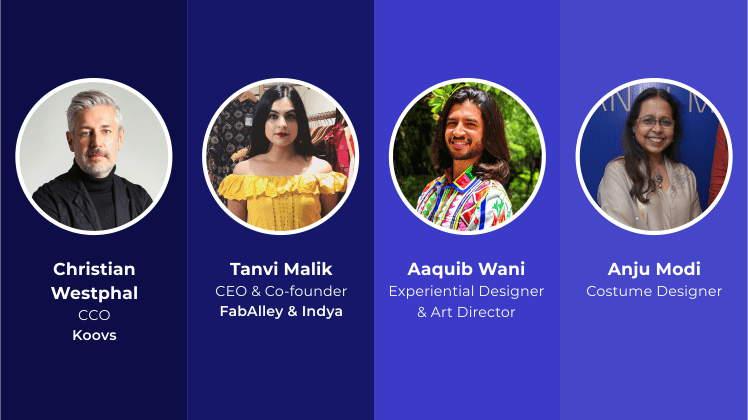
The ardent need to keep innovating and adding value to the existing experiences has necessitated retail brands to go for collaborations with fashion designers, with luxury brands or with celebrities. It is to be noted that grass-root innovations are too time consuming, require high investment and one cannot ensure that these would match the pace of changing expectations. To keep pace with the fast fashion, it is crucial for brands to differentiate their unique selling points and increase lead generation. Success today is increasingly dependent on the ability to build partnership of business networks, strategic alliances and collaboration amongst companies or brands catering to the same market segments with different but similar core competencies. This could help multiply value-added features in their collaborative merchandise and help enhance the user experiences for both the partners. Christian Westphal, Chief Creative Officer, Koovs, asserts, “Koovs is not just known to be a fashion leader but is really pushing forward the latest trends, and in the process, we have had some of the most dynamic collaborations. Going for such collaborations is not a new thing today and we have been seeing some of the most remarkable collaborations done by H&M and the like. However, the recent years have witnessed the most of it and it’s not only fashion brands but products, automobiles and also FMCG brands that are collaborating with everybody. The major factor pushing this trend is the access to each other’s respective customer base thereby making the brand visibility even stronger and retailing a collection that’s new, trendy and different from the regular ones. Its a win-win situation for both the parties and is expected to go on in the days to come.”
Making the most of the gap that exists between the ramp and the market, fashion collaborations are offering unique products from best of the both worlds, for a short period of time. Agrees Tanvi Malik, Co-Founder, FabAlley, “It opens a new audience and creates a touch of aspiration. There are a lot of brands that lie on the bridge between premium to luxury and designer collaborations capture that bridge really well. When we started on our collaborative collection with designer Nikhil Thampi, our thought was that there are a lot of consumers who aspire to have access to the couture collection by these designers and we wanted to give them access to truly democratised fashion. This is a way to introduce a whole new audience to designerwear and the designer also opens up to a new set of customers.” Collaborations have become a way of showcasing the evolving identities of brands using the hype and advertising and thereby creating a buzz while tapping into a partner’s assets. A positive brand association helps both the partners establish credibility and extend their market reach.
The differentiating factor

There are a number of examples related to the fashion fraternity’s growing bonhomie with the retail brands over the last couple of years. Some of the these collaborations are Koovs X Manish Arora , Puma X Masaba Gupta, Indya X Nikhil Thampi, Biba X Anju Modi, while others have launched their collaborative collection with international designers, like, Cover Story X Karl Lagerfeld, H&M with Giambattista Valli, etc.
While Puma has collaborated with designer Aki Narula for an athleisure apparel line for women before its recent collaboration with Masaba Gupta, FabAlley has partnered with Masaba Gupta before launching its collection with Nikhil Thampi. Biba has been collaborating with designers since the past 5 years and has till date worked with designers like Rohit Bal, Manish Arora and recently with Anju Modi. Meanwhile, Koovs has been engaging in collaborations since its inception in 2012 and some of these designers are Giles Deacon, Mawi, Gauri & Nainika, Shivan & Narresh, Manish Arora, among others. While it’s an established fact that the corporate-designer collaboration is not something new, the acceptability of these collections by the consumer base of the respective brands have drastically gone up in the recent years with a sudden need in them to stand out and the aspiration to own a premium set of clothing. These premium set of clothing definitely come at a premium price but the retail brands strategically price them for their set of consumers. “The price point is the most strategic aspect behind the success of a collaborative collection, which is to say that it needs to be attractive yet premium. We priced this collection at a plus of 15-20 per cent of our price point and the average price for the collection was Rs.3,000, which is still accessible and affordable. The consumers’ response to the Nikhil Thampi collection has been tremendous and we sold out 35-40 per cent of the collection within the first 30 days of the launch,” maintains Tanvi. Biba by Anju Modi is smartly priced ranging from Rs.5,995 to Rs.29,950. For Koovs as well, the collaborative collection is priced higher than the usual price bracket, however, the brand tries to work around to make it as affordable for its consumers as possible. “We do a 360 degree brand activation which ranges from social media, collaborating with Bloggers, etc., which increases traffic on our website, ultimately increasing the sell through. These collaborative collections are priced higher than the average product merchandise. Such collaborations give opportunity to the average customer to get access to these designer names. The price range actually varies, but we try to keep it at par with our customer base. We do not collaborate with super luxury brands and then sell at 10 times the average price at Koovs. That would never work. We need to find a price architecture within the acceptance of our customers, otherwise it could never work,” avers Christian.
A number of brands have been launching collaborative collections with designers and while a lot goes into launching these collections and making them a success, they ensure to have one-of-a-kind marketing strategy in place with advertising, promotions, show windows, visual merchandising, direct marketing and social media activation. Also, to maintain the premiumness and exclusivity of the collection, these are mostly not retailed across all the retail channels of the brand but are carefully offered at their premium locations. Biba’s collaborative collection which comprises of metallic and floral prints, intricate hand embroidery and fine zari work on pure fine fabrics like silk, chanderi, velvet and modal, for example, is available at select brand stores and on its website. Tanvi informs, “We do not retail our collaborative collection on all channels but choose our proprietary mediums for retail. For this particular collection, we are retailing from our own website, our EBOs and Lifestyle stores. While we work with more than 5 MBOs, the Nikhil Thampi collection is available at only Lifestyle. The strategy for this is to be available at more premium touchpoints.”
Back-end functioning

Even as the brands are all appreciative of the trend and the fact that these collaborations bring in designer innovations into the brand, the two partners in the game need to be very cautious about maintaining their design language and aesthetics in order for the collection to gel and fare well with the consumers. It is a fine balancing act and the two partners need to essentially align well with each other. For FabAlley, it starts with getting the designer acquainted with the brand and customer base through sharing of brand designs, bestselling products, products that have garnered good sales in the past to know the choices of customers better, commercial information regarding the brand, and from thereon leading to discussions on what would work and what would sell. “There is a lot of freedom that is given to the designer partners to be able to create a rich line because they are used to thinking on a completely different scale altogether. We want the designers to bring their own flair and their own je ne sais quoi to the collection. The design language will not be the same but it would be something comprehensively accepted by our consumer base. Also, there is a lot of focus on value addition, which is a big enough differentiation from the regular line. In any case, the merchandise needs to have the designer’s essence because the consumer would want a piece of the designer and it needs to come out strongly,” maintains Tanvi.
The designing aspect, though sounds a difficult aspect of the collaborative collections, has been efficiently handled by the two partners over the years and most if not all of these collections are a success. “If I talk about our very recent collaborative collection, a lot of effort was put into it with constant conversation with the design team of Manish Arora; we carried on the process with an in-depth, day-to-day conversation and discussion with his team, in order to make it a success. We have burnt the midnight oil to launch the right product merchandise with right fit, etc., but it was mostly fun and exciting for us, always has been. We do not restrict a designer with a design language. Our own collections are not in line with the Manish Arora designs and we don’t want anything similar which was the prime reason we don collaborations – to bring out something new. However, the common language we speak is being open, creative, innovative, etc., which dictates our designs. In our partnerships, the common language is love for fashion and bringing something innovative and dynamic. So, while the designs are finalised at the designer’s studio, the manufacturing happens at our vendors’ facilities in Delhi-NCR or other places,” enlightens Christian. And this also has its reasons. Since designers do not mass produce and usually work with hand-stitched assortment and retail brands need a certain efficiency and quantity to be available for sales, the manufacturing happens through the existing pool of partner vendors and it goes through an extensive quality check for efficiency. The average lead time for FabAlley is around 1.5-2 months.
The designers’ side of the story
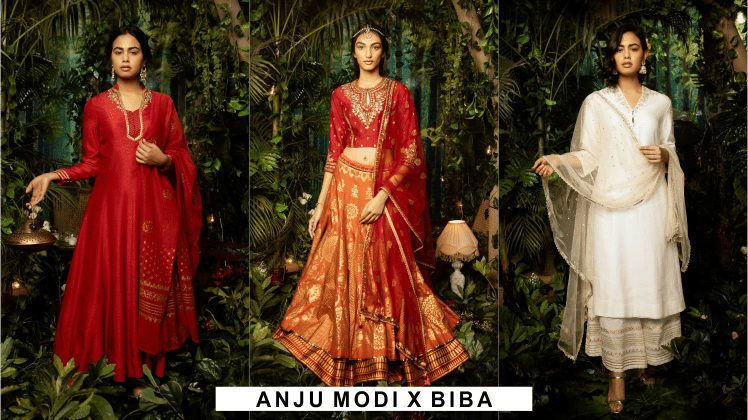
While the fashion retail brands are in love with the concept of collaborations and their consumer base is ready to pay the premium for these, what it really entails for the designer fraternity? A common verdict from this part of the industry says while its getting traction for them and opening them up to a wider consumer base, there’s scope for a lot more in this space. Bollywood’s acclaimed costume designer Anju Modi, who has launched a collection with Biba, asserts, “It has been great as this association has allowed me to showcase my designs across the massive retail network of the brand. Biba enjoys a great geographical spread and this partnership allows many more people to experience my designs and I am really excited and looking forward to a fruitful and a meaningful association going forward.” New Delhi based experiential designer and art director Aaquib Wani who has previously worked with retail majors like Adidas, Gas Jeans and Levi’s, feels that the collaborative collections give consumers options to sport their favourite brand with a customised design which brings in a new element to the merchandise. “For us, a designer to be associated with a global brand is good; it definitely opens up a wide pool of their customer base which helps gain traction. It’s always a positive alliance for any designer. For a designer, it’s not an easy thing to open their own store and it is not even on their agenda against the brands which already have a good number of stores. It is a win-win situation for both the partners. The best part about my collaborations with these brands was that I was never given a brief or a guideline on the design aspect. A corporate- designer collaboration is the best way to move forward and is always a welcome for a designer. We get advertised in the process and there is no reason to dislike it,” quips Aaquib.
Moving forward…
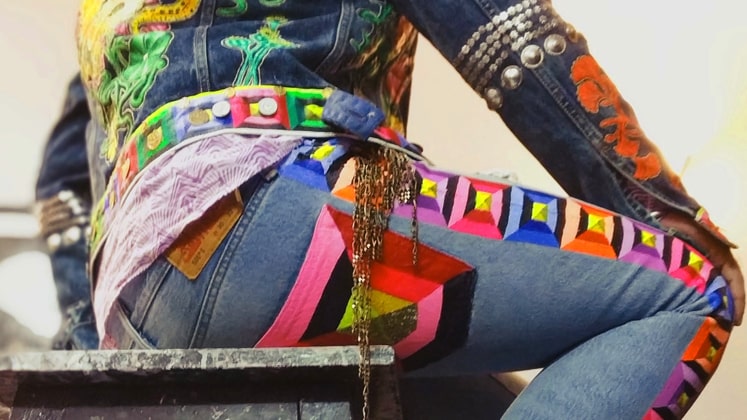
From being one-off instances few years back, corporate-designer partnerships is becoming the core of businesses and this model is creating its very own niche market across India. While it is trending big time in the Indian market, a lot still needs to happen in the sector. In India, as opposed to in the developed markets, such collaborations are often looked at as temporary arrangements. Some of the international renowned associations that worked for both parties include Adidas’ association with UK designer Stella McCartney for a range of sportswear, Puma’s tie-up with late Alexander McQueen for a special line of trainers, and British retailer Debenhams’ special ranges with a host of designers.
If implemented well, consumers can own products that integrate aesthetics of two brands in one product, which is never a bad deal for anyone. Also, these help brands maintain momentum especially during fashion off-seasons. As the industry voiced together that there was no downside to having such collaborations, it is only with time that India will witness a slew of these partnerships, which will be a long-term arrangement rather than an experimental one.