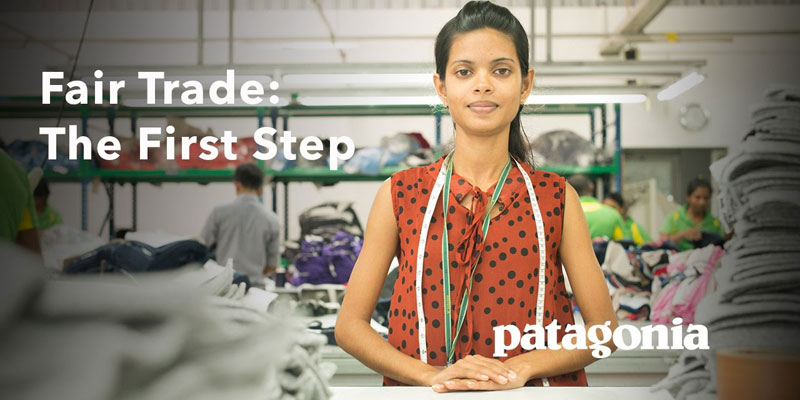
Outdoor clothing retailer Patagonia has released a 13 minutes film – Fair Trade: The First Step, based on the lives of nearly 40 million garment workers in the world. Produced in collaboration with “Little Village Films”, the short film delves into the human consequences of fashion’s profit-first business model.
“Fair Trade: The First Step” depicts the daily routine of a young Sri Lankan mother, who works as a sewing machine operator in a factory that sews Patagonia clothing, and her five-year-old son, who is able to attend the beautiful day-care built with the factory’s Fair Trade premiums. The film also portrays the atrocious conditions, including chemical exposure, experienced by labourers in conventional factories, which really puts the Fair Trade experience into perspective.
Helena Barbour, Senior Director of Patagonia says, “It completely changes the way you think about clothing when you consider the people in the process, but because there is no visibility when you buy garments, you are just oblivious to it.”
Also Read – Patagonia bags award for contribution to circular economy
It may be mentioned here that Fair Trade is one of the tools Patagonia is using to raise the standard of living of garment workers by adopting Fair Trade certification for many of its products. So far Patagonia has sold 218 Fair Trade-certified clothing items. Now, it plans to reach 300 items by the end of 2017. The clothing is certified by Fair Trade USA, which is a different entity than Fair trade International but follows similar guidelines
Patagonia’s CEO Rose Marcario explains the concept behind the Fair Trade certification, “For every Fair Trade Certified™ item we have sewn, Patagonia pays a premium. The money goes into an account the workers control. This is not a top-down program but one run in each case by a democratically elected Fair Trade worker committee that decides how the funds will be used, whether designated for social, economic and environmental community projects like private health care or a child care centre, or as a cash bonus that gets workers directly closer to a living wage.”