Counterfeit of goods has been a major issue for the fashion and luxury market. Since these are based on designers’ creativity and imagination, losing them to counterfeits can impact the business with a huge sales loss. Retailers and brands might even lose sales for the entire season, as the customers would buy counterfeit items either out of confusion or because they are getting branded copy for cheap. For combating this challenge, retailers must deliver transparency of their products to ensure authenticity of the products that they are investing in. This will also help the brands in maintaining the customer loyalty while retaining the profitability.
Blockchain is one such technology that helps in creating transparency across the entire supply chain from farm to retail. It has various applications in the apparel industry including sustainability and counterfeit. Blockchain is a list of records called blocks which are linked to each other through cryptography. Each block has a cryptographic hash of the previous block, a timestamp and transaction data which secures the information. The use of Distributed Ledger Technology (DLT) makes the information unalterable; only the person allowed can retrieve the information.
Tailor-made solution for the apparel industry
TextileGenesis, a provider of blockchain traceability platform for the apparel industry, focuses on creating transparency from fibre-to-retail and authenticity of sustainable textiles. The technology is especially curated to fit the need of apparel industry through Fibercoins (traceability technology which is patent-pending in the US). Fibercoins creates the ability to trace and manage the textile products across the apparel supply chain by creating a digital twin of the sustainable fibres at the point of origin. These are blockchain-based digital tokens to digitise physical volume of sustainable materials and are not based on any crypto-currency (Bitcoin, Ethereum, etc.) to restrict any legal and financial risk for the businesses.
Also read – How blockchain helps combat counterfeits in retail
All the transactions between the textile suppliers are captured using Fibercoins in direct relation to the movement of physical goods between the supply chain partners. Moreover, the platform is built on GS1 traceability standard used in food and healthcare industry. Based on this, TextileGenesis created the industry’s first fibre-to-retail traceability data protocol for apparel ecosystem based on GS1 framework. This allows all textile suppliers and retailers to seamlessly share the data with their downstream partner.
It is a cloud-based B2B solution accessible from any web browser. “The platform allows brands to see the ‘digital chain of custody’ across the textile value chain, thereby creating transparency and ensuring provenance of sustainable fibres against generics,” commented Amit Gautam, Founder and CEO, TextileGenesis.
The retailers and brands get access to the platform to view supply chain traceability. Each business across the textile value chain can create account on TG platform and start conducting transactions with the downstream customer.
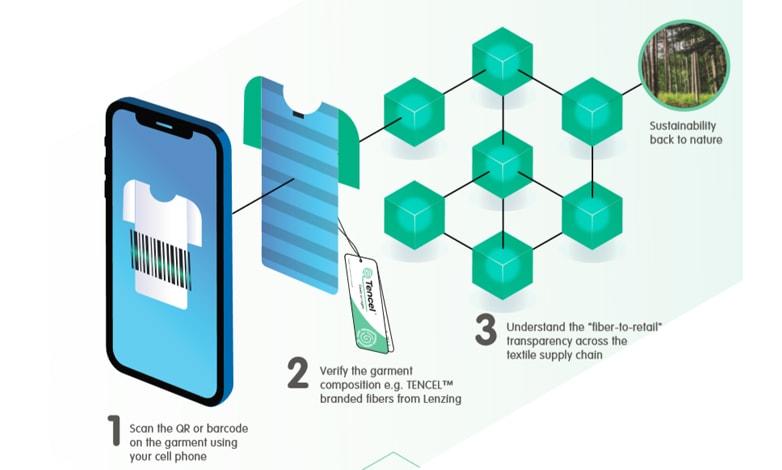
The solution can be either integrated within the existing brand apps or retailers can even opt for TextileGenesis transparency mobile app. The customers are required to scan the barcodes to view the garment history and relevant sustainability certifications.
Technology implementation and scope
One of the first pilots of TextileGenesis platform was with a Hong Kong-based brand called Chicks in collaboration with WWF and Lenzing AG. The company traced sustainable TENCEL fibres from the origin for 25,000 different garments from a T-shirt innerwear. The project was displayed at Hong Kong Fashion Week in 2019 and demonstrated the technology ‘proof of concept’. The company has since conducted live testing of the platform in over 10 countries across five major brands to demonstrate that the technology scales extremely well across diverse global supply chains.
“Blockchain technology can help to significantly reduce the supply chain compliance costs related to auditing, and drive improvement in supply chain efficiency. It creates a level of supply chain trust that was not possible before, and thus, creates new opportunities for collaboration,” said Gautam.
Providing complete transparency of the product can help gain trust of the customer in a brand. Using the blockchain technology, every product bought from a store other than the brand showroom can also be tested for the originality. The stores might have fake copies of a branded product; however, the retailers opted for the technology can ensure the customer that they are buying the original one. All the customer needs to have is a mobile phone with the installed application.
Also read – NFT-based inventory visibility next frontier of fashion supply chain
Having such technology will also motivate the customers to buy products from that brand from any offline or online store, as they are assured of receiving the right products. Another application of the technology is that it assists the retailers in ensuring the customers of sustainable practices they are following. The rising concern for sustainability among the customers has become one of the deciding factors in buying a product. Smart Tags with blockchain is helping retailers deliver the full transparency from farm-to-retail shelves to the customers. The customers receive complete information on their mobile phone by just scanning these smart tags.
Future of blockchain in the apparel industry
“We intend to further customise and tailor our product to customer needs, for example, a multi-language interface,” mentioned Gautam. The technology has received several awards for its innovation including the Global Change Awards from H&M foundation (often called Nobel Prize in Fashion), and Fashion For Good’s South Asia Innovation Programme.
Though the blockchain technology has recently been gaining acceptance in the fashion industry, a complete integration into retail, supply chain, logistics and manufacturing process would take years.
However, there are good numbers of user cases with retailers using the technology to encounter the counterfeiting challenge. It can develop greater trust between manufacturers, retailers and customers empowering them with better knowledge and transparency.