With e-commerce/online retail spreading like wildfire, retailers are actively adopting solutions that elevate the shopping experience of customers and retain them with the brands. According to Ayden-KPMG Retail report of 2022, 55 per cent of shoppers prefer retailers that offer tech-enhanced in-store experience (virtual showrooms, smart mirrors, self-service kiosks). The report also confirms that 70 per cent of shoppers will change brands after a bad in-store shopping experience such as lack of help from staff, disinterested employees at store. In-store automated technologies help brands and retailers maintain their existing customers, add in new customers and forge ahead with the growth graph.
Using artificial intelligence (AI), robotics, the Internet of Things (IoT), VR and AR, retailers can make shopping personalised, frictionless, contactless and social. The key is to deliver immersive data-driven experiences that prioritise convenience and engagement above everything else – even sales. The retail industry’s urge for more in-store automated technologies offering new interactive experiences seems to have no end.
Smart store technologies bring customers closer to customised shopping experience
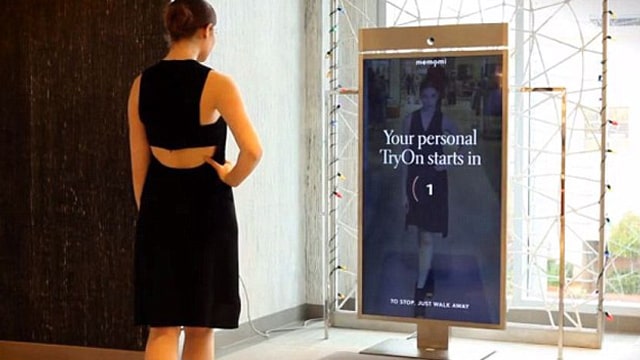
The market size of smart mirrors globally is estimated to be US $ 2.7 billion in 2022 and is projected to reach US $ 5.9 billion by 2027, growing at a CAGR of 16.8 per cent. Smart mirrors promise to offer the best of both worlds as they introduce shoppers to full inventory details about the store and allow customers to create their virtual avatars and try on clothes digitally.
H&M’s smart mirrors in its flagship store at Times Square, New York are integrated with voice and facial recognition technologies. Using voice command, the customers can take selfies which are then virtually integrated with the H&M catalogue. These images can then be downloaded to their smartphones using QR codes. The customers can also take suggestion from these mirrors about the products that would best suit them from the options available and then order the products directly from the online shop using QR code.
Valuable product discovery tools that they are, smart mirrors automatically introduce shoppers to relevant SKUs based on their taste and style. If for example you don’t like the product or item that you saw first, then it can be held up in the smart mirror till you view all other similar products. The smart mirror further supports you in purchasing pieces that will complete your look along with the garment selected by you such as shoes, earrings, hats, jewellery. Smart mirrors boost the merchandising strategy of stores by enabling them to have a showroom look and feel while exposing customers to some valuable products, increasing conversion and driving sales.
Self-checkout kiosks – retail’s next level
2022 may be a watershed moment for self-checkout technology and adoption. The global self-checkout market share, according to Fortune Business Insights, is projected to grow to US $ 12.01 billion by 2029 from US $ 4.51 billion in 2022, growing at a CAGR of 15 per cent during the forecast period. Leading this steadfast growth are the rapid expansion of digital infrastructure, rise in construction of commercial and recreational spaces, long queues at store checkout counters. Besides, greater access of workers to banking facilities and instruments like credit/debit cards, mobile wallets and Covid-19 minimalising physical contact have acted as stimulators leading to increased adoption of these kiosks.
Zara’s kiosks at Oxford Street, England simplify the users’ transaction process as all that the customers or users need to do is to scan the barcode of the garments by bringing them closer to the kiosk. Upon detecting the barcode, the image and price of the garments appear immediately on the screen, which then guides the users through the entire process.
Beacons – Bluetooth technology bettering customer proximity
Bluetooth technology of mobile phones, popularly known as beacons, promote personalised offerings and improve the in-store shopping experience of customers. These are small, battery-operated devices that transmit Bluetooth signals to nearby smartphones. Mobile apps listen to signals from beacons using Bluetooth technology and act accordingly so that customers receive the necessary content based on their location.
To be more precise, beacons communicate mainly through advertisements sent through small packets of data. This communication is only one way which enables retailers to connect with customers but the customers cannot reply back from their smartphones. Global retailers like Nordstorm, Macy’s, Target, Urban Outfitters, CVS are avid beacon users.
Target uses beacon technology to map routes for customers and help them locate the products they need directly in stores on a section-to-section basis. Once customers feed their shopping lists into the app, the app will produce an automatic shopping plan for them with the app’s store map showing products required as pins.
Macy’s uses beacon technology to track the movement of customers within the stores which helps in better inventory management planning and retail merchandising. Even knowing how the customers interact with the products can make the brand push promotional content related to products directly on their smartphones.
Customer representative robots – effectively assisting customers in stores
Available in both humanoid and non-humanoid forms, customer service robots not only assist in direct dealings with customers but also contribute significantly in product data management, tracking of customer’s buying patterns and accuracy in inventory management.
Designed by Fellow Robots for Lowe’s stores in 2016, LoweBots identify shoppers using 3D scanning, supporting customers to navigate the store for finding an item of interest. They are equipped with laser sensors which accurately measure distances of objects. These robots are capable of interacting with the customers and answering their questions using speech recognition.
Zara’s Cleveron robots are used for processing the online orders in-store. Using these robots, customers can pick up their orders inside the store without human intervention. All they have to do is to enter the code that they receive on their phones and the robots can then search and deliver the right orders to the customers.
Bossa Nova Robotics by Walmart help in autonomous shelf-scanning and provide information on pricing errors, products/items that are out of stock, products/items that are misplaced within the store in real time.
Apart from providing front-end benefits such as better customer service, personalised experiences, implementation of immersive shopping techniques, in-store automation technologies also have several back-end advantages such as application of effective retail employee scheduling strategy, reduced inventory and labour costs and upskilling of employees through new knowledge management software solutions. These augment the demand quotient of retailers and give them the competitive edge.