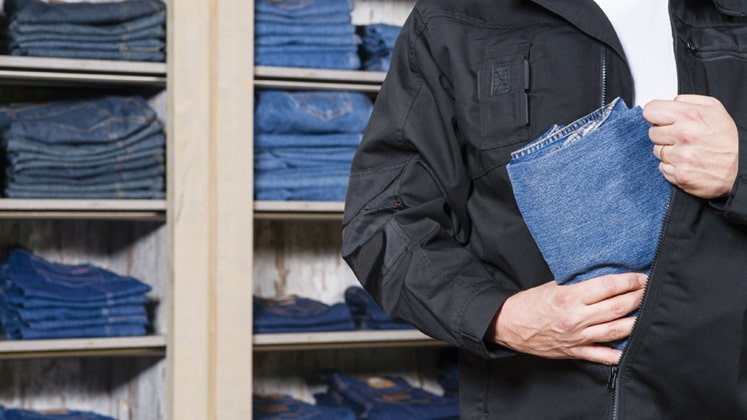
Shoplifting is the unauthorised removal of merchandise from a store without paying for it. This results in huge sales loss to the retailers. According to an Annual Retail Theft Survey by Jack L Hayes International, 66.7 per cent of retailers indicated increase in inventory shrinkage last year with major reason being shoplifting. Also, US experienced an increase in shoplifting in 2019 and has been ranked as the number one contributor to retail shrink.
There are three common methods that dominate self-checkout theft- the first is banana trick which sees the code of a cheaper weighed item applied to a more expensive one, the ‘pass off’ which is not scanning an item at all and ‘the switcheroo’ which involves placing the label of a cheaper item over the barcode of a more expensive one. In a recent study by Loss Prevention Research Council, 24 self-checkout offenders revealed that ‘the pass off’ is by far the most common. All of them indicated that they would scan some items but not all.
Initially the retailers had no technology to prevent shoplifting which impacted their profit margin severally. With a little advancement technology, the retailers installed video cameras in their stores in order to keep an eye on the customers. Slowly evolved a number of different strategies for reducing shoplifting including storing small, expensive items in locked glass cases; chaining or otherwise attaching items to shelves or clothes racks; attaching magnetic or radio sensors or dyepacks to items; installing curved mirrors mounted above shelves or video cameras and video monitors; hiring plainclothes ‘store detectives’ and security guards; and banning the bringing in of backpacks or other bags.
However, sometimes the strategies like glass doors and attaching items to the shelves leads to unsatisfied customer experience as they are not able to touch and feel the product. This also leads to sales loss as the customers end up not buying the product. Today, with the advancement in technology, there are certain solutions that are helping the retailers prevent shoplifting while providing a seamless shopping experience to the consumers.
Also Read: In-Store Tech Trends Shaping Retail In 2020
Electronic Article Surveillance System
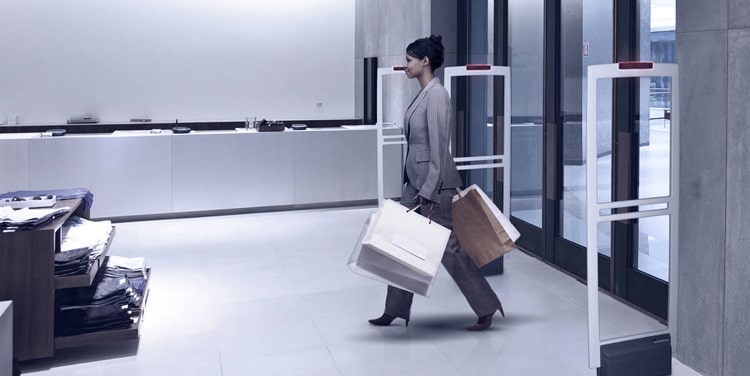
The most effective anti-shoplifting tool that came in use was the CCTV and the tag and alarm system, better known as Electronic Article Surveillance (EAS) system. Separately, these are good options but when used together, experts say, they’re almost unbeatable. EAS technology identifies the article as it pass through a gated area in a store. This identification is used to alert the unauthorised removal of article. EAS systems started being used almost everywhere as they did not have any restriction for item of any size. Using these EAS systems enabled the retailers to display popular items on the floor, where they can be seen and touched, rather than putting them in locked cases or behind the counter. EAS technology basically uses Electronic Antenna, Deactivator or Detacher, Electronic Tag.
Special tags and labels are fixed to merchandise. These tags or labels are removed or ‘deactivated’ by the clerks at POS either after billing or before billing. The deactivation is done either using a ‘Label Deactivator’ (cashier uses a ‘Detacher’ which releases the pin) or by passing each product label across the ‘Deactivation Pad’ after the deactivation of label or a tag customer can then pass by the antenna without any alarm.
If the tags are not removed, a detection system at the exit of the store sounds an alarm when it senses active tags are passing by. There are two commonly used types of EAS – radio frequency (RF) and acousto magnetic (AM), and the difference between them is the frequency at which they operate. Acousto Magnetic Systems operate at 58 KHz, which means a signal is sent out in pulses or bursts between 50 and 90 times a second while Radio Frequency or RF operates at 8.2 MHz.
One of the solution providers for the same is Sensormatic, based in Switzerland, which helps retailers deliver frictionless personalised experiences to their customers. The company offers wide range of solutions for loss prevention including detection system, sensors, deactivators and detachers and an analytic platform. There are three types of detection systems that the company provides-Pedestal Systems, that are installed at the door and exist; Concealed Systems, attached to the wall or door-frame mounted antennas and recessed systems and Surveillance Zones, an effective surveillance at exits and/or checkout lanes.
The Synergy Self-Contained Pedastal offered by the company is AM EAS technology with up to 2.5 m (8feet 2inches) global detection performance. The technology comes integrated with people-counting sensors that provide traffic intelligence and directionality to calculate conversion rates and maximise store performance. The Optional Metal-Foil Detection alerts staff when foil-lined bags or clothing enter the store environment, helping combat shrinkage. Also, an Optional Network Plug-in card delivers store-front alarm event and traffic intelligence to enhance loss prevention efforts and increase shopper visibility.
The other is the RFID Retrofit Panel that integrates the RFID technology to existing Acousto-Magnetic (AM) systems. It offers shrink and inventory visibility, in addition to protecting Electronic Article Surveillance (EAS) infrastructure. Moreover, these provide true directional sensing of RFID tag movement using beam steering technology at exits, transition areas, or zones. The other interesting options offered by the company are the Synergy Camera, The RFID Overhead EAS system, Concealed Floor System etc. The company also provides a range of hard tags and labels in AM, RF and RFID technologies.
RFID Labels for loss prevention
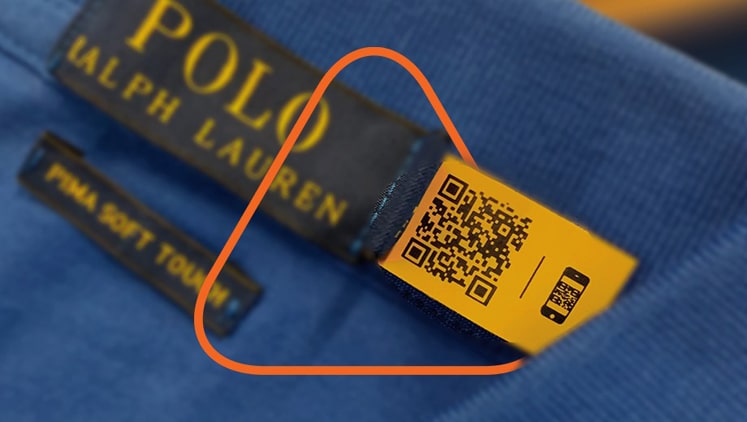
Radio Frequency Identification (RFID) is the wireless transfer of digital ID and additional data between a RFID tag and a reader by means of electromagnetic waves. Tagging products with RFID Tags assign a unique digital identity, a digital twin to identify, authenticate, track, sense and engage with each object seamlessly.
RFID allows tags to be read without a line of sight at a distance of a few centimetres to more than 20 metres or 60 feet, depending on the type of RFID system. An RFID system consist of three components including RFID tags or intelligent labels; RFID readers (also called interrogators); and software (also called middleware) to feed the captured data into IT systems or the Internet of Things (IoT).
One of the leading RFID technology suppliers is Avery Dennison, the provider of adhesive and supply chain labeling solution. The company offers AD-362r6-P inlays from Avery Dennison, a unique dual-technology design that incorporates a UHF RFID inlay and an Electronic Article Surveillance (EAS) tag in a single die-cut label. The solution combines item level tracking capabilities for a wide range of retail apparel products and secondary loss prevention functionality. The solution is specifically designed for the Apparel and Fashion Industry.
The other company offering the solution is Zebra Technologies, based in USA which provides software, services, analytics and solutions to intelligently connect people, assets and data. One of the different technologies that the company is providing leverages the use of Prescriptive Analytics which makes use of machine learning to help businesses decide a course of action based on a computer program’s predictions. The solution automatically analyses data for any behaviour that can potentially indicate ORC-type behaviour and then alert a retailer about the ‘opportunity’ for resolution.
The alerts consist of detailed findings from its analysis and one or more perspective action to the appropriate stakeholder, informing them exactly how to respond to the opportunity. This action includes the requirement for launching an investigation in accordance with company policy, pointing the recipient to potential evidence, and/or directing the recipient to contact law enforcement for assistance.
The company also provides SmartLens that offers deeper real-time-insights of the inventory and in store. The technology automatically senses and records the location and movement of products in the retail store, merchandise and assests and turns that data into easy-to-read actionable intelligence that delivers real competitive advantage.
Zebra SmartLens for retail consists of a family of purpose-built RFID sensors, the SmartLens data analytics engine and SmartLens applications. One of the solution is The Zebra ST5500 Transition Reader that can be installed on wall. The SmartLens Data Analytics Engine is at the heart of the SmartLens Solution. The engine consists of two components. The SmartLens Appliance Server correlates volumes of raw RFID data to provide meaningful events. Then the sophisticated analytics in the SmartLens Business Analytics and Reporting (BAR) automatically turns those events into actionable insights that can improve practically every aspect of your everyday store operations.
You no longer need to spend hours compiling data to examine past performance to determine how to improve future operations. Instead, without lifting a finger, you get a real-time picture that reveals how and where you can improve operations, right now.
Facial Recognition Technology: Technology for a checkout-free store
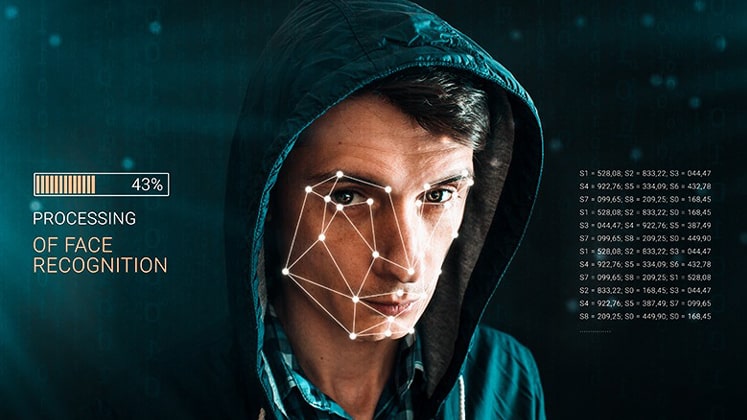
Facial Recognition technology has a vast database of documented shoplifters, organised retail crime associates, disgruntled ex-employees and other individuals that pose a risk. The shoplifters, if entering a store, can be traced from video footage or following an apprehension. As soon as the shoplifter returns to the store, the camera enabled with face recognition algorithm can match that individual’s face against the database of images on file.
When the system recognises any potential match, the store security professionals can be alerted instantly. The technology therefore allows to observe the suspected individuals and reduce the number of shoplifting instances.
In case any individual successfully gets away with committing a crime, face recognition can add tremendous value. An image of the retail criminal can be taken from store CCTV or VMS systems and enrolled in the system. You might not have a clue who the person is, but your security team will know the moment they return to a store.
One of the tech provider for the such technology is Cognitec System based in Germany, Face recognition technologies and applications for customers and government agencies around the world. The technology uses facial images, deep learning, computer vision, and pattern recognition technologies for making the accurate decisions.
The FaceVACS-VideoScan recognises people’s faces through the live video stream and video footage and then compares it to the image database and instantly finds known persons. It also performs anonymous facial analysis to count individuals, generate demographic statistics, track people flow in time and space, find frequent visitors and detect crowds. The technology can also be used to import the already recorded video files to find persons enrolled in image databases, or locate unknown persons in multiple videos.
The FaceVACS-VideoScan ES, identifies the banned or already marked person in seconds, displays real-time alerts for defined events, alerts the security personal within seconds for timely action, sends alerts to mobile devices for timely action, stores video sequences for each appearance and computes people flow data and demographics. The technology works with Cognitec’s own face recognition camera or other highly specialized IP video cameras, computing and storage servers, customer provides network and customer purchases client devices