According to Forrester, cross-border shopping will make up 20 per cent of e-commerce in 2022, with sales reaching up to US $ 627 billion. Hence, it’s expected that online merchants will sell and deliver their merchandise worldwide, resulting in the global expansion of their e-commerce business. The pandemic has resulted in a spurt of growth in e-commerce revenue both in emerging and established economies globally. The retailers should, therefore, grab the opportunity to expand and reach their customers in different parts of the world. Let’s delve deeper into cross-border e-commerce and how technology can help manage the operations…
Cross-border e-commerce or international e-commerce allows merchants to sell their products to customers located in other countries. It also allows retailers and brands to expand internationally and reach out to customers located in different parts of the world. Though it might seem a difficult process, it is not impossible; it just requires a smooth flow of orders and goods and adaptability to local laws and currencies. Moreover, consumer and market insights and selection of partners are few critical factors for the success of this business model.
A successful international expansion plan requires a complete analysis and strategising of global marketplaces. Firstly, it’s ideal to identify the principal market to expand and analyse the market trends, customer demands, expectations, competitions, dynamics of the market, etc. Once these points are cleared, it can help in deciding a plan to reach them and maintain the brand relevance according to the market.
The other very important factor is to understand your competitors, as no matter how unique a product is, it’s not always easy to convince the local customers. Also, it’s important to communicate with customers in the local language; any content from websites, images, infographics, and newsletters should be communicated in the local language to build up trust and connection with the brand.
Another most important thing for retailers is to be aware of all the foreign legal regulations for businesses to avoid any unnecessary allegations and problems. We shall discuss below four companies that are offering different services to handle few segments of managing cross-border operations.
Also Read: Embarking on a digital journey: The only way to stay relevant in fashion
Technology that can manage different aspects
Managing the content of sales channels manually can be quite challenging, as every platform has its own standards of attributes and requirements which, if done manually, can include lots of work and time. Therefore, the use of a centralised dashboard for all the different marketplaces can help retailers maintain consistency, reduce time to market, and eliminate any redundant and incorrect data to be published online. Vinculum Software Company, based in Noida, India, enabling omnichannel retailing, has rolled out a solution to help retailers manage their online activities. The solution provides a centralised platform to manage orders from different marketplaces through a single dashboard.
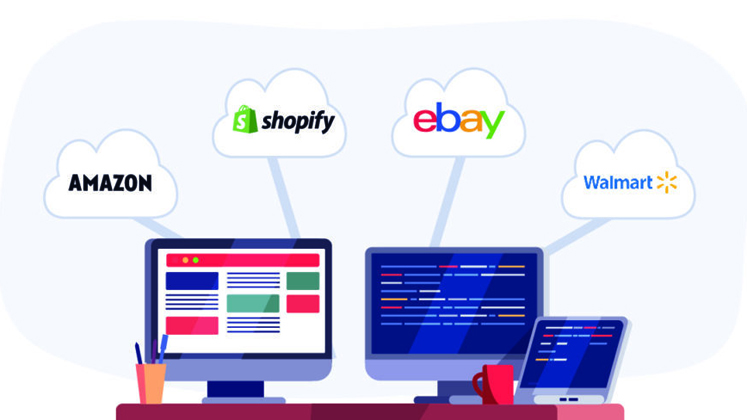
The Vin Lister solution by the company helps brands and retailers to manage different channels from a single dashboard. One of the biggest challenges encountered in managing the online activity is getting the product catalogue uploaded on these platforms. There is no standard taxonomy that these marketplaces and platforms have defined in case of the attributes and even for the picture format. Vin Lister solution aims to help retailers digitise their catalogues. The sellers are required to fill an excel sheet describing their products with attributes including price point, SKU, images, etc. Once the sheet is filled, it is validated by the company before pushing it to the marketplace that reduces the chances of rejection, market time, and increases the time for sale. The solution then will immediately update all the platforms making the product available for the customers as soon as possible, while maintaining the consistency of offerings and information.
Other areas where the technology can help ease out the task are website language translations, content creation, shipping, and analytics. Localisation is connecting with the audience in their language for being relevant in the market. Retailers’ websites are the main source of connect; therefore, it is important for retailers that the website content is designed and delivered according to the local language. It is also important to use the correct SEO to improve the Google search of websites. This seems to be quite a complex task, but there are companies that can help with the translation of the website content. One such company is Language Connect, based in London, United Kingdom, which offers language translation service. The tech solution by the company can help retailers with complete translation of the content making it relevant to a particular audience.
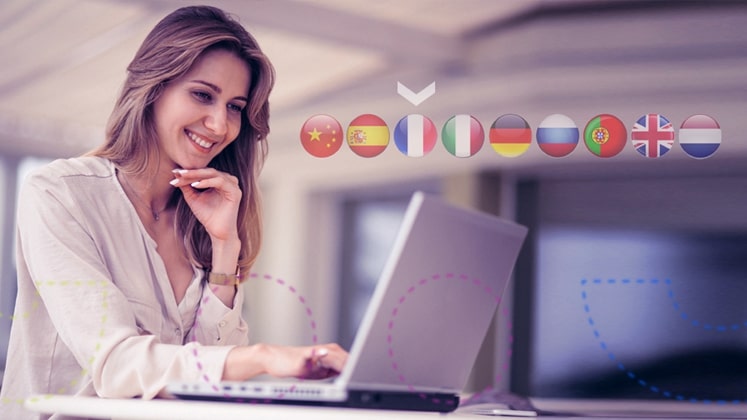
“When you look at the translation, there are so many things that you have to be flexible with depending on the type of content. You need to maintain the meaning and emotions of the brand that you want to bring to the local audience,” said Patience Seow, Senior Business Development Manager, Language Connect.
Also Read: Managing product catalogues on multiple online marketplaces
Once the website is developed, then comes the content creation of website. In this case, it must be noted that what works in one part of the country might not work in other part. ODN Digital Services Pvt. Ltd., based in New Delhi, India, specialises in innovative content solution for e-commerce. The company offers services that can help in brand content creation by understanding the brand and the market that they intend to work for. Based on the data provided by the brand, the company creates images, photoshoots, content services, digital storytelling, etc. to offer a much deeper connection with the customers. Furthermore, technologies like AR and 3D are utilised for helping customers understand the fit and sizing of products. Since the size charts vary across the countries and brands, customers might find it hard to understand the brands’ products and fit. For this, brands and retailers can leverage the use of technologies like AR and 3D to help the customers find their right fit in the first go. As one of the major issues in e-commerce is that of the fit and size, this might also lead to customer dissatisfaction.
Managing e-commerce with so many different requirements can be complex for which retailers today are looking for a complete solution that could help them with complete retail automation. AI-based analytics that can automate the retail lifecycle can help manage the business with meaningful insights. These tools are helping in business analytics to monitor the business performance. Besides, business weakness and rectification through identification of areas that can be improved for better productivity and product analytics for better targeted promotions generating greater ROI are other benefits of AI-based analytics. One of the solution providers for the same is Enalito, based in Indore, India, an e-commerce automation platform helping in complete analysis of customer behaviour and product performance. The solution focuses on three major areas including analytics to deliver the right product to the right customer, assister for AI personalisation to the customers, and Promo for targeted promotions and email marketing.
Technology adoption was a slow process, but got a boom due to COVID-19, and it can be said that it would change the future, as people would get used to the comfort and benefits of the technology for business. Therefore, it is important to get prepared for the coming future where accuracy, relevancy, and increased efficiency will be integrated in the DNA of businesses.
Also Read: Redefining the supply chain with improved flexibility and collaboration